
Laolu Akande Urges Living Wage Implementation for Nigerian Workers As Nigeria marked its annual Workers’ Day celebration, former presidential media aide Laolu Akande has issued a compelling call for the urgent review of workers’ welfare across the nation. In a strongly worded appearance on Channels Television’s Sunrise Daily, Akande stated that Nigerian workers—both in the
Laolu Akande Urges Living Wage Implementation for Nigerian Workers
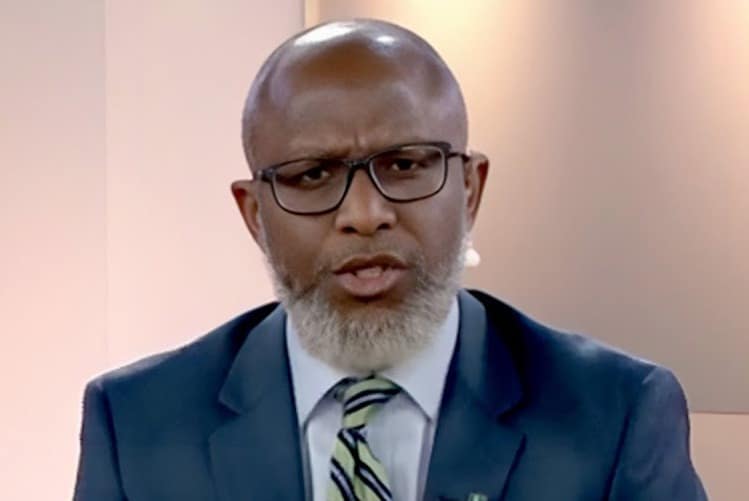
As Nigeria marked its annual Workers’ Day celebration, former presidential media aide Laolu Akande has issued a compelling call for the urgent review of workers’ welfare across the nation. In a strongly worded appearance on Channels Television’s Sunrise Daily, Akande stated that Nigerian workers—both in the public and private sectors—are grossly underpaid and deserve a meaningful living wage that reflects current economic realities.
Speaking on Friday, Akande used the occasion of Workers’ Day not only to highlight the plight of Nigerian workers but to challenge the federal government and private institutions to take actionable steps toward salary reform. According to him, Workers’ Day should not be treated merely as a day of ceremonial praise but rather as an opportunity to address systemic shortcomings in the country’s labour structure.
“Workers’ Day is not just a celebration. It’s a moment to reflect on what is missing in Nigeria’s labour system,” Akande emphasized. “We don’t pay good remuneration at all.”
Muhammadu Sanusi II Reclaims Influence, Appoints Five Top Chiefs In Kano Emirate
Living Wage: The Focus for Labour Reform in Nigeria
Central to Akande’s argument is the concept of a living wage, which he insists must replace the current framework of minimum wage standards. He criticized both government and private employers for what he described as a culture of denial and pretense, where fair compensation is discussed but rarely implemented in practice.
“Politicians will say the government is doing something. The private sector will pretend to pay decent salaries. Workers also pretend to be well paid. But the truth is, people are poorly paid in this country,” he asserted.
Akande’s criticism reflects a broader public sentiment, especially amid rising inflation and deteriorating purchasing power. With food prices skyrocketing and basic amenities becoming more expensive, the call for wage adjustment is resonating more loudly than ever. He pointed out that salary reviews should not be arbitrary but based on measurable standards that ensure a decent quality of life.
“You have to pay people a true living wage. It shouldn’t be reduced to a conjecture of whether it’s enough or not. There should be a way to measure what is decent and allows people to live a basic life,” he explained.
Praise for Judicial Pay Reform, but Urges Wider Application
While acknowledging recent government efforts to increase the salaries of judicial officers, Akande argued that such efforts must not be limited to a few elite categories. He called for the same principles of fairness and adequacy to be applied across all levels of the workforce.
“What the government is doing to pay judges appropriately is a step forward. But that principle should be trickled down to all workers,” he said.
Akande’s remarks echo the demands of various labour unions, who have long criticized the stagnation of wages in the face of growing economic hardship. According to experts, Nigeria’s minimum wage—currently set at ₦30,000 per month (approximately $25 USD)—is inadequate to support even a single adult, let alone families, in most urban centers.
Moreover, disparities between different sectors of the economy continue to widen. While lawmakers and top-level officials earn salaries and allowances far beyond the national average, many civil servants and private-sector workers struggle with irregular or meager pay.
Restoring Dignity Through Fair Compensation
Beyond economics, Akande touched on the emotional and psychological toll of underpayment. He emphasized that appropriate compensation is not merely a matter of financial reward, but one of human dignity and national morale.
“This is not just about salaries. It’s about restoring dignity to the workforce. When people are properly paid and respected, productivity improves, and so does national morale,” he noted.
Akande’s call has reignited a national conversation on labour equity, especially at a time when industrial actions and protests continue to shape Nigeria’s socio-political landscape. Labour unions, economists, and civil society organizations are now echoing the need for a structured reform agenda that includes wage evaluation mechanisms, inflation adjustments, and improved worker protections.
With the 2025 Workers’ Day now in the rearview, it remains to be seen whether Akande’s message will lead to tangible policy changes. However, his plea adds to the growing pressure on both public and private stakeholders to address the foundational issues that have long plagued Nigeria’s workforce.
Created with AIMONEYGEN.COM – “Visit GPTS Collection “














Leave a Comment
Your email address will not be published. Required fields are marked with *