
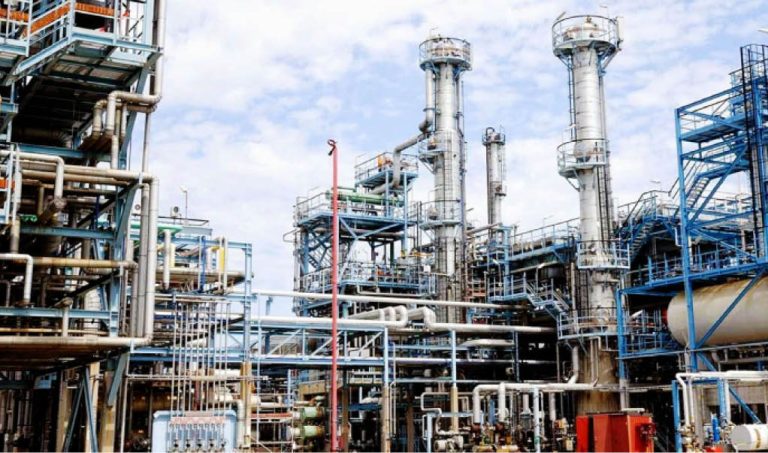
Nigeria Loses ₦366.2bn to Port Harcourt Refinery Downtime Nigeria’s long-standing struggle with domestic refining has once again come under scrutiny following revelations that the continued shutdown of the Port Harcourt Refining Company (PHRC) has cost the nation an estimated ₦366.2 billion in just five months. The refinery, which was slated to begin operations after years
Nigeria Loses ₦366.2bn to Port Harcourt Refinery Downtime
Nigeria’s long-standing struggle with domestic refining has once again come under scrutiny following revelations that the continued shutdown of the Port Harcourt Refining Company (PHRC) has cost the nation an estimated ₦366.2 billion in just five months. The refinery, which was slated to begin operations after years of rehabilitation, remains idle—deepening the country’s dependence on imported petroleum products and widening fiscal leakages.
House Of Reps Proposes Creation Of Additional LGAs In Benue State
A Promised Revival That Never Came
In 2021, the Federal Government approved $1.5 billion for the full rehabilitation of the 210,000-barrel-per-day Port Harcourt Refinery. The Nigerian National Petroleum Company Limited (NNPCL) assured citizens that the facility would commence partial operations by December 2023 and fully resume in 2024. However, as of October 2025, the refinery is yet to process a single barrel of crude oil commercially.
Despite several inspection visits and official reassurances, operations have stalled—triggering concerns among stakeholders over transparency, accountability, and the true status of the multi-billion-naira project.
Mounting Economic Losses
The shutdown has far-reaching economic consequences. According to data compiled from the Nigerian Bureau of Statistics (NBS) and industry reports, Nigeria imported about 9.8 billion litres of petrol between May and September 2025, spending approximately ₦4.5 trillion on fuel imports. Analysts estimate that if the Port Harcourt Refinery had been operational at even 60% capacity, the country could have saved roughly ₦366.2 billion within that period through reduced import dependence, lower freight costs, and foreign exchange preservation.
The losses are not limited to financial outflows. The non-utilization of local crude feedstock deprives Nigeria’s oil-producing communities and the federation of potential value addition. Instead, the country continues to export raw crude at discounted rates while importing refined products at premium prices—a paradox that has persisted for decades.
Energy Security at Risk
Experts argue that the refinery’s dormancy poses a grave threat to Nigeria’s energy security. The nation remains vulnerable to global price shocks, shipping delays, and foreign exchange volatility. This dependence also undermines the government’s deregulation efforts under the Petroleum Industry Act (PIA), as domestic pricing remains subject to international market fluctuations.
Energy economist, Dr. Kola Adetunji, explained that Nigeria’s refining gap “creates artificial scarcity and leaves the economy exposed to external disruptions.” He noted that “if even one major refinery like Port Harcourt were functional, Nigeria could stabilize its downstream sector and reduce inflationary pressure tied to fuel imports.”
Rehabilitation Questions and Transparency Gaps
The rehabilitation project, awarded to Italy’s Maire Tecnimont, was meant to proceed in three phases—each targeting 60,000, 150,000, and eventually 210,000 barrels per day. The NNPCL claimed in March 2024 that mechanical completion had reached 85%. However, whistleblowers and civil society organizations have raised concerns that the project’s timelines and budgets are opaque.
Civil rights groups such as the Nigeria Extractive Industries Transparency Initiative (NEITI) and BudgIT have demanded an independent audit of the refinery’s expenditures. They argue that the government’s repeated promises without tangible results amount to economic sabotage and waste of public resources.
Ripple Effects on Inflation and Forex
The refinery’s continued closure also fuels Nigeria’s inflationary trend. As fuel imports require billions of dollars monthly, the Naira faces persistent pressure against the dollar. Rising import bills translate to higher pump prices, increased transportation costs, and elevated food prices—exacerbating hardship for ordinary Nigerians.
The Central Bank’s limited foreign reserves are further depleted by the need to fund importation of petroleum products. This vicious cycle has hindered Nigeria’s ability to stabilize its currency and has made the economy heavily exposed to oil market volatility.
Government’s Defense
In defense, the NNPCL maintains that the project is nearing completion. Its Group Chief Executive Officer, Mele Kyari, stated earlier this year that “the Port Harcourt Refinery is technically ready, with pre-commissioning activities ongoing.” He promised that the facility would be fully operational before the end of 2025.
Kyari attributed the delay to “logistical challenges, global equipment shortages, and testing procedures,” insisting that no public funds were lost. However, the lack of visible output continues to erode public confidence.
Experts Call for Private Participation
Industry observers now argue that full government control of refineries is unsustainable. They urge the NNPCL to adopt a public-private partnership (PPP) model similar to the Nigeria LNG framework, allowing credible investors to manage operations efficiently.
Oil sector analyst, Timi Oladipo, said: “Government-run refineries have failed repeatedly. We need private expertise, transparency, and performance-based management to make them work. Nigeria cannot continue to lose hundreds of billions because of bureaucratic inefficiency.”
The Way Forward
To prevent further losses, experts recommend the immediate commissioning of the Port Harcourt facility and a transparent audit of the rehabilitation process. They also advocate the acceleration of modular refineries and incentives for local refining investors.
Unless decisive action is taken, the ₦366.2 billion lost over five months could double before the end of 2025—deepening Nigeria’s economic woes and prolonging the cycle of import dependency.














Leave a Comment
Your email address will not be published. Required fields are marked with *