
NJC Drops the Hammer: 11 Judges Removed, Sweeping Reforms Hit Nigerian Judiciary In a landmark disciplinary action set to reshape the Nigerian judicial landscape, the National Judicial Council (NJC) has approved the compulsory retirement of 11 judges, 10 of whom are serving within the Imo State Judiciary. This decision was taken at the NJC’s 109th
NJC Drops the Hammer: 11 Judges Removed, Sweeping Reforms Hit Nigerian Judiciary
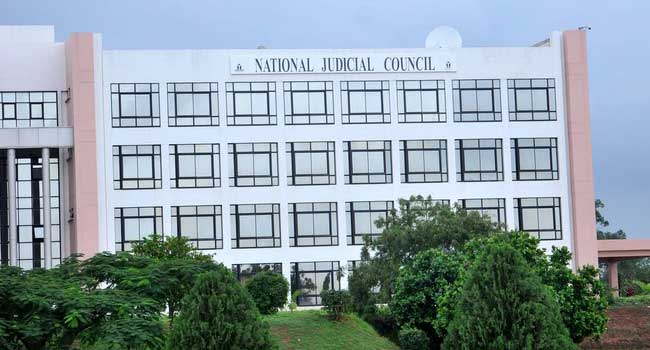
In a landmark disciplinary action set to reshape the Nigerian judicial landscape, the National Judicial Council (NJC) has approved the compulsory retirement of 11 judges, 10 of whom are serving within the Imo State Judiciary. This decision was taken at the NJC’s 109th meeting held on June 25, 2025, under the leadership of Justice Kudirat Kekere-Ekun, Chief Justice of Nigeria and Chairperson of the NJC.
This latest move signals a firm stance against judicial misconduct and further reflects the NJC’s intensified focus on restoring integrity within Nigeria’s judiciary. The meeting, which also saw new judicial appointments across multiple states, highlighted the council’s resolve to uphold ethical standards and meritocracy within the legal system.
Justice System Under Scrutiny: Compulsory Retirement in Imo Judiciary
Of the 11 judges facing compulsory retirement, nine were found guilty of falsifying their dates of birth to extend their tenure, while one, Justice T. N. Nzeukwu, was reprimanded for overstepping judicial protocol by accepting a position as Acting Chief Judge despite being fourth in hierarchy—an act in violation of Section 271(4) of the 1999 Constitution.
The following judges from Imo State were retired due to fraudulent age adjustments:
- Justice M. E. Nwagboso
- Justice B. C. Theka
- Justice K. A. Leaweanya
- Justice Okereke Chinyere Ngozi
- Justice Innocent Chidi Ibeawuchi
- Justice Tennyson Nze
- Justice Ofoha Uchenna
- Justice Everyman Eleanya
- Justice Rosemond Ibe
The Council emphasized the seriousness of these infractions, stressing that altering official records undermines the integrity of the judiciary. The sole exception in Imo, Justice Nzeukwu, was penalized for accepting an acting appointment despite clear constitutional restrictions and his relatively junior status.
FIRS Rebranded As Nigerian Revenue Service Under Tinubu’s Tax Reform Laws
NJC Reshuffles and Appoints: A Wave of New Judges Nationwide
While disciplinary actions made headlines, the Council also used the meeting to recommend new appointments across states, including Ekiti, Yobe, Ogun, Cross River, Zamfara, Katsina, Plateau, Ebonyi, and others. Among the key appointments:
- Hon. Justice Adekanye Lekan Ogunmoye as Chief Judge of Ekiti State
- Hon. Kadi Abba Mammadi as Grand Kadi of Yobe State
- Mainasara Ibrahim Kogo Umar, Esq. was recommended as Chairman of the Code of Conduct Tribunal
 The Council confirmed the appointments after rigorous scrutiny, which included public feedback and a merit-based interview process. This marked the first implementation of the NJC’s 2023 Revised Guidelines for the appointment of judicial officers.
Out of 86 public submissions on the shortlisted nominees, 73 were in favor, and 13 were adverse. However, only eight were reviewed due to procedural compliance, reflecting the NJC’s emphasis on due process and transparency.
Internal Clean-up: Other Retirements, Reprimands, and Cautions
In addition to the compulsory retirements, two judicial officers—Justice Babatunde Ademola Bakre (Ogun State High Court) and Justice H. O. Ajayi (Kwara State High Court)—voluntarily retired.
Also notable was the case of Justice Isaac J. Essien of the National Industrial Court, who was barred from promotion for three years. His offenses included:
- Ordering the confiscation of ₦1 billion in public funds despite a pending appeal
- Demonstrating bias due to past affiliation with Nasarawa State University
- Using official court letterhead to demand personal entitlements
- Personally visiting the Court of Appeal registry—an unethical act for a sitting judge
The NJC condemned these actions as egregious breaches of judicial conduct, warranting serious penalties to uphold institutional credibility.
Cases Reviewed: Cautions and Dismissals Issued
In a broader review of 30 complaints:
- 4 judges were cautioned
- 2 petitions were dismissed for lack of merit
- 4 judges were referred to investigative panels
Among those cautioned:
- Justice Rahman A. Oshodi was cautioned for misuse of discretion in Lagos.
- Justice Daniel Okungbowa, Chief Judge of Edo State, received similar caution.
- Justice G. B. Okolosi of Delta State was issued a final warning for failing to meet constitutional timelines for delivering judgment.
- Justice Sa’adatu I. Mark of the Federal High Court was warned for exceeding the 90-day window in delivering a ruling.
The NJC also cleared Justice M. A. Ikpambese, Chief Judge of Benue State, of wrongdoing. The Council criticized Benue’s Attorney-General, Fidelis Bemsen Mnyim, accusing him of politically motivated petitions aimed at unseating the Chief Judge. Mnyim will be referred to the Legal Practitioners’ Disciplinary Committee (LPDC) for misconduct.
Several judges were exonerated, including:
- Justice Binta Fatima Murtala Nyako
- Justice A. M. Liman (Federal High Court, Kano)
- Justice S. A. Amobeda
- Justice Muhammad Auwal Haruna
In all cases, the Council emphasized evidence-based judgment and procedural fairness.
Judicial Reform and Integrity: A Strong Message
This flurry of disciplinary action underscores a growing resolve within the NJC to hold judges accountable, protect the public trust, and uphold the sanctity of Nigeria’s legal system. It also signals a deeper cultural shift where seniority, experience, and ethical behavior are valued over influence or political ties.
For the Imo State Judiciary in particular, this is a moment of reckoning. The Council has repeated its instruction to Governor Hope Uzodinma to immediately appoint the most senior judicial officer as the Acting Chief Judge, reinforcing constitutional norms and rejecting shortcuts or favoritism.
Meanwhile, the NJC’s latest batch of appointments and guidelines for transparency offer hope for a more robust, fair, and incorruptible judiciary. As Nigeria grapples with complex legal and political challenges, this firm stance by the judiciary’s apex council may be exactly what’s needed to inspire broader reform and restore faith in the justice system.
Cleaning House to Restore Confidence
The NJC’s 109th meeting will be remembered as a defining moment in Nigeria’s legal history. From enforcing strict disciplinary action to enabling merit-based appointments, the Council has made it clear that judicial office comes with not just authority, but accountability. The decision to compulsorily retire 11 judges, investigate misconduct, and punish abuse of discretion represents a clear zero-tolerance policy for malpractice within the judiciary.
As Nigeria moves forward, the onus now rests on all stakeholders—from governors to court registrars, from senior judges to newly appointed ones—to uphold the high standards the NJC demands. The rule of law, after all, begins at the bench.











Leave a Comment
Your email address will not be published. Required fields are marked with *