
NLC Urges Federal Government to Sell Crude to Dangote Refinery in Naira The Nigeria Labour Congress (NLC) has called on the Federal Government to prioritise selling crude oil to the Dangote Refinery in Naira, arguing that such a move would reduce fuel prices and strengthen the country’s refining capacity. Lagos State NLC Chairperson, Funmi
NLC Urges Federal Government to Sell Crude to Dangote Refinery in Naira
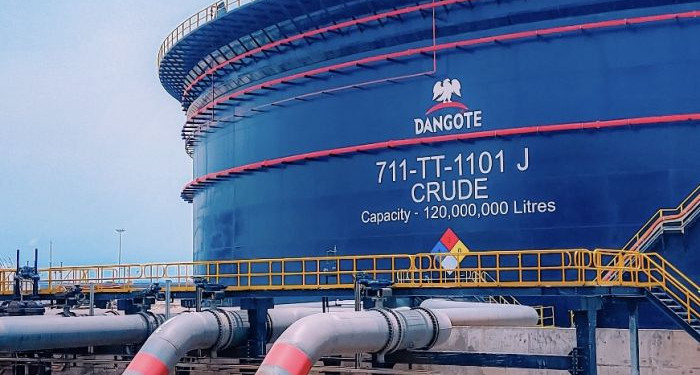
The Nigeria Labour Congress (NLC) has called on the Federal Government to prioritise selling crude oil to the Dangote Refinery in Naira, arguing that such a move would reduce fuel prices and strengthen the country’s refining capacity.
Lagos State NLC Chairperson, Funmi Sesi, made the appeal on Tuesday during a tour of the Dangote Petroleum Refinery and Fertiliser Ltd. by members of the Labour Writers Association of Nigeria (LAWAN) and NLC officials.
Bill To Shorten Election Litigation Timelines Advances In House
Call for Local Currency Transactions
Sesi questioned why the refinery, despite Nigeria’s abundant crude oil reserves, was still importing crude or paying for locally sourced crude in US dollars.
“This country has crude oil in abundance. Why is Dangote still importing crude or paying in hard currency for locally produced crude?” she asked.
She stressed that if the government is truly committed to lowering fuel prices and supporting local refining, it must make crude available to the Dangote Refinery in Naira.
According to Sesi, sourcing crude locally in local currency would significantly reduce operational costs for the refinery, translating to sustainable reductions in fuel pump prices for Nigerians.
Commendation for Dangote Group
The union leader praised Dangote Group for creating what she described as a transformative national asset, bridging Nigeria’s fuel supply gap, creating jobs, and boosting industrial output.
“Today, we have seen the refinery, the fertiliser plant, and other investments in this axis. The size and impact are enormous and impressive,” she said.
She highlighted that the company’s investments were already delivering tangible benefits to Nigerians, particularly in stabilising fuel prices after the removal of the petrol subsidy.
Sesi noted that Dangote’s 650,000 barrels-per-day capacity refinery could serve both Nigeria and the wider West African market, and observed large vessels exporting fertilisers to international destinations during the tour.
She also lauded the production of Euro-5-compliant fuels with reduced sulphur content, which align with global environmental standards and boost Nigeria’s market reputation.
“This is the pride we want — a Nigerian company producing at global standards, changing the narrative, and boosting our global standing,” she said.
Impact on Fuel Prices and Industrialisation
Following the subsidy removal, Nigerians experienced sharp increases in Premium Motor Spirit (PMS) prices. Sesi argued that Dangote’s entry into the market had played a significant role in stabilising prices and providing an alternative supply source.
She urged the government to support the refinery by enabling it to access crude in Naira, warning that forcing it to buy in dollars or import crude would undermine the potential benefits to consumers.
On agriculture, she commended Dangote Fertiliser Company for already exporting products globally, urging government support to reduce dependence on imported agricultural inputs and strengthen food security.
Dangote Industries’ Position
Speaking during the visit, Dangote Industries Vice President for Oil and Gas, Devakumar Edwin, reaffirmed the refinery’s commitment to ending Nigeria’s reliance on imported refined petroleum products.
He described the refinery as part of a broader effort to build a sustainable, competitive refining industry that can strengthen the national economy.
Edwin announced plans to deploy 4,000 Compressed Natural Gas (CNG)-powered trucks to distribute refined products nationwide, ensuring that cost savings from domestic refining reach consumers directly.
According to him, logistics costs are a significant factor in pump prices, and the introduction of CNG trucks will help reduce these costs while providing a cleaner, cheaper alternative to diesel-powered transportation.
“The deployment of 4,000 CNG-powered trucks will help pass down domestic refining benefits and lower product prices to consumers,” Edwin explained.
He emphasised that the aim was to improve distribution efficiency, not to replace existing operators, and stressed that the move would promote environmental sustainability.
Government’s Naira-for-Crude Policy
In April, the Federal Government reiterated its commitment to the Crude and Refined Product Sales in Naira initiative, describing it as key to reducing foreign exchange pressures and ensuring energy security.
However, the policy has faced inconsistencies. In March, reports suggested that the government had ended the Naira-for-crude initiative, raising concerns among industry stakeholders.
Sesi argued that reverting to dollar-based transactions for local crude sales would erode the potential for lower fuel prices and weaken the competitive advantage of domestic refineries like Dangote’s.
The NLC’s call reflects broader concerns about the affordability of petroleum products, the stability of the Naira, and Nigeria’s reliance on imported fuels despite having vast crude reserves.
By ensuring that crude is sold to local refineries in Naira, proponents believe the government can protect consumers from volatile exchange rates, enhance industrial productivity, and create a more self-reliant energy sector.
For Dangote Refinery, which is already producing Euro-5 fuels and operating at a scale capable of transforming the market, the shift could make it easier to deliver on its promise of cheaper, cleaner, and more reliable fuel for Nigerians and the West African region.
Whether the government will implement the policy fully — and consistently — remains to be seen. But for the NLC, the message is clear: if Nigeria truly wants cheaper fuel and stronger local refining, crude must be sold in Naira, not dollars.
















Leave a Comment
Your email address will not be published. Required fields are marked with *