
Northern Leaders Assess Tinubu’s Midterm Performance At Arewa House Summit Kaduna, Nigeria – A significant political convergence took place Tuesday at the historic Arewa House in Kaduna, as top political, traditional, and business leaders from Northern Nigeria assembled to evaluate President Bola Ahmed Tinubu’s administration at the midpoint of his first term. The high-profile summit,
Northern Leaders Assess Tinubu’s Midterm Performance At Arewa House Summit
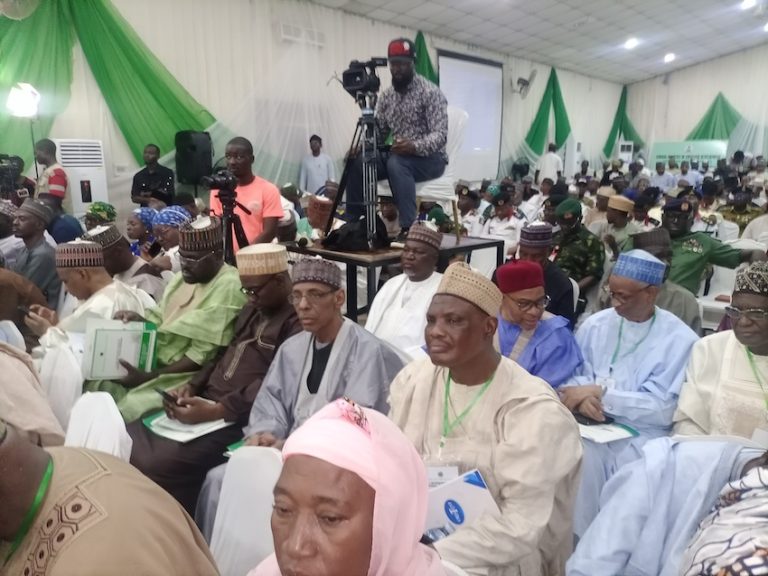
Kaduna, Nigeria – A significant political convergence took place Tuesday at the historic Arewa House in Kaduna, as top political, traditional, and business leaders from Northern Nigeria assembled to evaluate President Bola Ahmed Tinubu’s administration at the midpoint of his first term. The high-profile summit, organized by the Sir Ahmadu Bello Memorial Foundation, aimed to critically review Tinubu’s electoral promises and the federal government’s performance through the lens of Northern interests.
Tagged “Assessing Electoral Promises: Fostering Government-Citizens Engagement for National Unity,” the gathering drew eminent personalities from across the 19 Northern states and the Federal Capital Territory. Among the participants were former state governors, ex-ministers, traditional rulers, technocrats, religious figures, and members of civil society. Their collective presence underlined the significance attached to the session.
Director-General of the Foundation, Abubakar Gambo Umar, set the tone during his pre-event remarks. He noted that the summit was a continuation of constructive dialogues that began before the 2023 general elections. “This landmark event builds on the Foundation’s successful engagement in 2022, where frontline presidential candidates, including then-candidate Asiwaju Bola Ahmed Tinubu, presented their manifestos and made commitments towards the development of Northern Nigeria,” Umar stated.
Keeping the Kaduna Connection: Midterm Review Highlights Regional Expectations
The city of Kaduna, long considered the intellectual and political heartland of the North, was a symbolic venue for what many considered a crucial “litmus test” for President Tinubu’s administration. As articulated by Umar, the session sought to determine how effectively Tinubu has honored his pledges to the region, particularly in key areas such as security, economic inclusion, infrastructure development, and national unity.
Although the opening day’s discussions were largely diplomatic and measured in tone, insiders revealed that behind closed doors, more candid deliberations took place. A major topic was the perception of marginalisation in federal appointments and project implementation. Many northern stakeholders reportedly feel that the region has not received equitable consideration in federal policy-making and resource distribution.
Other thematic issues included the worsening security situation in several northern states, especially the Middle Belt, economic disempowerment in rural areas, and a growing disconnect between the federal center and local realities. Some delegates expressed concern that two years into Tinubu’s tenure, substantial structural progress remained elusive.
Participants lauded the Foundation’s initiative for creating a non-partisan platform that encourages mutual accountability and policy re-evaluation. A respected traditional ruler from the North West noted that “it is only through such engagements that democracy deepens and national integration is strengthened.”
Ogun Police Arrest Man Over Attempted Suicide At MFM Church Amid Debt Crisis
The meeting was not only a forum for critique but also for policy brainstorming. Attendees presented potential pathways to improve governance in the second half of Tinubu’s tenure. Suggestions included greater federal investment in agricultural transformation, more equitable political appointments, and a comprehensive blueprint to tackle insurgency and rural banditry.
Furthermore, the role of youth empowerment and women’s inclusion in economic policies was heavily emphasized, with calls for special presidential initiatives targeting these demographics. Civil society representatives advocated for improved mechanisms to monitor the execution of federal projects in the North, ensuring transparency and accountability.
As the summit entered its second day on Wednesday, expectations heightened around the release of a formal communiqué. This document is anticipated to summarize the North’s collective position on the Tinubu administration so far and to offer strategic recommendations for stronger governance and unity.
Political analysts observing the event commended the Sir Ahmadu Bello Memorial Foundation for its proactive stance. They noted that by institutionalizing dialogue and evaluation, the Foundation continues to honor the legacy of Sir Ahmadu Bello – a visionary leader who championed equitable development and regional cooperation during his time.
Ultimately, the Kaduna summit underscored the vital role of regional engagement in national discourse. As Nigeria navigates the remainder of Tinubu’s presidency, such forums could become instrumental in bridging divides and reinforcing democratic accountability across the federation.










Leave a Comment
Your email address will not be published. Required fields are marked with *