
One Year Later: Supreme Court’s Landmark Ruling on Local Government Financial Autonomy Remains Unimplemented Almost a year after the Supreme Court of Nigeria delivered a landmark judgment affirming full financial autonomy for the country’s 774 local government areas (LGAs), the ruling remains largely unimplemented. The delay has triggered growing discontent, legal battles, and concerns
One Year Later: Supreme Court’s Landmark Ruling on Local Government Financial Autonomy Remains Unimplemented
Almost a year after the Supreme Court of Nigeria delivered a landmark judgment affirming full financial autonomy for the country’s 774 local government areas (LGAs), the ruling remains largely unimplemented. The delay has triggered growing discontent, legal battles, and concerns about constitutional compliance and good governance.
The judgment, delivered on July 11, 2024, was hailed as a watershed moment in the struggle for local government autonomy. It ordered that all allocations from the Federation Account be paid directly to local government councils, bypassing state governments that had for decades controlled the disbursement of funds to local councils. The apex court further declared the appointment of caretaker committees in place of elected council officials unconstitutional, insisting that local governments must operate under democratically elected administrations.
However, nearly twelve months after this verdict, implementation is stalled due to a cocktail of bureaucratic hurdles, resistance from state governors, and legal ambiguities.
Leadership Tussle Erupts In SDP Over Controversial NWC Appointments
Federal Government’s Role and the AGF’s Warning
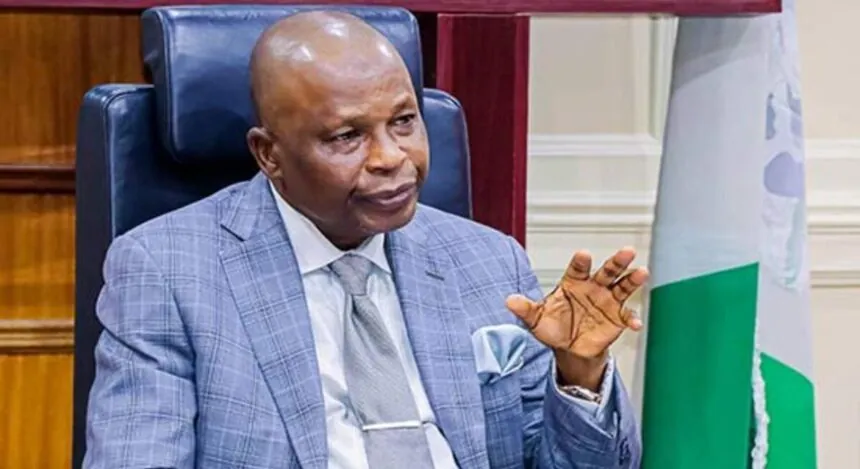
Shortly after the judgment, the Attorney General of the Federation (AGF) and Minister of Justice, Prince Lateef Fagbemi (SAN), warned that there would be serious consequences for any state government that failed to comply. He noted that enforcing the Supreme Court’s ruling falls under the jurisdiction of the Office of the Accountant General of the Federation.
Yet, it remains unclear if any official directive was issued to enforce the court’s decision. Inquiries about the implementation were deflected by the AGF’s spokesperson, Kamarudeen Ogundele, who referred journalists to other bodies such as the Nigerian Union of Local Government Employees (NULGE) and the Ministry of Finance. He also reminded that the Secretary to the Government of the Federation (SGF), Senator George Akume, chairs the implementation committee.
Implementation Hindered by New Bureaucratic Conditions
What many perceive as stalling tactics began with a three-month moratorium agreed upon by the Federal Government and state governors in August 2024. The pause was meant to address concerns about salary payments, local government elections, and the viability of direct disbursements.
Following this, the Central Bank of Nigeria (CBN) introduced a controversial requirement: all local governments must present at least two years of audited financial reports before being eligible for direct allocations. The requirement has been criticised as an unnecessary bureaucratic barrier. Local government officials argue that this new condition, imposed months after the court ruling, appears to be designed to delay compliance further.
ALGON Drags Government to Court Over Delay
In response to the slow pace of implementation, the Association of Local Governments of Nigeria (ALGON) filed a suit at the Federal High Court in Abuja, accusing both federal and state governments of non-compliance. In suit number FHC/ABJ/CS/353/2025, ALGON seeks a declaration that the apex court’s ruling must be upheld without interference or rerouting of funds through third parties.
ALGON has also questioned the role of commercial banks allegedly acting as de facto custodians of local government allocations, in violation of the court’s directive.
The defendants in the case include the AGF, the Federal Government, the CBN, the Minister of Finance, the Accountant-General of the Federation, and several state commissioners of finance, among others. The Federal High Court has adjourned the matter until May 29, 2025, for further hearing.
In their defence, both the CBN and FAAC argued that ALGON lacks the legal standing to bring the suit, pointing out that it was not a party to the Supreme Court case and is not a constitutionally recognised body. ALGON, in turn, maintains that it was incorporated in 2002 with the mandate to defend the interests of local governments.
Governors’ Alleged Resistance
Further complicating the matter, reports have surfaced that some state governors are actively working against the implementation of the ruling. Several governors have allegedly directed their local government chairmen not to open the required CBN accounts for direct allocation transfers. Analysts believe this opposition stems from the potential loss of control over local government funds—an entrenched source of financial leverage at the state level.
To facilitate implementation, the Federal Government established an Inter-Ministerial Committee led by SGF Senator George Akume. The committee included top officials such as the Ministers of Finance, Budget and Planning, the AGF, the CBN Governor, and representatives from state and local governments.
The committee convened several meetings and reportedly submitted a confidential report. That report was then handed over to a separate review panel. However, months later, neither the report nor any action plan has been publicly disclosed, and the ruling remains in limbo.
The continued delay in implementing the Supreme Court’s judgment undermines democratic governance at the grassroots level and calls into question the commitment of both state and federal actors to uphold the rule of law.
Financial autonomy for local governments is widely regarded as essential for development and service delivery. The current bottleneck denies councils the resources and independence they need to function effectively. It also risks further legal entanglements and fuels political instability at the local level.
The Supreme Court judgment of July 2024 was a defining legal victory for advocates of local government autonomy in Nigeria. Yet, nearly a year later, the lack of implementation has exposed deep-rooted resistance, institutional delays, and the need for constitutional clarity.
For Nigeria to truly embrace democratic federalism, the three tiers of government must be allowed to function independently, with proper checks and balances. The Federal Government, through the AGF, must show political will and lead the charge in enforcing the court’s verdict. The local governments—long neglected and manipulated—must finally be empowered to serve the people directly and transparently.














Leave a Comment
Your email address will not be published. Required fields are marked with *