
Osun State Local Government Crisis Deepens as Judge Withdraws from APC Suit The protracted political tussle over control of local government councils in Osun State took a dramatic turn on Thursday, as Justice Isiaka Adeleke announced his withdrawal from a high-profile suit involving the All Progressives Congress (APC). The move has further complicated an already
Osun State Local Government Crisis Deepens as Judge Withdraws from APC Suit
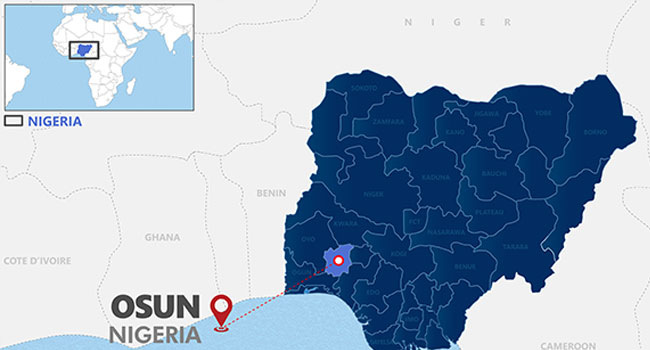
The protracted political tussle over control of local government councils in Osun State took a dramatic turn on Thursday, as Justice Isiaka Adeleke announced his withdrawal from a high-profile suit involving the All Progressives Congress (APC). The move has further complicated an already tense legal battle between the reinstated APC chairmen and the Nigeria Union of Local Government Employees (NULGE), who are challenging the legitimacy of their return.
Floating Corpse In Osun River Confirmed As Missing Man
A Judiciary Under Pressure: Accusations, Perceptions, and Withdrawal
The controversy was reignited at the Ikirun High Court, where Justice Adeleke was scheduled to hear the suit filed by NULGE. The union is seeking a court injunction to stop the APC chairmen—recently reinstated by an appellate court—from assuming control of the state’s local government councils. However, proceedings took an unexpected turn when Justice Adeleke, visibly agitated, declared his decision to recuse himself from the case.
Citing growing public distrust and allegations of bias, the judge explained that accusations from top APC leaders had made it impossible for him to continue with the case in good conscience. He referred specifically to a press conference held by Mr. Sunday Akere, a prominent APC chieftain, who had accused the court of preparing a “kangaroo judgment” to plunge Osun into political chaos.
Adding to the tension, the APC State Chairman, Tajudeen Lawal, had earlier submitted a petition to the Chief Judge of Osun State, alleging collusion between the court and the claimants (NULGE). Lawal claimed the court was being used to secure a judgment without granting the APC fair hearing.
Justice Adeleke said these public statements and formal petitions had undermined the integrity of the court and painted him as biased in the eyes of the public.
“Justice is rooted in public confidence. And perception, at times, is stronger than reality,” he stated during the hearing. “The persons have successfully set public opinion against this court… I cannot, despite these allegations of bias, proceed to determine the matter.”
He emphasized that any verdict he issued would be questioned, with one side likely to accuse him of being compromised and the other of being intimidated into submission. “The combined effect of the APC’s actions is that I cannot deliver true judgment in this matter,” the judge said.
Consequently, Justice Adeleke formally returned the case file (HIK/5/2025) to the Chief Judge of Osun State for reassignment to a new judge.
Legal and Political Implications for Osun
The withdrawal of Justice Adeleke from the high-stakes case has thrown the already volatile local government dispute into further uncertainty. The APC-led chairmen were reinstated by an earlier Appeal Court ruling, overturning the dissolution of their councils by the state government. However, NULGE and other stakeholders have resisted the reinstatement, arguing that it undermines democratic processes and contradicts local autonomy.
With Justice Adeleke’s exit, legal experts say the case could now face delays in reassignment and scheduling, giving more time for political maneuvering behind the scenes.
Political analysts warn that the situation could inflame tensions in Osun’s local councils, where governance has already stalled due to the leadership vacuum. “This isn’t just a legal tussle; it’s a governance crisis,” said Dr. Remi Adebayo, a political science lecturer at Osun State University. “Residents are suffering from halted services while the courts and politicians wrestle for control.”
Rising Concerns Over Judiciary Independence
The judge’s decision to recuse himself due to perceived political interference has also sparked debate about the independence of Nigeria’s judiciary. Legal bodies and civic rights groups are expressing concern that public attacks and partisan pressure may force more judges to abandon cases, weakening the rule of law.
Justice Adeleke’s statement highlighted the ethical dilemmas faced by judges in politically sensitive cases. “If someone is to be said to be non-partisan, that person is me,” he said, insisting that his conscience and faith guided his decision.
His withdrawal was widely interpreted as an effort to preserve judicial integrity, but it also exposed how deeply partisan politics can infect the courtroom.
Next Steps: Awaiting Reassignment
The legal community now awaits the Chief Judge’s next move. Once the case is reassigned, the new judge will face the complex task of navigating both the legal arguments and the politically charged environment that surrounds the case.
Meanwhile, the APC has neither withdrawn its allegations nor issued any apology. NULGE, for its part, remains firm in its position, maintaining that local government councils must remain autonomous and free from partisan manipulation.
Conclusion: A Fractured System in Need of Stability
The Osun local government crisis continues to reflect the broader challenge of balancing partisan politics with constitutional legality. As the judiciary struggles to assert its independence amid mounting external pressures, the need for a clear, enforceable resolution grows ever more urgent.
Until a new judge is assigned and the case resumes, Osun State remains caught in a deadlock—with governance, service delivery, and public trust all hanging in the balance.














Leave a Comment
Your email address will not be published. Required fields are marked with *