
“Policing Error Turns Fatal: DSS and PMF Clash Leaves Inspector Dead in Anambra” In a tragic case of mistaken identity, a police inspector from the 29 Police Mobile Force (PMF), Awka, lost his life following a violent encounter with operatives of the Department of State Services (DSS) during a stop-and-search operation in Uli, Ihiala
“Policing Error Turns Fatal: DSS and PMF Clash Leaves Inspector Dead in Anambra”
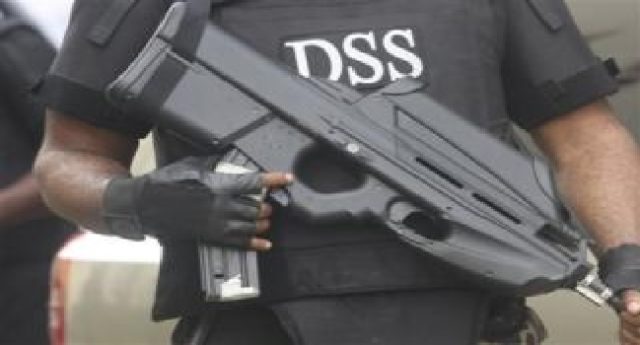
In a tragic case of mistaken identity, a police inspector from the 29 Police Mobile Force (PMF), Awka, lost his life following a violent encounter with operatives of the Department of State Services (DSS) during a stop-and-search operation in Uli, Ihiala Local Government Area, Anambra State. The incident, which unfolded around 5:50 p.m. on June 24, 2025, near the Danaks Filling Station along the Onitsha/Owerri Expressway, has sparked concerns about lapses in communication between Nigeria’s security agencies.
According to security analyst Zagazola Makama, the encounter involved a DSS team traveling in an unmarked Toyota Sienna vehicle that allegedly emerged from a track road, driving against the flow of traffic. Mobile police officers assigned to patrol the highway flagged down the suspicious vehicle for inspection. Eyewitness reports say the occupants, dressed in black uniforms and carrying assault rifles, refused to comply, escalating tensions.
Race For Tinubu’s 2027 Running Mate Heats Up As Power Brokers Battle Behind The Scenes
“Police Inspector Shot During Uli Stop-and-Search Operation”
What began as a standard search quickly descended into chaos. Eyewitness accounts from fellow officers detail how the refusal of the occupants to disembark or identify themselves prompted a standoff. In the ensuing confusion, gunfire erupted. Inspector Bello Abdulahi was hit in the lower rib, suffering critical injuries that would prove fatal.
He was first transported to Our Lady of Lourdes Hospital in Ihiala, but due to the severity of his wounds, was referred to Nnamdi Azikiwe University Teaching Hospital in Nnewi. Despite efforts to save his life, Abdulahi was pronounced dead on arrival. His body has since been deposited in the hospital morgue for autopsy and preservation.
The attackers, who fled the scene immediately, were later confirmed to be DSS operatives reportedly attached to the Ihiala Local Government Secretariat. Their hasty departure and failure to identify themselves at the scene further complicated an already volatile situation.
The DSS headquarters in Awka has since been notified, and a formal investigation is now underway to determine how such a critical breakdown in inter-agency recognition could have occurred. Preliminary findings suggest that the absence of standard identification markers on the DSS vehicle and personnel may have contributed to the fatal misunderstanding.
This event is yet another stark reminder of the dangers posed by poor coordination and lack of inter-agency communication within Nigeria’s security framework. Inspector Abdulahi’s death has renewed calls from civil society groups, lawmakers, and security experts for systemic reform.
Systemic Gaps and the Need for Coordination
Nigeria’s complex security landscape involves multiple agencies often operating independently within overlapping jurisdictions. While each has a defined mandate, cooperation and clear channels of communication are critical to maintaining public safety and ensuring the safety of personnel.
Security consultant Makama stressed that such incidents undermine public trust and internal morale within the armed forces. “This was a preventable tragedy. Standard operating procedures must be revised to ensure operatives can recognize and verify each other in the field. Without that, we risk more deadly errors,” he noted.
Calls for a review of inter-agency protocols have intensified. Stakeholders argue that a unified identification system, regular joint training exercises, and a centralized communication network could help prevent such tragedies in the future.
A Life Lost, A Lesson to Learn
As Inspector Abdulahi’s family, colleagues, and community mourn his loss, the incident has sparked broader debates on the operational integrity of Nigeria’s security services. While the DSS has yet to issue a public statement, public pressure is mounting for transparency and accountability.
This fatal misidentification must serve as a turning point—a call to action for all security stakeholders in Nigeria to work together more effectively. As investigations proceed, the hope remains that Abdulahi’s death will not be in vain but will catalyze real, structural change.












Leave a Comment
Your email address will not be published. Required fields are marked with *