
Presidency Clarifies Tinubu’s Borrowing Plan, Denies $21bn Loan Request to National Assembly The Presidency has debunked widespread media reports suggesting that President Bola Ahmed Tinubu has formally requested a $21 billion loan from the National Assembly. Clarifying the development on Wednesday, Temitope Ajayi, Senior Special Assistant to the President on Media and Publicity, emphasized that
Presidency Clarifies Tinubu’s Borrowing Plan, Denies $21bn Loan Request to National Assembly
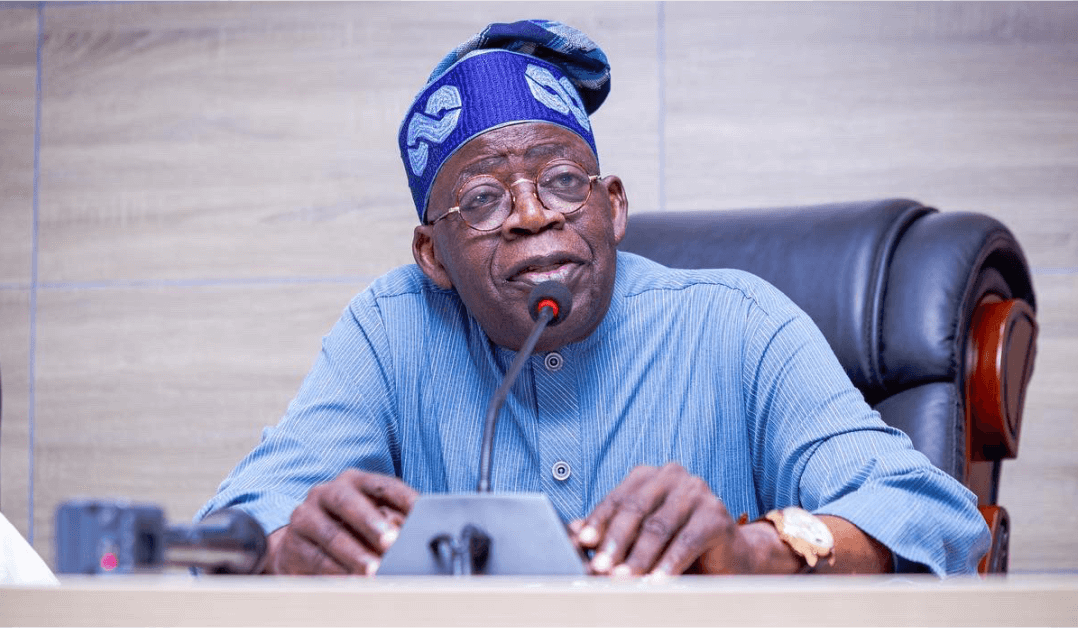
The Presidency has debunked widespread media reports suggesting that President Bola Ahmed Tinubu has formally requested a $21 billion loan from the National Assembly. Clarifying the development on Wednesday, Temitope Ajayi, Senior Special Assistant to the President on Media and Publicity, emphasized that what was sent to the legislature was merely a borrowing plan—not a direct loan request.
Ajayi, speaking via his official 𝕏 handle, expressed concern over what he called a misrepresentation of facts by several media outlets. He stated categorically that President Tinubu had only submitted a proposed borrowing framework for 2025–2026 in compliance with fiscal responsibility protocols, not a concrete or immediate loan demand.
PDP Headquarters Remains Sealed Despite Tinubu’s Order To Unseal Properties
“Yesterday, President Bola Tinubu sent a communication to the National Assembly on the Federal Government and State Governments borrowing plan for 2025–2026 for consideration and approval,” Ajayi wrote. “The material facts in the communication to NASS have been misrepresented and misreported.”
According to Ajayi, the borrowing plan is part of the federal government’s long-term fiscal strategy. It outlines potential sources and sectors for future borrowing but does not commit the government to any immediate debt acquisition. “A borrowing plan doesn’t amount to taking $21 billion loan,” he clarified. “It only shows a plan of what can be borrowed and where the loans will come from for specific projects that are important to the federal and state governments.”
He noted that some of the proposed loans—especially those scheduled for the first quarter of 2025—have not even been activated and may be deferred to a later period depending on economic conditions and project readiness.
The aide also explained that any eventual disbursement of funds, if loans are secured, would follow a structured timeline tied to specific project deliverables. “Even when specific loans are eventually taken, the drawdown has project timelines and milestones that will take between 5–6 years,” he said, noting that disbursement is not instantaneous and is subject to multiple layers of due diligence and approval.
Ajayi emphasized that submitting a borrowing plan to the National Assembly is part of the legal and responsible budgetary process. “It is part of fiscal responsibility to fully lay out borrowing plans before the National Assembly whether the loans will be taken or not,” he said. He criticized media coverage for jumping to conclusions, urging journalists and commentators to offer more nuanced and contextual interpretations of government actions.
“Instead of the news reports to be nuanced and contextual, virtually every news outlet went to town that Tinubu wants to borrow $21 billion dollars and all manners of public affairs analysts and ‘experts’ have been running commentaries on the basis of misrepresentation of facts,” Ajayi lamented.
The media storm erupted after President Tinubu sent the National Assembly a borrowing plan which, on paper, referenced funding for projects across key sectors such as infrastructure, healthcare, agriculture, and education. The total outlined in the borrowing plan includes figures that might be sourced externally if approved, sparking sensational headlines and public debate.
Ajayi’s statement sought to temper the narrative, reminding the public that such plans are standard in governance and that decisions about actual loans are contingent on several factors, including feasibility studies, economic conditions, interest rates, and repayment structures.
“The loan that the Federal Government should take in the first quarter 2025 has not even been taken up till now and may be rolled into the second half of the year,” he reiterated, pushing back on claims that the administration is recklessly plunging the nation into unsustainable debt.
He concluded by calling on the media to uphold journalistic ethics by reporting accurately and responsibly, especially on sensitive fiscal matters that affect public perception and investor confidence.
“We should do better by presenting information accurately and factually to the public,” Ajayi said, stressing the role of the media in promoting informed discourse rather than fueling misinformation.
The clarification comes amid heightened scrutiny of Nigeria’s debt profile, which is already approaching ₦183 trillion. Fiscal analysts and opposition voices have expressed concern over the country’s debt-servicing burden and called for increased transparency in future borrowing.
While Ajayi’s clarification may ease fears of an immediate debt spike, it also underscores the need for consistent and accurate communication between government institutions, the media, and the public. As the nation braces for critical fiscal decisions in the coming year, stakeholders will be watching closely to ensure that borrowing aligns with national interests and economic sustainability.












Leave a Comment
Your email address will not be published. Required fields are marked with *