
Race for Tinubu’s 2027 Running Mate Heats Up as Power Brokers Battle Behind the Scenes Despite assurances from the Presidency that President Bola Ahmed Tinubu will name his 2027 running mate only after the All Progressives Congress (APC) national convention, the scramble for the vice-presidential slot is already stirring up intense political manoeuvring and factional
Race for Tinubu’s 2027 Running Mate Heats Up as Power Brokers Battle Behind the Scenes
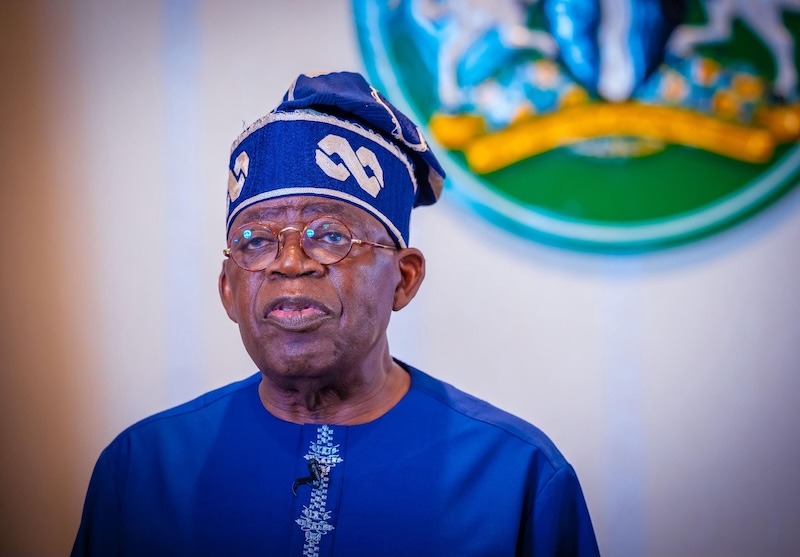
Despite assurances from the Presidency that President Bola Ahmed Tinubu will name his 2027 running mate only after the All Progressives Congress (APC) national convention, the scramble for the vice-presidential slot is already stirring up intense political manoeuvring and factional rivalry within the ruling party. The unfolding drama, which has escalated in recent weeks, reflects broader ambitions beyond 2027 — the quest for who will emerge as the APC’s next presidential candidate in 2031.
The political tension, particularly within the northern bloc of the APC, surfaced dramatically at a recent North-East stakeholders meeting intended to affirm Tinubu’s 2027 candidacy. The gathering descended into chaos when supporters of Vice President Kashim Shettima turned on APC North-East Vice Chairman Mustapha Salihu for omitting any endorsement of Shettima as Tinubu’s running mate. Salihu later explained that endorsing the VP would pre-empt Tinubu’s prerogative and future party decisions.
VP Slot Becomes Proxy Battle for 2031 Presidential Race
Sources within the APC revealed to The PUNCH that the VP battle is not merely about 2027, but a proxy war for 2031. “What the media does not know is that the battle about who becomes Tinubu’s running mate is actually the battle of who will succeed him,” one party insider said.
Currently, at least four northern governors and two principal officers of the National Assembly are reportedly lobbying to replace Shettima on the 2027 ticket. A top official in Tinubu’s cabinet from the North-East is also believed to be positioning himself for the VP slot with an eye on the 2031 presidency.
Their logic is straightforward: whoever serves as Vice President during Tinubu’s second term will be the frontrunner to succeed him. Therefore, Shettima’s continued tenure as VP poses a significant threat to their ambitions.
Religious, Regional Considerations and Political Strategy
There are also strategic and demographic calculations shaping this battle. Some party stakeholders have floated the idea of a Christian candidate from Bauchi or the North Central to balance the ticket. Yakubu Dogara, a former Speaker of the House of Representatives and a Christian from Bauchi State, has recently been endorsed by the North-East Coalition of APC Support Groups as a “unifying” VP candidate.
Still, insiders argue that picking a Christian from North Central could alienate the core northern Muslim vote in the North-West and North-East — regions critical to the APC’s 2023 success. Tinubu won four states in the North Central in the last election and may not want to risk those gains.
The President’s victory map in 2023 adds complexity to the conversation. He triumphed in the North-West with over 2.6 million votes but lost the North-East to Atiku Abubakar, a fellow northerner. These dynamics make the choice of a running mate a sensitive balancing act of religion, regional loyalty, and political loyalty.
VP Camp Mobilising, As Opposition to Shettima Builds
Despite the uncertainty, Shettima’s camp is not taking any chances. His supporters have ramped up consultations and are engaging governors and party bigwigs to secure endorsements ahead of the convention. There are whispers that his wife’s close relationship with First Lady Oluremi Tinubu could also bolster his chances for a second term.
Meanwhile, opposition to Shettima remains formidable. Some believe that the Vice President’s extended role in Tinubu’s administration will give him an undue advantage in 2031. These power brokers are therefore pushing to have him replaced now to level the playing field.
Notable Names, Denials, and Strategic Silence
Several big names have been linked to the VP race. Former Kaduna State Governor Nasir El-Rufai, who has long been rumoured to harbour presidential ambitions, was allegedly sidelined from Tinubu’s cabinet to prevent him from gaining further political capital.
El-Rufai, in a recent interview, accused National Security Adviser Nuhu Ribadu of orchestrating a campaign to damage his reputation over the 2031 race. Ribadu, according to El-Rufai, sees him as a major threat and is allegedly collaborating with Kaduna State Governor Uba Sani to tarnish his name using federal agencies.
Meanwhile, Deputy Senate President Barau Jibrin, who was endorsed by a youth group as a potential VP pick, swiftly distanced himself from the campaign. In a public statement, he cautioned supporters against engaging in “ill-timed” political distractions and pledged loyalty to Tinubu’s administration.
Likewise, Senator Aliyu Wamakko and the Sokoto ALGON chapter debunked reports suggesting that he was interested in the VP slot. Wamakko’s media aide described such rumours as “false, baseless, and highly irresponsible.”
Party Constitution, Convention, and Mixed Reactions
Amid this high-stakes politicking, the Adamawa APC chapter issued a timely reminder that vice-presidential candidates are chosen solely at the discretion of the presidential candidate — in this case, President Tinubu. “We don’t endorse deputies,” the state party spokesperson clarified.
Political analysts, however, disagree on whether the jostling is premature. Professor Tunde Adeniran remarked that early lobbying is “not abnormal,” while political scientist Professor Shola Omotola observed that Nigerian politicians are always in election mode. Nasarawa University’s Professor Jideofor Adibe echoed similar sentiments, describing the current scramble as “completely expected.”
Looking Ahead: Power Games Just Beginning
Although the APC convention is months away, the VP battle has exposed deep divisions and long-term ambitions within the party. The power struggle is no longer just about 2027; it is a precursor to a much larger contest — the fight for Nigeria’s presidency post-Tinubu.
Until Tinubu makes his final decision, all eyes remain fixed on the unfolding drama, with each camp digging deeper trenches in a battle that is as much about survival as it is about supremacy.












Leave a Comment
Your email address will not be published. Required fields are marked with *