
Senate Demands End to Benue Killings, Calls for National Security Collaboration Abuja, Nigeria – The Nigerian Senate has raised an urgent alarm over the unrelenting cycle of violence and killings in Benue State, calling for coordinated and lasting action to halt the bloodshed. During a press briefing on Tuesday, Senate spokesperson Senator Yemi Adaramodu
Senate Demands End to Benue Killings, Calls for National Security Collaboration
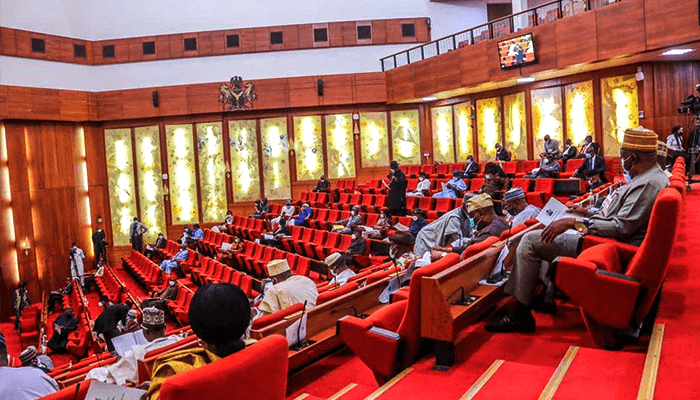 Abuja, Nigeria – The Nigerian Senate has raised an urgent alarm over the unrelenting cycle of violence and killings in Benue State, calling for coordinated and lasting action to halt the bloodshed. During a press briefing on Tuesday, Senate spokesperson Senator Yemi Adaramodu declared the upper chamber’s firm stance against the renewed attacks, stressing that decisive measures must be taken immediately.
The lawmaker emphasized that the Senate could no longer continue to send condolence messages without addressing the root causes of the crisis. “We are tired of paying condolence visits. We must put a stop to the killings. That’s why collaboration from everyone—federal, state, security agencies, and most importantly, the locals—is essential to find a lasting solution,” Adaramodu stated.
MMIA Customs Denies Extortion Allegations, Launches Probe Into Returnee’s Claims
Senate Urges Bold Steps to End Benue Violence
The recent resurgence of deadly attacks in parts of Benue State has reignited national concerns over persistent insecurity in the region. In response, the Senate has announced plans to send a delegation of lawmakers, in collaboration with the executive, to the affected communities. The team will both commiserate with victims and engage directly with traditional leaders, local officials, and other stakeholders on the ground to chart a sustainable path to peace.
Significantly, the Senate also threw its full support behind President Bola Ahmed Tinubu’s proposed visit to Benue on Wednesday. Senator Adaramodu noted that the President’s personal involvement would inject new momentum into efforts aimed at stabilizing the volatile situation. “With the visit of Mr. President tomorrow, it will make great mileage,” he added.
The violence in Benue—characterized by attacks on rural communities, destruction of property, and displacement of residents—has long been attributed to clashes between farmers and herders, among other criminal activities. Yet, despite repeated security operations, the killings have continued unabated.
National Security Summit a Step Toward Lasting Peace
In light of the worsening security conditions in Benue and other troubled states, the Senate reiterated its earlier call for a national security dialogue. Senator Adaramodu confirmed that preparations for a security summit were underway, describing it as a pivotal forum to dissect the issues and propose actionable solutions.
“When we hold the security summit, if there is any problem that is unknown, we will then know it,” he remarked. He emphasized that the National Assembly had already provided sufficient funding to security agencies and expected results from those investments.
According to Adaramodu, the goal of the summit would be to assemble voices across all relevant sectors, from government officials and military leaders to civil society groups and community representatives, to collectively brainstorm on security reforms.
Clarifying Senate Commitment and Legislative Duties
Addressing criticisms regarding Senate productivity, Senator Adaramodu took a moment to correct what he termed as “misguided assumptions” about lawmakers’ performance. Contrary to beliefs in some quarters that Nigerian senators fall short of their duties, he maintained that senators often surpass the constitutional benchmark of 181 plenary days per year.
“There are months we don’t take any holiday at all, aside from statutory holidays observed globally. Out of 365 days in a year, we sit for more than the mandated plenary days,” he said.
This, according to him, highlights the lawmakers’ dedication to national issues, including the pressing need to reform the country’s security architecture.
As communities in Benue continue to grapple with grief and displacement, the Senate’s new posture signals a determination to replace sympathy with strategy. The body now seeks to move beyond ceremonial condolences by driving concrete policy actions, increased inter-agency collaboration, and grassroots mobilization.
While the forthcoming presidential visit and the anticipated security summit represent steps in the right direction, many Nigerians remain hopeful that this renewed attention will translate into real peace and safety for affected populations.
As the nation watches, the challenge remains for federal and state actors, alongside local communities, to ensure that this renewed urgency does not fade into another round of promises unfulfilled.
















Leave a Comment
Your email address will not be published. Required fields are marked with *