
Senate Warns Defence Minister Over Comments, Reps Demand Action on Plateau Killings In a tense session on Thursday, the leadership of the Nigerian Senate issued a strong warning to the Minister of Defence, Mohammed Badaru, over public remarks that have sparked concerns about a growing divide between the legislature and the executive arm of government
Senate Warns Defence Minister Over Comments, Reps Demand Action on Plateau Killings
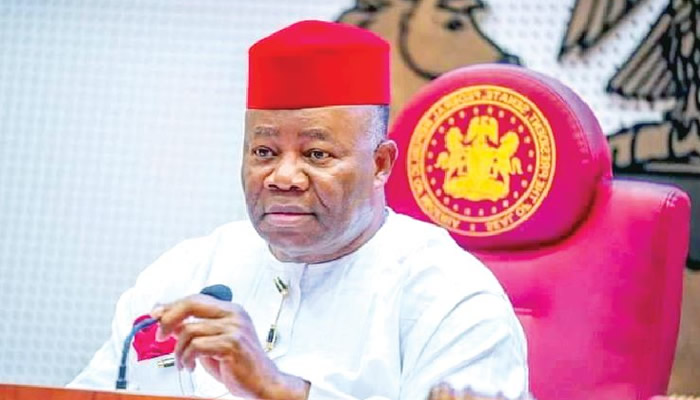
In a tense session on Thursday, the leadership of the Nigerian Senate issued a strong warning to the Minister of Defence, Mohammed Badaru, over public remarks that have sparked concerns about a growing divide between the legislature and the executive arm of government under President Bola Ahmed Tinubu.
The Senate’s caution followed the Minister’s dismissal of a planned two-day national security summit as “unnecessary,” sparking outrage among lawmakers who considered the statement not only dismissive of legislative efforts but also potentially damaging to the unity of government institutions working toward national stability.
Addressing Accountability in Security Affairs
At the heart of the issue lies a contentious comment made by Minister Badaru during a Wednesday ministerial briefing in Abuja. He claimed that strategy—rather than summits—was the key to solving Nigeria’s persistent security woes. While acknowledging that public discourse might provide input, he insisted that “operational orders come from the Defence Chiefs, not from public discussions.”
This assertion was met with firm rebuttals from Senate President Godswill Akpabio and Senate Leader Opeyemi Bamidele, both of whom condemned the tone and content of the minister’s comments. They argued that such public dismissals of Senate initiatives risked undermining the democratic process and legislative oversight.
“If the Ministry of Defence has any issue with any Senate resolution, it should not address it in the marketplace,” Akpabio said during plenary. “It should reach out to the Senate President or Senate elders. Such public remarks could lead to unnecessary executive-legislative conflict.”
He stressed that at a time when the nation is grappling with insurgency, kidnapping, and communal violence, the focus should be on collaboration rather than division. Akpabio also praised the 10th Senate for remaining committed to national priorities, noting that dialogue and engagement should always take precedence over public criticism.
Senate Leader Bamidele also voiced concern, stating, “We are elected to work for the people and support the President’s agenda. But when we are falsely portrayed or publicly undermined, it becomes difficult to build synergy.”
Describing Badaru’s comments as “demoralising and unhelpful,” Bamidele argued that summits offer a valuable platform for integrating diverse viewpoints and contributing to long-term strategic planning in national defence.
House of Representatives Demands Swift Action in Plateau State
In another major development on Thursday, the House of Representatives took a stand on the deteriorating security situation in Plateau State, where repeated violent attacks have led to dozens of deaths and widespread displacement.
Reacting to the latest assaults in Bokkos and Bassa Local Government Areas, the House called on President Tinubu to immediately deploy additional security forces to the region. The motion, co-sponsored by lawmakers Ishaya Lalu and Daniel Ago, was adopted unanimously after being presented as a matter of urgent public importance.
Lalu, while presenting the motion, highlighted the harrowing impact of the recent attacks, describing them as part of a “troubling pattern” of unrelenting violence that has plagued Plateau State for years.
“These incidents represent a troubling pattern of violence in Plateau State that has persisted for years, despite previous interventions,” Lalu said. “The situation has resulted in a worsening humanitarian crisis, with inadequate relief and support for displaced persons.”
The House did not stop at security deployment. It also called on the National Emergency Management Agency (NEMA) and the National Commission for Refugees, Migrants, and Internally Displaced Persons (NCFRMI) to send food, medical supplies, and essential relief materials. The motion urged these agencies to establish fully functional Internally Displaced Persons (IDP) camps with proper facilities.
Additionally, the House mandated its Committees on National Security, Defence, and Police Affairs to launch a comprehensive investigation into the root causes of the ongoing violence and submit actionable recommendations within four weeks.
In a forward-looking move, the House directed the Ministry of Humanitarian Affairs to design a robust rehabilitation framework. This plan is to include the rebuilding of destroyed homes, schools, and healthcare infrastructure to help restore a sense of normalcy in the affected communities.
Thursday’s parliamentary proceedings underscore the need for alignment and accountability in governance, especially when it concerns national security and humanitarian welfare. The friction between the Senate and the Defence Ministry exposes a gap that must be bridged through structured dialogue and mutual respect among all arms of government.
At the same time, the House of Representatives’ proactive stance on the Plateau crisis reflects a growing urgency among lawmakers to address not just the symptoms but the underlying causes of Nigeria’s security challenges.
As the country continues to grapple with threats to its peace and stability, there is a clear consensus among lawmakers: collaboration, not confrontation, is the pathway to a safer and more united Nigeria.










Leave a Comment
Your email address will not be published. Required fields are marked with *