
Sule Lamido Reveals Why Obasanjo Was Chosen Over Other Yoruba Leaders in 1999 In a significant political disclosure, former Jigawa State Governor and ex-National Secretary of the defunct Social Democratic Party (SDP), Sule Lamido, has explained the rationale behind the selection of former President Olusegun Obasanjo as the preferred Yoruba candidate for the presidency in
Sule Lamido Reveals Why Obasanjo Was Chosen Over Other Yoruba Leaders in 1999
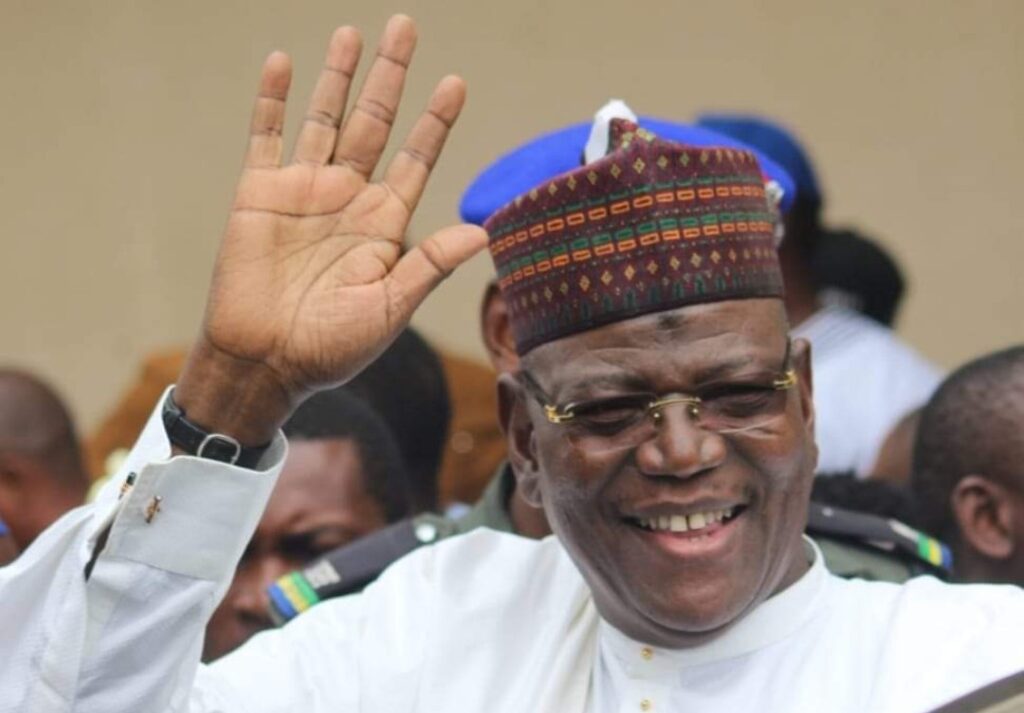
In a significant political disclosure, former Jigawa State Governor and ex-National Secretary of the defunct Social Democratic Party (SDP), Sule Lamido, has explained the rationale behind the selection of former President Olusegun Obasanjo as the preferred Yoruba candidate for the presidency in 1999. This revelation is detailed in Lamido’s recently released autobiography, Being True to Myself, officially launched on May 13.
In Chapter 9 of the book, titled “Abdulsalami’s Transition and Formation of the PDP”, Lamido stated that Obasanjo was chosen over prominent Yoruba politicians such as Chiefs Bola Ige, Olu Falae, and Abraham Adesanya in a calculated bid to ensure national unity during Nigeria’s transition from military to civilian rule.
According to Lamido, the Yoruba ethnic bloc initially proposed the trio of Falae, Ige, and Adesanya as suitable presidential candidates. However, the leaders of the emerging Peoples Democratic Party (PDP), including key retired military figures, assessed the situation and concluded that none of the three had the widespread appeal needed to serve as a unifying national figure.
2027 Presidency: Peter Obi Advised To Shun Atiku Ticket As PDP Faces Uncertainty
Why Obasanjo Emerged as the National Choice
Lamido emphasized that the primary objective was to find a candidate who could be accepted across Nigeria — a “Yoruba Nigerian President,” as opposed to a “President of the Nigerian Yoruba.” This distinction became a guiding principle during the deliberations.
He wrote, “The Yoruba saw through our moves and wanted to nominate one of three possible persons: Chiefs Olu Falae, Bola Ige, or Abraham Adesanya. But none of these could make a fair and effective president in Nigeria.”
Obasanjo, however, had two key advantages that set him apart. First, he had already earned national trust through his military and political conduct. Second, he had shown, historically, that he prioritized Nigeria’s unity above ethnic or regional interests.
Lamido highlighted Obasanjo’s military résumé, including his service as Chief of Staff, Supreme Headquarters under General Murtala Mohammed, and later as Head of State after Murtala’s assassination in 1976. These roles, he argued, gave Obasanjo the stature and credibility required to stabilize a transitioning democracy.
Legacy of Statesmanship: 1979 and Beyond
Another factor that cemented Obasanjo’s image as a national leader, according to Lamido, was his decision in 1979 to hand over power to Shehu Shagari of the National Party of Nigeria (NPN), despite widespread pressure to back fellow Yoruba leader Chief Obafemi Awolowo, who had narrowly lost the election. The move, though controversial among the Yoruba elite, demonstrated Obasanjo’s commitment to national unity.
“That singular act painted Obasanjo as a patriot who put national unity above ethnic loyalty,” Lamido wrote.
Resistance from Yoruba Political Establishment
Despite his national appeal, Obasanjo’s emergence as the PDP’s preferred candidate provoked backlash within his own ethnic base. Lamido acknowledged that many Yoruba leaders and voters viewed Obasanjo with suspicion, not only for his perceived abandonment of Yoruba interests in 1979 but also for his silence during the struggle to validate the annulled June 12, 1993 presidential election, which was widely believed to have been won by Chief MKO Abiola — another Yoruba leader from Abeokuta, Obasanjo’s hometown.
“Obasanjo and Abiola were bitter opponents, divided by temperament, ideology, and religion,” Lamido noted. “His refusal to support Abiola’s struggle to reclaim his mandate was seen as his second ‘offence’ after handing over to Shagari in 1979.”
Nonetheless, Lamido remained firm in his assessment that Obasanjo was the only Yoruba candidate with the necessary nationwide acceptance to take over leadership at such a delicate time in Nigeria’s history.
A Unifying Figure in a Fragile Transition
Lamido concluded that the selection of Obasanjo was not solely aimed at placating Yoruba grievances over the annulment of the June 12 election but was fundamentally about selecting a leader who could unify the country.
“The idea was not just to placate the Yoruba after June 12, but to unify Nigeria under a president with national credentials,” he asserted.
With this revelation, Lamido’s memoir offers a deeper insight into the high-level political calculations that shaped Nigeria’s return to democracy in 1999. It sheds light on how strategic decisions, often behind closed doors, are made with long-term national interest in mind — even when they come at the cost of regional popularity.













Leave a Comment
Your email address will not be published. Required fields are marked with *