
SunTrust Bank Executives Face Money Laundering Charges Over $12 Million Dealings Abuja, Nigeria – The Economic and Financial Crimes Commission (EFCC) has formally arraigned two top executives of SunTrust Bank Ltd before the Federal High Court in Abuja. The accused—Halima Buba, Managing Director/Chief Executive Officer, and Innocent Mbagwu, Executive Director/Chief Compliance Officer—are facing six-count
SunTrust Bank Executives Face Money Laundering Charges Over $12 Million Dealings
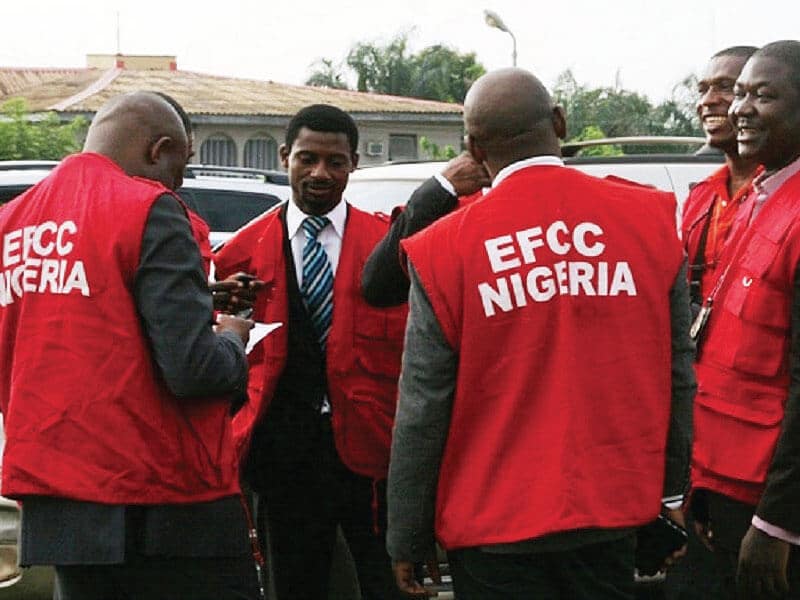
Abuja, Nigeria – The Economic and Financial Crimes Commission (EFCC) has formally arraigned two top executives of SunTrust Bank Ltd before the Federal High Court in Abuja. The accused—Halima Buba, Managing Director/Chief Executive Officer, and Innocent Mbagwu, Executive Director/Chief Compliance Officer—are facing six-count charges relating to alleged fraudulent financial activities totaling $12 million.
The case is being presided over by Justice Emeka Nwite, with proceedings revealing a deepening investigation into the activities of high-level banking officials suspected of violating Nigeria’s anti-money laundering laws.
Eight Family Members Killed In Eid Accident
Fraudulent Financial Dealings Spotlight Bank Executives
According to the EFCC’s indictment, Buba and Mbagwu are accused of aiding and abetting unauthorized cash transactions. Notably, on March 10, 2025, the duo allegedly facilitated a $3 million cash payment on behalf of one Femi Gbamgboye to Suleiman Muhammed Chiroma and his associates, all without channeling the transaction through a licensed financial institution. This act contravenes multiple sections of the Money Laundering (Prevention and Prohibition) Act, 2022, specifically sections 21(a), 2(1), and 19(1)(d), and is punishable under section 19(2)(b) of the same law.
In another incident captured under count three of the charge sheet, Buba and Mbagwu are alleged to have conspired to deliver another $3 million in cash to Mukhtar Miko, identified as an associate of Chiroma, on March 13, 2025, in Lagos. This too was purportedly done outside any regulated financial framework, intensifying the gravity of the case.
Upon arraignment, both defendants entered a plea of “not guilty” to all charges leveled against them.
Bail Granted Despite Legal Tug-of-War
Following the defendants’ plea, Rotimi Oyedepo, SAN, representing the EFCC, affirmed the prosecution’s readiness to commence the trial and emphasized the urgency of a fast-tracked hearing. However, the legal discourse quickly shifted focus to the matter of bail, prompted by a formal application previously filed by the defence on May 27, 2025.
J.J. Usman, SAN, counsel for the defence, pushed for the court to honor the bail requests already on file. In contrast, Oyedepo contested the validity of the application, arguing that the defendants had neither been arrested nor presented in court when they filed for bail—a requirement clearly stipulated under the Administration of Criminal Justice Act (ACJA).
Oyedepo labeled the existing application as procedurally flawed, criticizing what he described as a tactic by the accused to “seek judicial leniency from the comfort of their homes.”
Nonetheless, Justice Nwite ruled in favor of granting bail, imposing a stringent ₦100 million bond for each defendant. Conditions attached include the provision of one surety each—who must own landed property in Abuja—along with the submission of original property documents, international passports, and two recent passport photographs.
To ensure transparency and legitimacy, the court mandated verification of all documents and addresses before recognizing the sureties. Until these bail conditions are met, the defendants will remain in a correctional facility.
Trial Adjourned as Nation Watches Closely
The proceedings have been adjourned to July 17 and 18, 2025, setting the stage for a high-profile legal battle that may have broader implications for regulatory compliance within Nigeria’s banking sector.
The EFCC’s firm stance in this case aligns with the federal government’s wider anti-corruption mandate, particularly in the financial industry. As the case unfolds, stakeholders in the banking and legal sectors will be watching closely, especially considering the stature of the accused and the significant sums involved.
This case marks a serious test of Nigeria’s legal mechanisms for holding top-tier financial executives accountable for alleged financial crimes—a step many view as long overdue in strengthening the credibility and transparency of Nigeria’s financial institutions.















Leave a Comment
Your email address will not be published. Required fields are marked with *