
Dual Budget Chaos: Tinubu Govt, National Assembly Under Fire Over Fresh Extension of 2024 Capital Budget The Senate and House of Representatives have approved, for the second time, an extension to the capital component of Nigeria’s 2024 national budget—this time to December 31, 2025. The decision, made during Tuesday’s plenary sessions in both chambers, has
Dual Budget Chaos: Tinubu Govt, National Assembly Under Fire Over Fresh Extension of 2024 Capital Budget
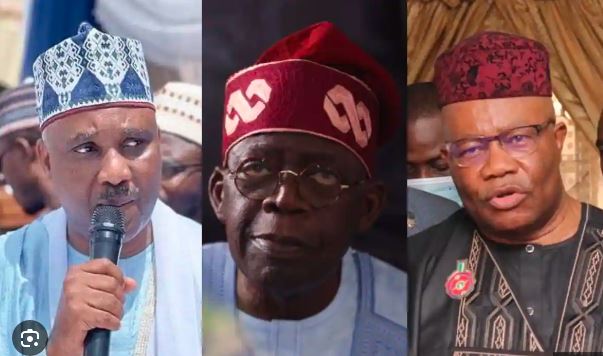
The Senate and House of Representatives have approved, for the second time, an extension to the capital component of Nigeria’s 2024 national budget—this time to December 31, 2025. The decision, made during Tuesday’s plenary sessions in both chambers, has triggered renewed accusations of poor fiscal discipline, weak execution capacity, and growing uncertainty in economic planning under President Bola Tinubu’s administration.
The extension, passed through an expedited legislative process, allows federal ministries, departments, and agencies (MDAs) to continue implementing capital projects captured in the 2024 budget alongside the already-passed 2025 fiscal plan, creating an unusual dual-budget scenario that experts fear will further destabilise Nigeria’s fragile economy.
PDP Crisis Deepens As Emergency NWC Meeting Follows INEC Dispute Over Leadership Legitimacy
Lawmakers Justify Extension Amid Execution Lags
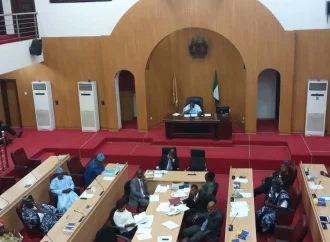
At the Senate plenary, Deputy Senate President Barau Jibrin announced the extension after the appropriation amendment bill passed its first, second, and third readings. Chairman of the Senate Committee on Appropriations, Senator Olamilekan Adeola, argued that the extension was vital to allow the federal government to complete ongoing capital projects and avoid leaving them abandoned across the country.
Adeola admitted that the Nigerian government lacks the fiscal resources to fully implement budgeted expenditures within a single calendar year, necessitating staggered implementation over longer periods.
In the House of Representatives, a similar bill was presented by Deputy Majority Leader Ibrahim Halims, seeking to extend the capital budget from June 30, 2025, to December 31, 2025. Speaker Tajudeen Abbas described the move as essential, citing low levels of implementation of the 2024 capital projects thus far.
The 2024 budget had initially been extended from December 31, 2024, to June 30, 2025, based on President Tinubu’s request to complete key infrastructure projects. However, with the new deadline looming and project completion still far off, lawmakers felt compelled to approve yet another extension—effectively creating an overlap between two distinct fiscal years.
Budget Paralysis: Ministries Still Operating Under 2024 Guidelines
A senior official at a federal ministry, speaking on condition of anonymity, revealed that nearly seven months into 2025, operations are still being executed under the 2024 budget. The official said the implementation of the 2025 budget is yet to commence, causing delayed payments to staff and contractors.
“All of our expenses this year have come from the 2024 budget. Duty travel allowances haven’t been paid, and contractors are owed. We expect the 2025 budget to start by August—hopefully,” the source disclosed.
Confirming recent disbursements, Mr. Bawa Mokwa, Director of Press and Public Relations at the Office of the Accountant General, noted that some capital funds from the 2024 budget were released just last week. He added that 2025 implementation would only begin once the 2024 capital component is formally closed.
Experts Condemn Fiscal Indiscipline, Poor Planning
Top economists and financial analysts have not held back in condemning the development. Ayo Teriba, CEO of Economic Associates, said Nigeria is now falling into a dangerous pattern of habitual budget extensions.
“It’s becoming a habit. You don’t need 24 months to execute a budget meant for 12. The problem is simple—there’s no money. We need to confront that reality and plan accordingly,” he said.
Chief Economist at SPM Professionals, Paul Alaje, warned that running two budgets concurrently will increase money supply and could spike inflation.
“As 2024 and 2025 projects are implemented simultaneously, the government will inject more liquidity into the system. This may be good for contractors but could inflate prices,” he noted. Alaje urged authorities to restrict such extensions to Q1 of a new year at most, ensuring predictability and manageable inflation expectations.
Professor Akpan Ekpo, a respected economist and former Vice Chancellor of the University of Uyo, also condemned the dual-budget scenario, calling it an embarrassment and a reflection of poor forecasting models.
“The capital budget is critical to driving growth and employment. But having two budgets running simultaneously shows poor fiscal planning. It will affect development, worsen stagflation, and deter serious investors,” he warned.
Ekpo added that repeated extensions are not only inflationary but signal institutional incompetence in budgeting and project execution.
Revenue Shortfalls, Unrealistic Targets Undermine Performance
Muda Yusuf, CEO of the Centre for the Promotion of Private Enterprise, linked the poor performance of capital projects to unrealistic revenue assumptions. He noted that 2024 oil revenues underperformed due to failed output targets and the negative impact of forward crude sales.
Yusuf stressed that Nigeria’s capital budgets have always suffered from weak performance, and 2024 is no different. “Ambitious budgets based on faulty assumptions only worsen the deficit problem. Until revenue projections are realistic and project execution capacity improves, these extensions will continue,” he said.
A Crisis of Credibility and Confidence
As Nigeria navigates another mid-year fiscal quagmire, questions are growing over the Tinubu administration’s ability to restore financial discipline and credibility. The decision to extend the 2024 capital budget for a second time raises critical concerns about the nation’s public finance strategy, project management capacity, and macroeconomic stability.
With the 2025 budget implementation still in limbo and inflationary pressures mounting, analysts say urgent reforms are needed to align Nigeria’s fiscal planning with economic realities. Until then, the country may remain trapped in a vicious cycle of delayed execution, rising debt, and eroding public trust.










Leave a Comment
Your email address will not be published. Required fields are marked with *