
“Tinubu Warns Governors on Land Approvals, Champions Legacy Infrastructure Projects” In a determined call for coordination between federal and state governments, President Bola Tinubu has urged state governors to avoid issuing planning approvals for land without proper consultation with the Federal Ministry of Works and the Surveyor General of the Federation. The appeal was
“Tinubu Warns Governors on Land Approvals, Champions Legacy Infrastructure Projects”
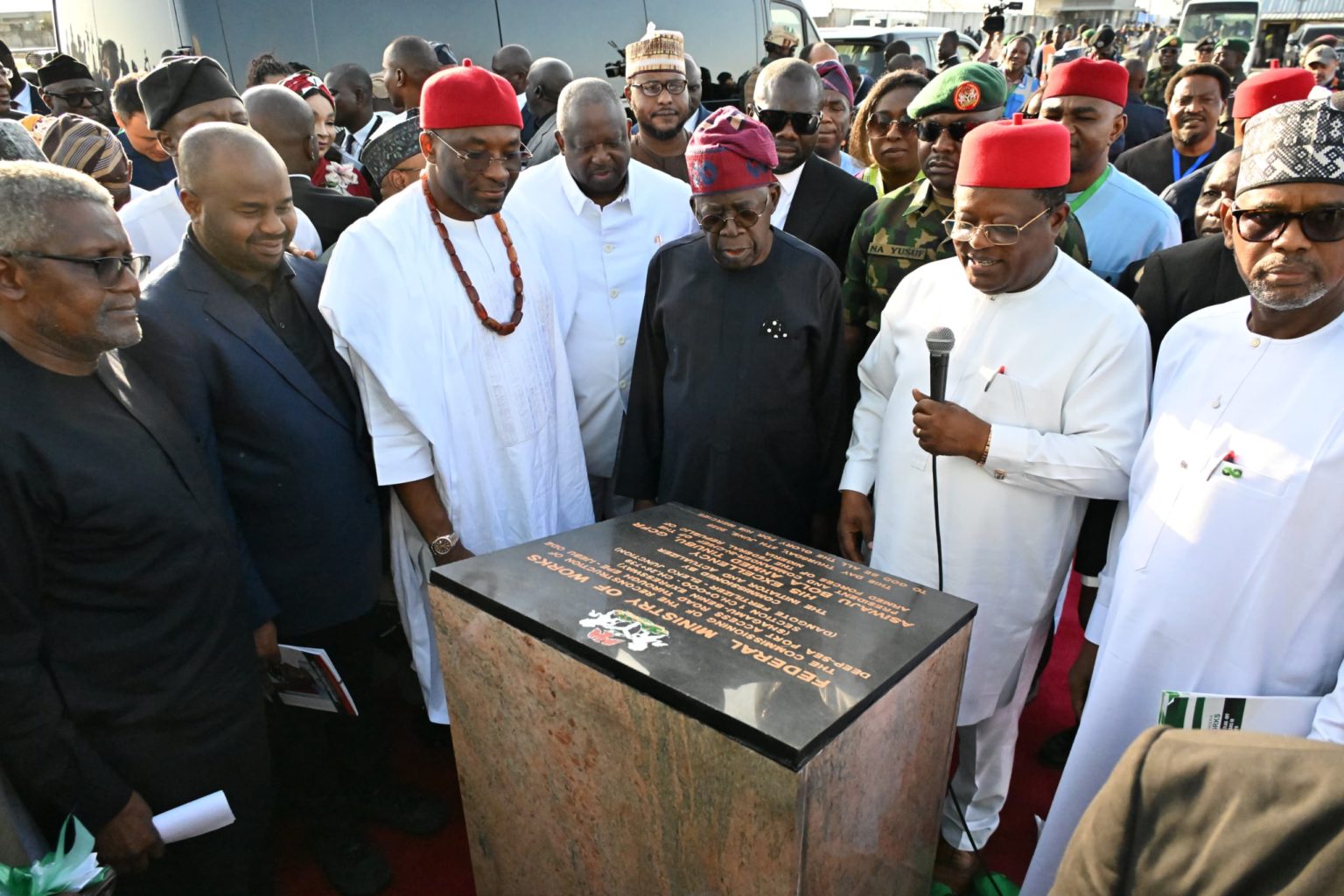
In a determined call for coordination between federal and state governments, President Bola Tinubu has urged state governors to avoid issuing planning approvals for land without proper consultation with the Federal Ministry of Works and the Surveyor General of the Federation. The appeal was made on Thursday during the inauguration of the access road to the Lekki Deep Sea Port, a critical infrastructure hub within the Lagos Free Trade Zone.
Tinubu stressed that improper land approvals were jeopardizing Nigeria’s strategic infrastructure expansion and called for unified planning to protect investments in national development.
“Musk vs. Trump: Former Allies Turn Adversaries in Explosive Political Clash”
Setback Guidelines and the “No More Illegal Approvals” Order
Setbacks—the required distances between structures and public roads—have become a central issue in Tinubu’s infrastructure strategy. Highlighting the importance of ensuring clear right-of-way for future expansions, Tinubu said:
“I have directed the Honourable Minister of Works to work with the Surveyor General of the Federation and all the state governors on these legacy projects’ route bypass to procure reasonable setbacks for land future expansion, building of infrastructures to enhance road architecture, and return on investment.”
In a stern warning to state governments, Tinubu made it clear that any approvals granted in violation of these guidelines would be annulled. “We will revoke all those approvals, even on the setbacks already given,” he said. “No more planning approval for those unapproved islands being created illegally.”
This move signals the Federal Government’s intent to assert authority over federal infrastructure planning, which has often been hindered by fragmented approvals and urban encroachments.
Legacy Projects in Focus: Lagos-Calabar, Sokoto-Badagry, and Beyond
President Tinubu’s speech also offered an extensive update on the Federal Government’s major road projects, dismissing critics and clarifying misconceptions about the scope and structure of contract awards.
“The completed 30 km segment of the Lagos-Calabar Coastal Highway is part of the 47.7 km, six-lane Section I contract, not a wholesale 750 km contract as some have suggested,” he explained. “No contractor has been awarded the entire corridor.”
He described the administration’s approach as “systematic, transparent, and section-based,” aimed at ensuring accountability and efficiency. The Lagos-Calabar Coastal Highway is designed to boost coastal connectivity and economic growth across southern Nigeria, and work is already progressing across multiple sections.
Tinubu also spotlighted the revival of the Sokoto-Badagry Superhighway, a route first proposed during the Shagari administration over four decades ago. The highway spans Sokoto, Kebbi, Niger, Kwara, Oyo, Ogun, and Lagos—providing vital links for agriculture, trade, and even wind energy generation.
“We have completed over 10 km of the 258 km three-lane carriageway in Kebbi,” the President said, adding that the second carriageway was being flagged off. In Sokoto, he noted, work had begun on a 120 km single carriageway, with over 10 km already completed and more segments underway.
Expanding Nigeria’s Trade Arteries
Among the long-term visionary projects highlighted was the Trans-Sahara Trade Route, which will connect Calabar to Abuja through Ebonyi, Benue, Kogi, and Nasarawa. Tinubu confirmed that construction on several parts of the corridor is advancing steadily.
He also expressed satisfaction with developments in Cross River and Akwa Ibom, where he has ordered additional segments of the Lagos-Calabar Coastal Highway to be designed and awarded for construction.
These projects are part of a broader federal vision to stimulate national economic growth by linking farmlands, trade corridors, and industrial zones across regions—maximizing Nigeria’s natural and human resources.
Private Sector Support and Presidential Praise
Acknowledging the efforts of private partners, President Tinubu commended companies like Hitech Construction, Dangote Industries, and BUA Group for their roles in road development. He also toured the “massive” Dangote Refinery site, which he described as a hallmark of private sector commitment to national growth.
Africa’s wealthiest businessman, Aliko Dangote, thanked the President for his vision and leadership, pledging continued support from the private sector for Nigeria’s infrastructure renaissance. Also in attendance were the governors of Kaduna, Abia, Enugu, Borno, and the deputy governor of Lagos State. Business leaders such as Femi Otedola, Abdulsamad Rabiu, Jim Ovia, and other dignitaries joined the inauguration ceremony.
As Tinubu pushes forward with his ambitious infrastructure agenda, his administration is making it clear that coordination, compliance, and clarity in land-use approvals are essential ingredients for Nigeria’s transformation. With legacy projects rapidly taking shape and private sector support rallying behind him, the message is simple: no shortcuts, no compromises—only progress.










Leave a Comment
Your email address will not be published. Required fields are marked with *