
UN Halts Humanitarian Air Service in Nigeria’s Northeast Amid Funding Shortage The United Nations (UN) has suspended a vital humanitarian air service in Nigeria’s troubled northeast, citing severe funding shortages that threaten the delivery of life-saving assistance to conflict-affected communities. The UN Humanitarian Air Service (UNHAS), operated by the World Food Programme (WFP), officially ended
UN Halts Humanitarian Air Service in Nigeria’s Northeast Amid Funding Shortage
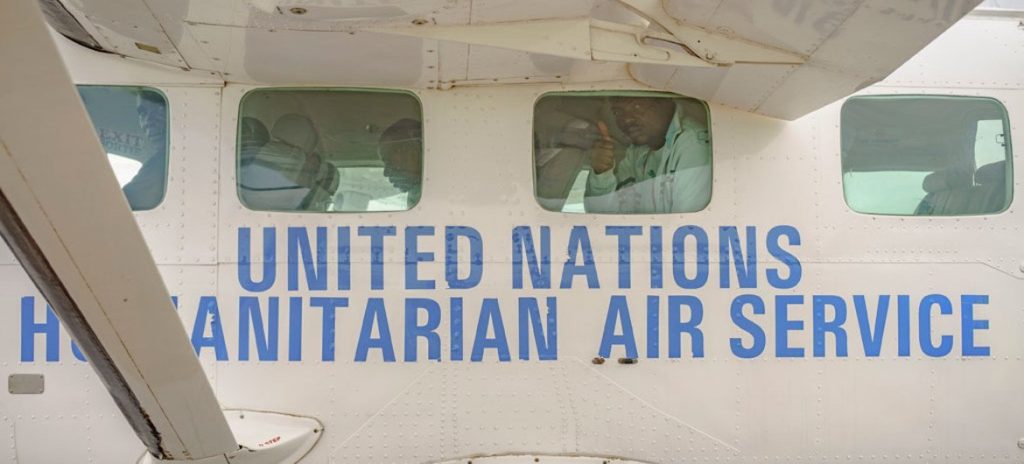
The United Nations (UN) has suspended a vital humanitarian air service in Nigeria’s troubled northeast, citing severe funding shortages that threaten the delivery of life-saving assistance to conflict-affected communities. The UN Humanitarian Air Service (UNHAS), operated by the World Food Programme (WFP), officially ended its fixed-wing operations last week after nearly a decade of serving Borno and Yobe states, two epicenters of Nigeria’s long-running insurgency.
For years, UNHAS has provided a critical lifeline to aid workers and relief supplies in areas that remain largely inaccessible due to insecurity and poor infrastructure. According to UN spokesperson Stéphane Dujarric, more than 9,000 passengers were transported in 2024 alone, with 4,500 humanitarian staff already relying on the service this year to reach conflict-hit areas.
“Road transport is extremely dangerous in northeast Nigeria due to ongoing insecurity. For nine years, UNHAS has enabled humanitarian staff, medical supplies, and critical cargo to reach vulnerable populations. Without it, aid operations face a severe setback,” Dujarric told reporters in New York.
FCCPC Introduces DEON Regulations To Curb Abuses In Nigeria’s Digital Lending Sector
$5.4 Million Needed to Keep UNHAS Operational
The suspension comes after repeated warnings from the UN that at least $5.4 million is urgently required to sustain the service for the next six months. The funding shortfall has forced the grounding of flights, further complicating relief efforts in a region where over 16 years of conflict have left millions displaced and dependent on humanitarian assistance.
“UNHAS cannot continue without funding,” Dujarric emphasized. “Without this $5.4 million, the humanitarian response in northeast Nigeria risks being cut off from the very people it is meant to serve.”
The crisis comes amid broader financial constraints faced by the World Food Programme, which has already warned of possible cuts to emergency food and nutrition aid. In July, WFP announced that it might be forced to suspend food assistance for 1.3 million people in Nigeria’s northeast due to dwindling resources.
Margot van der Velden, WFP’s Regional Director for West and Central Africa, echoed the urgency: “We urgently need $5.4 million just to sustain food and nutrition operations in the region for the next six months. Without it, the humanitarian pipeline will collapse.”
Nigeria’s Support Insufficient Without Global Donors
While the Nigerian government has become the largest financier of the emergency response, the UN insists that international contributions remain indispensable to sustain large-scale operations.
“The humanitarian response risks collapse without donor support,” Dujarric reiterated. “Critical aid pipelines will be cut off, leaving vulnerable families at risk of hunger, displacement, and exploitation by extremist groups.”
The closure of air services has raised concerns over worsening conditions for communities already struggling with hunger, violence, and forced migration. Humanitarian workers have also warned that the loss of safe air access will isolate many remote towns, leaving civilians without life-saving food, medical care, and protection.
According to the UN, the absence of air links could push families into desperate survival strategies, including migrating through unsafe routes or falling prey to extremist groups exploiting the crisis.
Global Funding Strains Deepen the Crisis
The funding crisis in Nigeria reflects a broader trend of shrinking donor budgets worldwide. Economic pressures and multiple global emergencies—ranging from conflicts in Gaza and Sudan to the war in Ukraine—have stretched humanitarian financing to its limits.
In this context, Nigeria’s northeast, already grappling with insurgency and instability, risks becoming a forgotten crisis. The UN has warned that the termination of the air service may further isolate already fragile communities at a time when they need international solidarity the most.
“For millions displaced by insurgency, losing this vital air bridge could mean losing access to life-saving support,” the UN said in its statement. “The humanitarian consequences will be devastating unless immediate funding is secured.”
The halt of the UNHAS air service in northeast Nigeria marks a critical setback for humanitarian operations in one of Africa’s most protracted crises. With $5.4 million urgently needed, the fate of thousands of aid workers and millions of vulnerable civilians hangs in the balance. Unless international donors step forward quickly, communities in Borno and Yobe may find themselves further cut off from essential relief, deepening an already dire humanitarian emergency.
















Leave a Comment
Your email address will not be published. Required fields are marked with *