
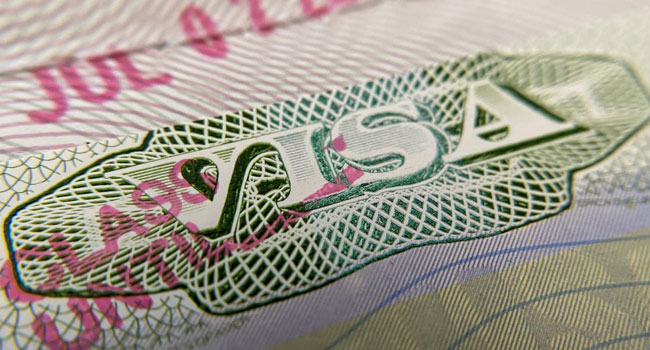
US Suspends Student Visa Processing Under Rubio’s Order, ‘Japa’ Movement Face Setback In a move that could significantly alter global student mobility and impact thousands of aspiring international scholars, US Secretary of State Marco Rubio has ordered an immediate suspension of student visa processing. The directive, communicated via an internal State Department cable on Tuesday,
US Suspends Student Visa Processing Under Rubio’s Order, ‘Japa’ Movement Face Setback
In a move that could significantly alter global student mobility and impact thousands of aspiring international scholars, US Secretary of State Marco Rubio has ordered an immediate suspension of student visa processing. The directive, communicated via an internal State Department cable on Tuesday, comes as part of the Trump administration’s efforts to tighten vetting measures, including expanded scrutiny of applicants’ social media activity.
The cable, obtained by AFP, instructed US embassies and consulates worldwide to halt “any additional student or exchange visa… appointment capacity until further guidance is issued.” Although framed as a temporary suspension, the directive’s vague timeline has created anxiety among students and academic institutions alike. The communication indicates that updated guidelines will be disseminated in the “coming days,” yet US consular services are already grappling with significant backlogs in visa processing due to high demand.
Tinubu’s $24.14bn Loan Request Triggers Concerns As Nigeria’s Debt Nears ₦183tn
A Blow to International Students and US Universities
The suspension will affect thousands of prospective international students, including a substantial number from Nigeria—a country that has emerged as a leading source of foreign students in the United States. For many Nigerian youths, studying in the US forms part of the broader “Japa” migration trend, a socio-economic movement driven by the pursuit of better education, job security, and quality of life abroad.
The United States, alongside the United Kingdom and Canada, has traditionally been a top destination for Nigerian students. However, this latest restriction threatens to disrupt academic plans and delay or derail dreams of studying in American universities. More broadly, it could strain the financial ecosystem of US higher education institutions, many of which rely heavily on tuition from international students.
The Trump administration’s decision to temporarily bar even Harvard University from admitting non-Americans marks a particularly drastic shift. It signals a deepening of the administration’s immigration stance, now extending even into elite educational spaces previously seen as insulated from such policy turbulence.
Expanded Social Media Vetting at the Core
Central to the new restrictions is a directive to implement intensified scrutiny of social media activity for all student and exchange visa applicants. According to the cable, the US State Department plans to provide embassies with new vetting criteria that would allow immigration officers to review online content as part of the decision-making process.
State Department spokesperson Tammy Bruce, when pressed for clarification, declined to comment on the specifics of the cable but reinforced the administration’s broader security goals. “We take very seriously the process of vetting who it is that comes into the country,” she said.
“It’s a goal, as stated by the president and Secretary Rubio, to make sure that people who are here understand what the law is, that they don’t have any criminal intent, and that they are going to be contributors to the experience here,” Bruce added.
When asked whether prospective students could expect visa processing to resume in time for the autumn semester, Bruce offered a cautious and non-committal response: “If you’re going to be applying for a visa, follow the normal process, the normal steps, and expect to be looked at.”
Controversial Use of Legal Power and Allegations of Targeting
Rubio has defended his decision under an obscure legal provision that empowers the Secretary of State to revoke visas based on concerns related to US foreign policy interests. Speaking during a Senate hearing last week, Rubio revealed that he had revoked “thousands” of visas since the Trump administration took office in January 2025.
A number of these revocations have drawn sharp criticism from civil rights groups and academic communities. Some of the most prominent cases involve student activists engaged in protests over the Israel-Gaza conflict. Rubio and other Trump administration officials have accused some of these individuals of harboring anti-Semitic views—allegations that have been strongly denied by those affected.
This controversial move is perceived by many as an attempt to stifle political expression and limit the presence of dissenting voices in American academia, further exacerbating the tension between US immigration policy and international human rights norms.
Impact on the ‘Japa’ Wave and Nigeria’s Youth
For Nigeria, the implications are particularly concerning. The country is in the midst of a brain drain, as young professionals and students seek better opportunities abroad amid domestic economic instability. The suspension of US student visas poses a significant barrier to this movement and may force many to reconsider their migration plans or shift their focus to other destinations.
The educational disruption also has broader socio-economic consequences. Families that have invested heavily in securing overseas education for their children may face financial loss and uncertainty. Nigerian universities, already struggling with underfunding and frequent strikes, may be ill-prepared to absorb students whose plans to study abroad are suddenly upended.
Uncertain Future for International Education
As the Trump administration presses forward with its hardline immigration agenda, the suspension of student visas is the latest sign that international education is no longer immune to geopolitical pressures. With embassies awaiting new guidance and students caught in the crossfire, the future of foreign study in the US remains uncertain.
While Rubio and the administration defend the measures as necessary for national security and public policy, critics argue that the broad scope and hasty execution risk damaging the United States’ longstanding reputation as a global leader in higher education.
For thousands of students across Nigeria and the world, the wait for clarity continues.










Leave a Comment
Your email address will not be published. Required fields are marked with *