
Wike Slams ₦5 Million Fines on Ganduje, Ex-Governors, CJNs Over Abuja Property Misuse The Minister of the Federal Capital Territory (FCT), Nyesom Wike, has imposed a ₦5 million fine each on several prominent Nigerians, including former All Progressives Congress (APC) National Chairman, Abdullahi Ganduje, for allegedly converting their properties to unauthorised uses in Abuja. The
Wike Slams ₦5 Million Fines on Ganduje, Ex-Governors, CJNs Over Abuja Property Misuse
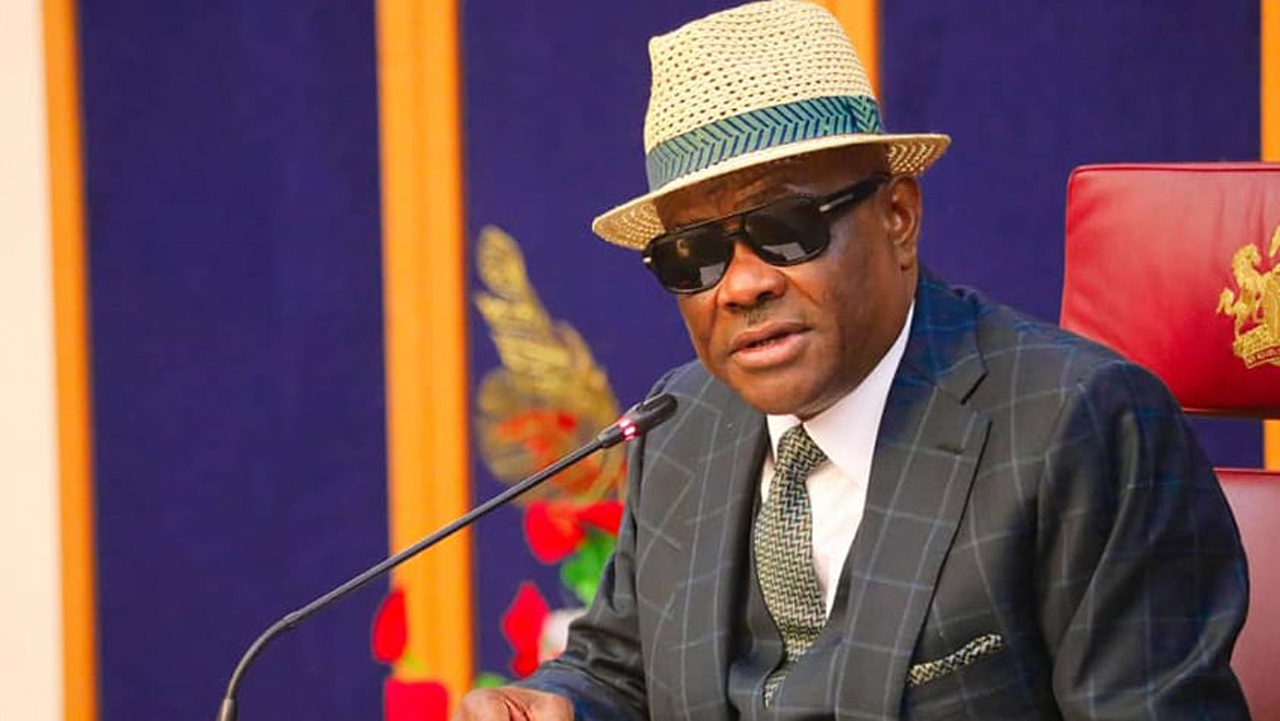
The Minister of the Federal Capital Territory (FCT), Nyesom Wike, has imposed a ₦5 million fine each on several prominent Nigerians, including former All Progressives Congress (APC) National Chairman, Abdullahi Ganduje, for allegedly converting their properties to unauthorised uses in Abuja.
The sanctions, which also affect deceased statesmen, former governors, ex-Chief Justices of Nigeria, corporate bodies, and even government institutions, stem from alleged breaches of the Right of Occupancy conditions under which the properties were originally allocated.
According to a paid advertisement published in national dailies, the FCT Administration (FCTA) directed all affected property owners to pay the violation penalty within 30 days, with a strict deadline of September 10, 2025.
Senate Rejects Natasha Akpoti-Uduaghan’s Bid To Resume Legislative Duties
A Crackdown Across Prime Districts
The exercise covers properties across 15 major streets in Maitama, Asokoro, Wuse 2, Garki 1, and Garki 2—some of Abuja’s most prestigious districts.
Wike further approved the issuance of new title documents reflecting the updated land use for a fresh 99-year tenure, provided the owners meet all stipulated conditions, including payment of the fines.
In its publication, the FCTA stressed that compliance with land use regulations was non-negotiable. “Allottees must comply with the conditions of the right of occupancy. Any violation attracts consequences,” the notice read.
High-Profile Cases of Violation
Among those sanctioned is Abdullahi Ganduje, who allegedly converted a residence at Adetokunbo Ademola Street in Wuse 2 into a banking hall without obtaining official approval.
The late General Tunde Idiagbon was also cited in the report. His property at Gana Street, Maitama, was said to have been turned into Serendib Hotel and Suites.
Former Osun State Governor, Prince Olagunsoye Oyinlola, was sanctioned for allegedly redesigning a residential property at Yakubu Gowon Crescent, Asokoro, into Zhouyi Hotel.
Two former Chief Justices of Nigeria were also indicted. Justice Atanda Fatai-Williams’ residence in Maitama was reportedly converted into a wood factory and shopping complex, while Justice Aloma Mariam Mukhtar allegedly turned her residential property into a supermarket.
Other Prominent Names on the List
Several other influential figures and institutions were listed among violators of Abuja’s land use framework:
- Senator Shehu Sani – for allegedly converting a residence at Aminu Kano Crescent into a showroom.
- Okauru Okauru, former DG of the Governors’ Forum – for using a residence as a showroom.
- Lt. Gen. Rufus Kupolati (retd.) – accused of turning a residential property into a gym.
- Abba Gana, former FCT minister – for converting a Maitama residence into a shopping mall.
- Nigerian National Petroleum Company (NNPC) – for converting a residential building into NNPC Medical Services.
- Nigeria Police Force – for allegedly converting a public space into a facility for the Police Officers’ Wives Association (POWA).
The scope of the sanctions highlights the widespread disregard for Abuja’s master plan, cutting across political leaders, retired military officers, and state institutions.
Restoring the Abuja Master Plan
Since assuming office, Nyesom Wike has consistently vowed to restore Abuja’s original master plan, which has long been undermined by indiscriminate property conversions and illegal structures. The former Rivers State governor has launched a series of demolition and penalty enforcement exercises targeting both ordinary residents and high-ranking Nigerians.
According to the FCTA, the latest sanctions form part of a broader review of land use compliance in the capital city. Authorities warned that while fines may apply in some cases, more serious consequences—such as revocation of titles—remain on the table for persistent violators.
Wike, in previous public statements, made it clear that his administration would not hesitate to apply the law regardless of the individuals involved. “There are no sacred cows in Abuja. Whether you are a former president, governor, or minister, once you violate the land use law, you must face the consequences,” he declared in a recent briefing.
Public Reaction and Implications
The development has sparked conversations among Abuja residents and political observers, many of whom believe that the penalties are a step toward restoring order in the city’s urban planning. Critics, however, argue that successive administrations failed to enforce regulations strictly, thereby encouraging decades of abuse of land allocations.
Legal experts suggest that while the fines may compel compliance, affected property owners could challenge the sanctions in court, especially given the high-profile names involved. Others argue that the imposition of fresh 99-year tenure titles after payment of fines might serve as a compromise between strict enforcement and economic realities.
For institutions such as the NNPC and the Police, the sanctions raise deeper questions about government accountability, since state agencies themselves are expected to model compliance with the law.
A Strong Warning for the Future
The ₦5 million penalty, while significant, may not pose a major financial burden for the wealthy individuals and institutions involved. However, the symbolic weight of the sanctions sends a clear warning that Abuja’s urban laws will no longer be treated with impunity.
By setting a deadline of September 10, the FCTA has drawn a firm line, forcing property owners to either comply with payment and title regularisation or face the risk of losing their rights entirely.
As the countdown to the deadline begins, attention will remain fixed on how Nigeria’s political elite, legal giants, and corporate bodies respond to the enforcement drive. What is certain is that Wike’s determination to restore Abuja’s master plan has now entered a more decisive—and controversial—phase.












Leave a Comment
Your email address will not be published. Required fields are marked with *