
Tension Brews in Oyo Over Bill to Crown Alaafin as Permanent Chair of Obas’ Council A contentious bill currently progressing through the Oyo State House of Assembly has sparked widespread outrage among traditional rulers and stakeholders across Yorubaland. The bill, which seeks to establish the Alaafin of Oyo as the permanent Chairman of the Council
Tension Brews in Oyo Over Bill to Crown Alaafin as Permanent Chair of Obas’ Council
A contentious bill currently progressing through the Oyo State House of Assembly has sparked widespread outrage among traditional rulers and stakeholders across Yorubaland. The bill, which seeks to establish the Alaafin of Oyo as the permanent Chairman of the Council of Obas and Chiefs in the state, has been described as a move that could fracture the long-standing harmony among royal institutions in the region.
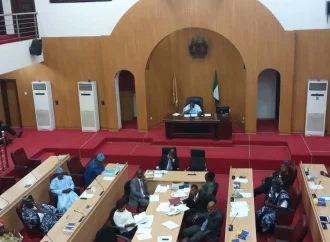
Passed through its second reading on Thursday, May 15, under the leadership of Speaker Adebo Ogundoyin, the bill has now been referred to the House Committee on Local Government and Chieftaincy Matters for further review. However, the legislative proposal is already stoking tensions among key traditional leaders, particularly from Ibadan and Ogbomoso.
NDPHC Adds 625MW To National Grid Despite N600bn Debt And Stranded Power Challenges
According to the amendment, in the absence of the Alaafin, the Olubadan of Ibadanland would act as chair, and if both are unavailable, the Soun of Ogbomoso would step in. Though seemingly hierarchical, critics argue this arrangement upends the deeply respected tradition of rotational leadership among monarchs in Oyo State.
Stakeholders Warn of Looming Crisis as Rotational Leadership Tradition Faces Threat
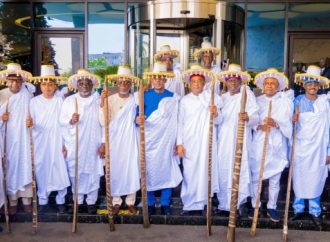
The backlash has been swift and emphatic. In a joint statement issued in Ibadan on Monday, a coalition of traditional leaders, community heads, and prominent indigenes of Ibadanland and Ogbomosoland voiced their unified opposition to the bill. The signatories included Mogajis, Baales, monarchs, the Central Council of Ibadan Indigenes (CCII), the Ibadan Compounds Peace Initiative (ICPI), and respected individuals from the Soun Ruling Houses.
Describing the bill as a “distortion of historical tradition,” the stakeholders warned that the attempt to make the Alaafin the permanent chair would erode the balance of power and respect that has sustained peace among royal fathers in the state. They called it an affront to other monarchs and a politically motivated overreach that could trigger deep-seated animosities.
“The chairmanship of the Council of Obas and Chiefs has always been rotational, and this practice must continue. It ensures fairness, mutual respect, and unity across the different traditional councils,” the statement read.
President of the Ibadan Mogajis, Asimiyu Ariori, and ICPI Coordinator, Nurudeen Akinade, were among those who emphasized that their objection was not borne out of any personal grudge or rivalry but was instead rooted in the need to preserve the cultural equilibrium and long-standing harmony among royal stools in Oyo State.
“Our position is not driven by personal interest,” Ariori said. “It is rooted in historical precedent and a genuine desire to ensure unity and peace across Oyo State.”
The rotational system has long been seen as a diplomatic innovation that acknowledges the historical importance of each royal institution, while avoiding a perception of dominance by any single traditional authority. It promotes inclusivity and provides an equal platform for various monarchs to influence policy and cultural matters within the state.
The stakeholders have now urged the Oyo State Assembly to tread carefully, warning that pushing through with the bill could plunge the state into an avoidable crisis. They expressed concern that enshrining a fixed leadership position for the Alaafin could create a hierarchy that would be seen as undermining the prestige of other ancient thrones such as the Olubadan and Soun.
“The Assembly must avoid creating unnecessary tension,” said Nurudeen Akinade. “Our lawmakers should respect tradition and maintain the rotational model, which has worked perfectly for decades. The peace and unity of our state should not be sacrificed on the altar of politics.”
Political observers note that this controversy comes at a sensitive time for Oyo State, as various factions begin posturing ahead of upcoming local and state elections. The dispute threatens to shift focus away from governance and economic development, potentially plunging the state into a divisive cultural and political battle.
As the House Committee on Local Government and Chieftaincy Matters continues to deliberate on the bill, many across Yorubaland will be watching closely. The decision taken by the Assembly in the coming weeks may not only determine the future of the Council of Obas and Chiefs but could also define the trajectory of inter-royal relationships in Oyo State for generations.
The call for caution is now ringing louder than ever, with traditional voices warning that peace must never be taken for granted—especially in a region where culture and heritage are deeply intertwined with governance.













Leave a Comment
Your email address will not be published. Required fields are marked with *