
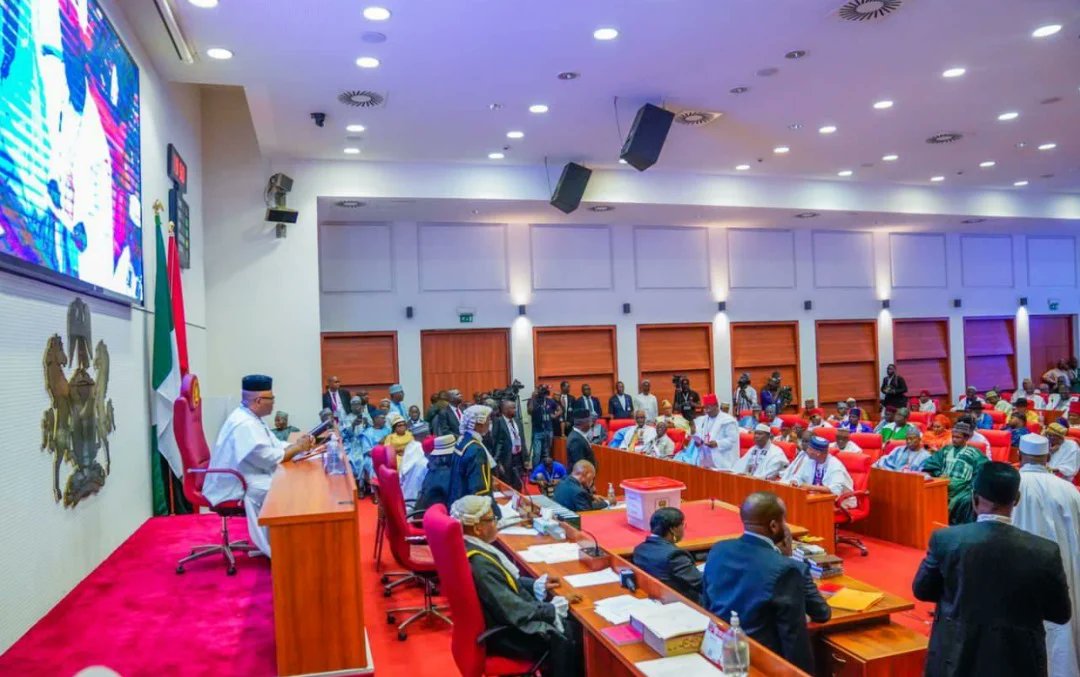
The Nigerian Senate has once again failed to pass the long-awaited Electoral Act Amendment Bill, despite spending more than four hours in a closed-door session on the matter. The delay comes shortly after a protest by the Kimpact Development Initiative (KDI) and other civil society groups, who had urged lawmakers to urgently conclude work
The Nigerian Senate has once again failed to pass the long-awaited Electoral Act Amendment Bill, despite spending more than four hours in a closed-door session on the matter.
The delay comes shortly after a protest by the Kimpact Development Initiative (KDI) and other civil society groups, who had urged lawmakers to urgently conclude work on the bill to strengthen Nigeria’s electoral process ahead of future elections.
Senate Moves To Increase Federal Government Share In Revenue Formula
Tuesday’s outcome marks the third unsuccessful attempt in just two weeks to finalise deliberations on the proposed amendment, raising fresh concerns about the Senate’s commitment to delivering key electoral reforms.
The repeated postponements have sparked criticism from observers and stakeholders who fear that further delays could undermine preparations for upcoming polls and weaken public confidence in the electoral system.
If you want, I can also add quotes, background on the bill’s key provisions, or tighten it into a shorter breaking-news version.After KDI Protest, Senate Yet to Pass Electoral Act Amendment Bill After Closed-Door Talks
The Nigerian Senate has again failed to pass the long-awaited Electoral Act Amendment Bill, despite holding more than four hours of deliberations behind closed doors.
The development comes shortly after the Kimpact Development Initiative (KDI) and other civil society organisations staged a protest at the National Assembly, demanding swift passage of the bill to strengthen Nigeria’s electoral system ahead of future elections.
Tuesday’s outcome marks the third unsuccessful attempt within two weeks to conclude consideration of the proposed legislation, further delaying critical electoral reforms.
The amendment bill is expected to address key issues in Nigeria’s electoral framework, including transparency in vote transmission, dispute resolution, and improvements in election management by the Independent National Electoral Commission (INEC).
Observers warn that continued postponements could affect preparations for upcoming elections and weaken public confidence in the country’s democratic process.














Leave a Comment
Your email address will not be published. Required fields are marked with *