
Global Airlines Cancel and Reroute Flights Amid Middle East Airspace Closures Following Israeli Strikes on Iran Global air travel was thrown into disarray on Friday as several major airlines cancelled or rerouted flights to Middle Eastern destinations following a surge in regional tensions sparked by Israeli military strikes on Iranian facilities. The escalation has
Global Airlines Cancel and Reroute Flights Amid Middle East Airspace Closures Following Israeli Strikes on Iran
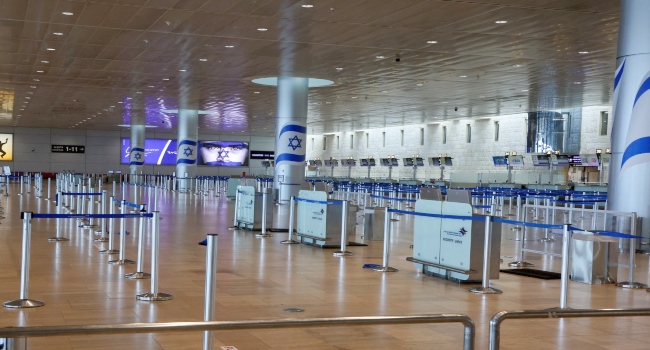
Global air travel was thrown into disarray on Friday as several major airlines cancelled or rerouted flights to Middle Eastern destinations following a surge in regional tensions sparked by Israeli military strikes on Iranian facilities. The escalation has prompted the closure of airspace in Israel, Iran, Iraq, Jordan, and Syria, severely affecting flight operations across the region.
The disruptions come amid a dangerous escalation in hostilities between Israel and Iran, after Israeli forces reportedly struck military and nuclear sites in Iran. Tehran retaliated by launching drones, intensifying fears of a broader regional conflict that could impact global aviation and geopolitical stability.
Presidency Denies Awarding National Honours To Aisha Yesufu, “Fake News”
Major Airlines Halt Operations to Affected Countries
Emirates Airlines, the Middle East’s largest carrier, was among the first to announce cancellations of flights to and from Iraq, Jordan, Lebanon, and Iran, citing the rapidly evolving security situation.
Qatar Airways, another heavyweight in regional aviation, also confirmed it had “temporarily cancelled flights to Iran and Iraq” due to escalating tensions and the associated risks of flying over hostile or uncertain airspace.
Europe’s major carriers quickly followed suit. Air France announced a suspension of all flights to and from Tel Aviv, citing the closure of Israeli airspace. A spokesperson for the French airline told AFP that the airline was monitoring the situation in real-time and prioritizing “the safety of its customers and crews.”
Lufthansa Group, the German aviation giant, extended its own flight suspensions to Tehran and Tel Aviv until at least the end of July 2025, reflecting concerns that the situation may not stabilize quickly.
Flights Rerouted Mid-Air Amid Heightened Tensions
The fallout also reached the skies over South Asia and Europe, with Air India forced to divert or cancel at least 16 flights. Routes between India and major Western destinations like London, Canada, and the United States were either rerouted or turned back after the Israeli strikes began.
According to Flight Aware, a leading aircraft tracking platform, Air India’s New Delhi-Vienna and Mumbai-London flights were forced to abort their journeys as they approached Iranian airspace, returning to their airports of origin. This dramatic real-time response underscores the unpredictability and operational challenges airlines now face amid rising geopolitical risks.
In a statement, Air India cited “emerging circumstances in Iran” as the reason for the sudden adjustments, emphasizing that passenger safety remains the airline’s top concern.
Disruptions Ripple Across Gulf Airports
Within the Gulf region, airports in the United Arab Emirates experienced the brunt of the operational delays and disruptions. Abu Dhabi International Airport issued an advisory on Friday, warning that “flight disruptions are expected through today” due to the closure of regional airspaces.
In Dubai, the world’s busiest airport for international passenger traffic, delays and cancellations rippled across schedules. Flights destined for or originating from Iran, Iraq, Syria, and neighboring countries were either suspended or delayed indefinitely, leaving thousands of travelers stranded or in limbo.
Airport authorities and airlines advised travelers to check their flight status and remain in contact with airline representatives as rerouting decisions and updates are issued on an ongoing basis.
Aviation Industry on High Alert
The latest disruption has placed global aviation stakeholders on high alert, especially given the region’s importance as a strategic flight corridor connecting Europe, Asia, and Africa. Airlines must now reassess flight paths to avoid the affected zones, which could lead to longer flight durations, increased fuel costs, and potential congestion in alternate corridors.
Flight security analysts note that the Middle East is historically prone to airspace volatility, with prior examples including disruptions during the Gulf War, the Syrian civil war, and the U.S.-Iran tensions in 2020. However, this particular incident raises the specter of a direct military confrontation between two regional powers, posing heightened risks for commercial aviation.
International aviation authorities such as the International Civil Aviation Organization (ICAO) and IATA are expected to issue further advisories as the situation evolves.
Travelers Advised to Stay Updated
With no clear indication of when airspace restrictions will be lifted, travelers heading to or transiting through the Middle East are urged to check with airlines for real-time updates and prepare for delays or rebooking.
As global leaders call for restraint and de-escalation, the international aviation industry braces for what could become a prolonged period of instability in one of the world’s most geopolitically sensitive regions.



















Leave a Comment
Your email address will not be published. Required fields are marked with *