

Nigeria’s political landscape has been thrown into fresh controversy following a proposed amendment to the Electoral Act 2026, prescribing stiff penalties for individuals holding membership in more than one political party. The development has ignited widespread debate among lawmakers, legal experts, and opposition figures ahead of the 2027 general elections. The amendment, recently passed
Nigeria’s political landscape has been thrown into fresh controversy following a proposed amendment to the Electoral Act 2026, prescribing stiff penalties for individuals holding membership in more than one political party. The development has ignited widespread debate among lawmakers, legal experts, and opposition figures ahead of the 2027 general elections.
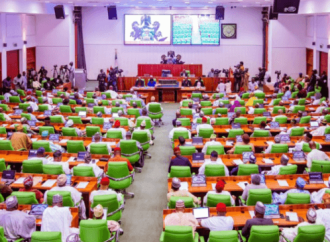
The amendment, recently passed by the House of Representatives Nigeria, introduces a ₦10 million fine or a two-year prison sentence—or both—for offenders found guilty of dual party membership. The proposal comes just weeks after the Electoral Act 2026 was signed into law by Bola Tinubu.
Sponsored by House Leader Julius Ihonvbere, the bill seeks to amend Section 77 of the Act by adding new clauses that criminalise belonging to multiple political parties simultaneously. Lawmakers fast-tracked the bill through all legislative stages in a single plenary session, a move that has further fueled public scrutiny.
15 Killed, Several Injured As Bandits Attack Katsina Community
At the heart of the proposal is a strict provision stating that no individual should be registered as a member of more than one political party at the same time. Where such dual membership is established, the law would render the memberships void, pending regularisation.
More controversially, the amendment classifies dual membership as a criminal offence. Offenders, if convicted, face heavy financial penalties or imprisonment, signaling one of the toughest regulatory stances on political affiliation in Nigeria’s democratic history.
The bill has sharply divided lawmakers. While some argue it promotes political integrity, others warn it may conflict with constitutional rights. Jonathan Gaza backed the amendment, describing dual membership as deceptive and misleading.
However, Abubakar Fulata raised concerns that the proposal may violate Section 40 of the 1999 Constitution, which guarantees freedom of association. He argued that restricting individuals from joining multiple political platforms could amount to an infringement on fundamental rights.
Presiding over the session, Deputy Speaker Benjamin Kalu defended the bill, insisting that dual party membership constitutes “fraudulent misrepresentation” and undermines ideological clarity in politics.
Opposition parties have reacted strongly against the amendment. Social Democratic Party Nigeria leaders described the proposal as unconstitutional and politically motivated. The party’s presidential candidate in the last election, Adewole Adebayo, argued that citizens should not be penalised for associating with multiple political groups.
According to Adebayo, electoral laws already require candidates to run under a single party, making the new restriction unnecessary. He accused lawmakers of pursuing narrow political interests rather than strengthening democratic principles.
Beyond the political class, legal analysts have also weighed in. Public affairs expert Maarcellus Onah suggested that the amendment may be driven by fears of defections within the ruling All Progressives Congress. He noted that economic challenges and security concerns could trigger shifts in political loyalty, prompting attempts to restrict movement across party lines.
Onah further criticised the National Assembly, alleging that it has increasingly failed to serve as an independent check on executive power. He argued that some lawmakers supporting the bill have themselves switched parties in the past, raising questions about consistency and intent.
The debate also touches on broader concerns about Nigeria’s democratic environment. Analysts warn that perceived restrictions on political freedom could undermine confidence in the electoral process, especially as the country prepares for the 2027 elections.
While the APC maintains dominance across many states and holds a legislative majority, critics insist that political control does not necessarily reflect public satisfaction. As Adebayo noted, the ultimate verdict lies with the electorate.
As discussions continue, the proposed amendment has become a focal point in Nigeria’s evolving democratic journey—highlighting the delicate balance between regulation and fundamental rights in a politically dynamic nation.















Leave a Comment
Your email address will not be published. Required fields are marked with *