
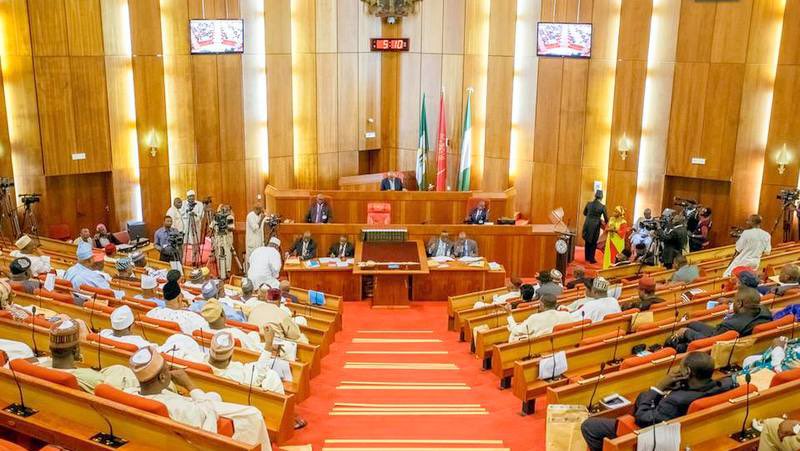
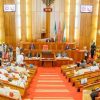
The Nigerian Senate has rejected proposed amendments seeking to make the electronic transmission of election results compulsory, opting instead to retain the existing provisions of the Electoral Act 2022. During plenary on Wednesday, lawmakers considered the Bill for an Act to Repeal the Electoral Act No. 13, 2022 and Enact the Electoral Act, 2025.
The Nigerian Senate has rejected proposed amendments seeking to make the electronic transmission of election results compulsory, opting instead to retain the existing provisions of the Electoral Act 2022.
During plenary on Wednesday, lawmakers considered the Bill for an Act to Repeal the Electoral Act No. 13, 2022 and Enact the Electoral Act, 2025. A key provision — Clause 60(5) — which would have required presiding officers to electronically transmit polling unit results in real time to the Independent National Electoral Commission’s (INEC) Result Viewing (IReV) portal after completing Form EC8A, was voted down.
FG Proposes N3.6tn Deduction From Federation Account To Fund Power Subsidies
With the rejection, the Senate preserved the 2022 framework that prioritises manual procedures. Under the current system, results must be manually recorded, signed, stamped, and distributed to party agents and security officials before being announced at polling units and subsequently transferred “in a manner as prescribed by the Commission,” without explicitly mandating electronic transmission.
Lawmakers also struck out Clause 47, which proposed the use of electronically generated voter identification, including downloadable voter cards with QR codes, for accreditation.
As a result, the requirement for voters to present a physical Permanent Voter’s Card (PVC) remains in place. However, the Senate upheld the continued use of the Bimodal Voter Accreditation System (BVAS) and other INEC-approved devices for voter verification.
The decisions signal the upper chamber’s preference for maintaining the existing electoral framework rather than adopting expanded digital voting measures ahead of future elections.
















Leave a Comment
Your email address will not be published. Required fields are marked with *