
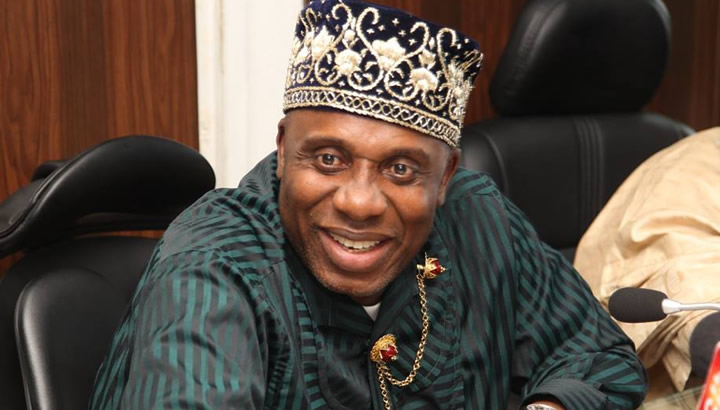
2027 Election Will Be Decided By Nigerians, Not Politicians, Says Amaechi Former Minister of Transportation, Rotimi Amaechi, has launched a scathing critique of Nigerians for what he termed widespread passivity in the face of worsening national hardship. Speaking in Abuja on Thursday at the launch of the 2025 Nigeria Social Cohesion Survey by the Africa
2027 Election Will Be Decided By Nigerians, Not Politicians, Says Amaechi
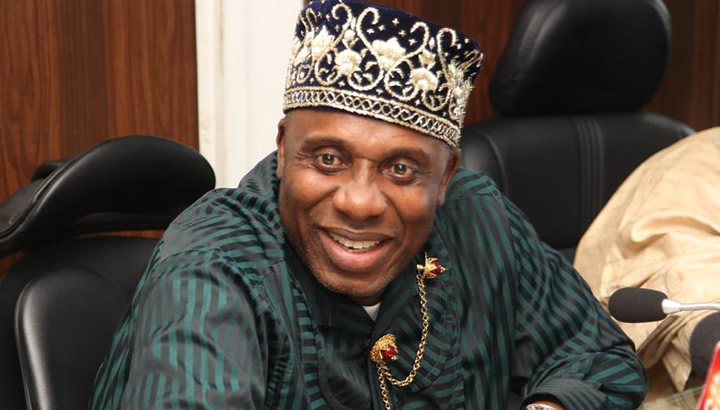
Former Minister of Transportation, Rotimi Amaechi, has launched a scathing critique of Nigerians for what he termed widespread passivity in the face of worsening national hardship. Speaking in Abuja on Thursday at the launch of the 2025 Nigeria Social Cohesion Survey by the Africa Polling Institute, Amaechi lamented the country’s socioeconomic decline and issued a rallying cry for citizen-led change.
Amaechi, known for his blunt political commentary, didn’t mince words as he blamed everyday Nigerians for allowing what he described as a small, corrupt elite to dominate the political and economic landscape. “The elites who are stealing Nigerian money are not up to 100,000,” he said. “But you have 200 million Nigerians who can fight them.”
A Call for Boldness and Radical Change
Using the focus keyword A, Amaechi accused Nigerians of voluntarily surrendering their power and described the country as “the most docile society” he had ever witnessed. “You sit down in your house and complain and grumble. The elites know you’re not happy. But you made yourself helpless,” he charged.
He went further to argue that no meaningful transformation has ever occurred without sacrifice, adding a controversial note: “Any revolution without blood is a failure.” Amaechi’s statement underscores his belief in deep civic involvement as a prerequisite for societal reform, especially in Nigeria’s current political climate.
Amaechi expressed concern that unless the citizenry mobilizes in a united front, the 2027 elections would again go in favor of the ruling elite. “The only way you can stop Tinubu is to run an election of Nigerians versus the bandits,” he warned, referencing what he perceives as a political system hijacked by corrupt interests.
Bolaji Abdullahi Explains Why 2027 Opposition Coalition Adopted ADC As Political Platform
Resignation from APC and Criticism of Current Leadership
In one of the most startling revelations of the event, Amaechi announced that he had officially resigned from the All Progressives Congress (APC), the party that brought him into national prominence during the Buhari administration. “I left APC last night,” he stated. “I warned them not to invite me to any meeting again.”
He didn’t stop at party politics. Amaechi drew sharp contrasts between the current government under President Bola Tinubu and that of former President Muhammadu Buhari. “People want Buhari back because things were better during his time,” he said. “Look at the exchange rate. Then it was about ₦460 to a dollar; now it’s over ₦1,500.”
Amaechi claimed inflation and hunger have reached crisis levels and accused the current administration of prioritizing power consolidation over the welfare of ordinary Nigerians. “Any government that doesn’t consider the people is not worth it,” he declared.
Labour Unions and Student Bodies Criticised for Silence
Another major point of concern for Amaechi was the perceived decline of Nigeria’s historically active civil society bodies. “In the past, ASUU, NLC, and NANS could shut down the government with coordinated protests. Now NLC can’t even mobilise. Why? Ethnicity,” he lamented.
According to him, ethnic divisions have weakened the unity and resolve of labour and student organizations, which once served as checks on governmental excesses and inefficiency.
Reflections on Crime and a Personal Dilemma
As a former governor of Rivers State, Amaechi said he had firsthand knowledge of how economic decline correlates with rising crime rates. “Once robbery and kidnapping increase, I know there’s no money in circulation,” he said. “Once people are paid, they spend money, and the crime rate drops.”
In a revealing personal anecdote, Amaechi admitted that he once contemplated joining the growing list of Nigerians seeking opportunities abroad, commonly known as “japa.” However, he said his wife convinced him to stay. “I wanted to japa, but my wife said Nigeria is still lovely,” he quipped.
Amaechi’s address painted a grim but familiar picture of Nigeria’s current state, while simultaneously challenging citizens to act. His message was clear: passivity has allowed the nation’s decline, and only bold, united action can reverse the tide.















Leave a Comment
Your email address will not be published. Required fields are marked with *