
FAAC Shares N2 Trillion Among Federal, State and Local Governments for July 2025 The Federation Account Allocation Committee (FAAC) has announced that it disbursed a total of N2 trillion among the three tiers of government for the month of July 2025. The disclosure was made during FAAC’s August meeting chaired by Wale Edun, Minister
FAAC Shares N2 Trillion Among Federal, State and Local Governments for July 2025
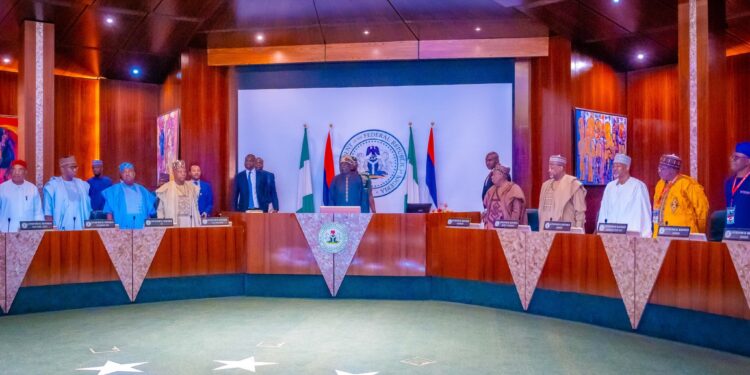
The Federation Account Allocation Committee (FAAC) has announced that it disbursed a total of N2 trillion among the three tiers of government for the month of July 2025. The disclosure was made during FAAC’s August meeting chaired by Wale Edun, Minister of Finance and Coordinating Minister of the Economy, and confirmed in a statement issued on Friday by Muhammed Manga, Director of Information and Public Relations at the Ministry of Finance.
The committee revealed that the gross total revenue collected in July stood at N3.83 trillion, out of which N2 trillion was allocated to the federal, state, and local governments. The balance was directed towards statutory deductions, transfers, interventions, and refunds.
Conflicting Police Reports Deepen Dispute Over Lekki Property Linked To Al-Mustapha
Breakdown of July 2025 Revenue Allocation
From the total revenue shared, the federal government received N735.08 billion, the 36 states collectively received N660.34 billion, while the 774 local government councils were allocated N485.03 billion. In addition, oil-producing states benefited from N120.35 billion, representing the constitutionally mandated 13 percent derivation on mineral revenue.
The committee also disclosed that N152.68 billion was set aside for the cost of collection, while a larger sum of N1.68 trillion went into transfers, interventions, and refunds.
Value-Added Tax (VAT) Distribution
The FAAC communique highlighted that the gross revenue from Value-Added Tax (VAT) in July 2025 amounted to N687.94 billion, slightly higher than the N678.16 billion recorded in June, reflecting a marginal increase of N9.77 billion.
From the VAT revenue:
- N27.51 billion was deducted for the cost of collection.
- N19.81 billion was earmarked for transfers, interventions, and refunds.
- The balance of N640.61 billion was distributed among the three tiers of government.
Out of this balance, the federal government received N96.09 billion, states got N320.31 billion, and local governments were allocated N224.21 billion.
Statutory Revenue Allocation
The committee reported that gross statutory revenue for July was N3.07 trillion, a decline of N415.10 billion compared to the N3.48 trillion recorded in June 2025.
From the statutory revenue:
- N123.59 billion was deducted for the cost of collection.
- N1.66 trillion went into transfers, interventions, and refunds.
- The balance of N1.28 trillion was shared among the three tiers.
The federal government received N613.81 billion, states received N311.33 billion, while local governments were allocated N240.02 billion. Oil-producing states received N117.71 billion as part of the 13 percent derivation principle.
Electronic Money Transfer Levy (EMTL)
The FAAC also disclosed that revenue from the Electronic Money Transfer Levy (EMTL) for July amounted to N39.16 billion. After deducting N1.56 billion for the cost of collection, the balance was distributed among the three tiers:
- The federal government received N5.64 billion.
- States were allocated N18.80 billion.
- Local governments got N13.16 billion.
This revenue stream continues to serve as a supplementary source of income for governments at all levels, particularly at a time of fiscal strain.
Government Commends Reforms
In his opening remarks at the meeting, Finance Minister Wale Edun praised the committee for its meticulous work in ensuring resources were equitably distributed. He expressed optimism that the current administration’s economic reforms were beginning to yield tangible results, as reflected in the improved consistency of revenue inflows despite volatility in global oil prices and domestic fiscal challenges.
“The economic reforms embarked upon by the federal government are yielding positive results, and our collective efforts will continue to drive growth and development,” Edun said, while encouraging states and local governments to channel the allocated funds towards infrastructure, social welfare, and economic development programs.
Implications for Governance
The N2 trillion allocation for July 2025 provides significant financial backing for governments at all levels to meet their obligations, including salaries, pensions, infrastructure development, and service delivery. For oil-producing states, the 13 percent derivation serves as a crucial revenue lifeline, supporting their developmental projects and addressing environmental challenges linked to oil exploration.
However, analysts have raised concerns about Nigeria’s heavy reliance on oil revenues and statutory allocations. Despite efforts to diversify the economy, fluctuations in oil prices and declining global demand continue to affect government revenues. Experts suggest that while reforms in tax administration and digital revenue collection are yielding modest gains, greater efforts must be made to broaden Nigeria’s non-oil revenue base.
Balancing Allocation and Fiscal Responsibility
The consistent sharing of large revenue figures also raises questions about accountability in public finance management. Civil society organisations have repeatedly called for increased transparency in how these funds are utilised at the federal, state, and local government levels.
While FAAC’s monthly allocations serve as a lifeline for many states—particularly those unable to generate substantial internally generated revenue (IGR)—the challenge remains ensuring that funds are invested in ways that tangibly improve citizens’ quality of life.
As Nigeria continues to implement economic reforms aimed at stabilising public finances, the July 2025 FAAC allocation underscores both opportunities and challenges. On one hand, the N2 trillion shared reflects the government’s ability to generate substantial revenue, even amid fiscal pressure. On the other hand, it highlights the urgent need for deeper diversification, stronger fiscal discipline, and accountability in spending.
For now, the latest FAAC disbursement provides federal, state, and local governments with the resources needed to sustain governance and development programs. Whether these allocations translate into improved infrastructure, social services, and economic growth depends largely on how prudently the funds are managed in the months ahead.
















Leave a Comment
Your email address will not be published. Required fields are marked with *