
Federal Government Approves New Nigerian Passport Fees Effective September 2025 The Federal Government of Nigeria has announced an upward review of passport application fees, effective September 1, 2025. The decision was confirmed in a statement released by the spokesman of the Nigeria Immigration Service (NIS), A.S. Akinlabi, on Thursday. According to the NIS, the
Federal Government Approves New Nigerian Passport Fees Effective September 2025
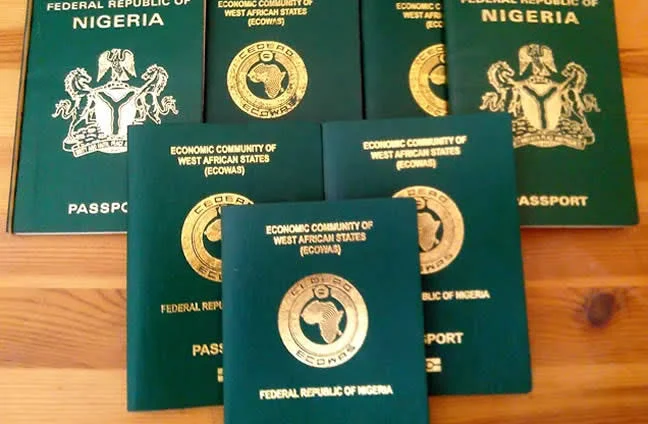
The Federal Government of Nigeria has announced an upward review of passport application fees, effective September 1, 2025. The decision was confirmed in a statement released by the spokesman of the Nigeria Immigration Service (NIS), A.S. Akinlabi, on Thursday. According to the NIS, the increment is designed to maintain the quality, security, and global integrity of the Nigerian Standard Passport.
The announcement has generated widespread attention, especially among Nigerians planning to renew or apply for passports. Here is a breakdown of the new structure, reasons for the changes, and its likely impact on citizens at home and abroad.
Nigeria Set For Second Round Of Integrated Vaccination Campaign Across 11 High-Risk States
New Nigerian Passport Fee Structure
The upward review affects only applications made within Nigeria, while fees for Nigerians in the diaspora remain unchanged. The revised rates are as follows:
- 32-page passport with 5-year validity: ₦100,000 (previously ₦35,000 – ₦45,000, depending on location).
- 64-page passport with 10-year validity: ₦200,000 (previously ₦70,000 – ₦80,000).
This represents more than double the previous costs, making Nigeria one of the countries with comparatively higher passport fees in Africa.
For Nigerians abroad, the old fee regime remains in place. The NIS clarified that the review was only applicable to domestic applications, stressing that the government considered the unique circumstances of citizens living outside the country.
Why the Review Was Introduced
According to the Immigration Service, the upward review was necessary for several reasons:
- Passport Quality and Security – The Nigerian Standard Passport incorporates biometric and electronic features aimed at preventing forgery, duplication, and identity theft. Producing these documents requires advanced technology, which comes at a higher cost.
- Global Standards – The International Civil Aviation Organization (ICAO) sets global benchmarks for machine-readable and biometric passports. Nigeria’s new pricing reflects efforts to maintain compliance with international passport standards.
- Operational Costs – The NIS emphasized that printing, logistics, and maintenance costs have risen significantly. The increase will help cover operational expenses, ensure timely passport delivery, and reduce shortages.
- Curbing Middlemen and Racketeering – Officials believe the upward review will discourage exploitation by passport racketeers who often charge desperate applicants exorbitant fees outside official channels.
What It Means for Citizens
For many Nigerians, the new passport fee represents a significant financial adjustment. The steep increase is likely to have different effects on various groups:
- Students and Young Professionals – Young Nigerians seeking opportunities abroad for study or employment may find the new rates financially burdensome. With the 32-page passport now at ₦100,000, the cost of pursuing academic or work migration has gone up.
- Frequent Travelers – Business people and professionals who require passports for international transactions and travel will face higher application costs, though many may opt for the 10-year, 64-page option for longer validity.
- Low-Income Earners – Citizens from rural and low-income backgrounds may find the new fees out of reach, raising concerns that the passport could become a privilege for wealthier Nigerians rather than a universal right.
- Diaspora Nigerians – Since fees remain unchanged for those applying abroad, diaspora communities may not feel the immediate impact. However, family members in Nigeria could face challenges in securing travel documents at the new rates.
Public Reaction and Concerns
The announcement has already triggered mixed reactions across social media and among civil society groups. Critics argue that the timing of the increase is insensitive, given the current economic hardships facing Nigerians. Rising inflation, fuel costs, and a weakened naira have already stretched household incomes, and the new passport fees could add to the burden.
Others, however, believe that the increase is justified if it leads to better service delivery. Complaints about delays, corruption, and scarcity in passport issuance have plagued the NIS for years. Some Nigerians say they are willing to pay more if it guarantees efficiency and eliminates the need for “express” payments to unofficial middlemen.
Government’s Assurances
The Nigeria Immigration Service assured the public that the fee hike will translate into improved services. Spokesman A.S. Akinlabi stated that the reforms are part of a broader modernization agenda, including:
- Faster processing times.
- Expanded passport production centers nationwide.
- Strengthened anti-corruption measures in passport offices.
- Enhanced tracking systems for online applications.
The NIS also pledged to ensure that applicants get value for the new fees by reducing unnecessary bottlenecks in the process.
Broader Implications
The revised passport fees highlight broader issues about governance, affordability, and national mobility. While the government insists that the hike is necessary for sustainability, many Nigerians worry about accessibility. A valid passport is not just a travel document—it is often required for employment, education, banking, and other civic engagements.
Analysts suggest that without careful implementation, the high cost of passports could discourage citizens from obtaining them, potentially affecting Nigeria’s global mobility ranking and access to international opportunities.
At the same time, the government faces pressure to prove that the revenue generated will genuinely improve passport services and not be lost to inefficiencies or corruption.
As the September 1 implementation date approaches, Nigerians are watching closely to see how the new fee structure will affect daily realities. The Federal Government has urged citizens to see the upward review as an investment in a more secure and globally recognized passport.
Ultimately, whether Nigerians accept the new pricing will depend on how well the Immigration Service delivers on its promises. If the reforms eliminate long delays, reduce racketeering, and guarantee a smooth application process, the higher fees may be justified. But if old challenges persist, the increment may only deepen frustrations and widen the gap between citizens and government.












Leave a Comment
Your email address will not be published. Required fields are marked with *