
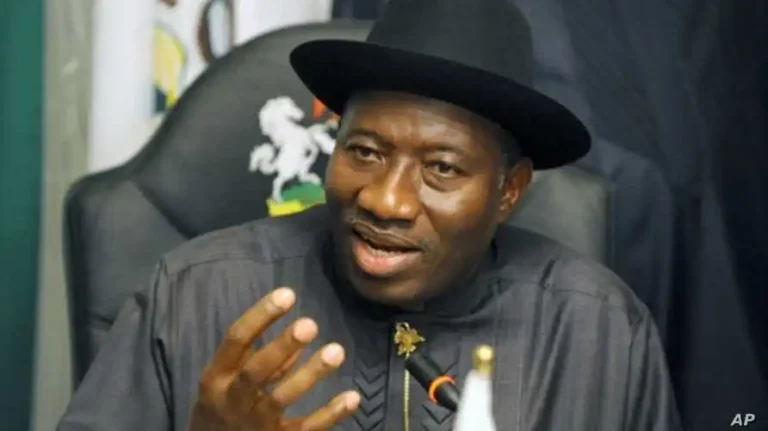
I Thought Boko Haram Would Hand Over Their Guns To Buhari – Goodluck Jonathan Former President Goodluck Jonathan has revealed that during his administration, Boko Haram insurgents once nominated the late former President Muhammadu Buhari to negotiate with the Nigerian government on their behalf. Jonathan made this disclosure on Friday at the public presentation
I Thought Boko Haram Would Hand Over Their Guns To Buhari – Goodluck Jonathan
Former President Goodluck Jonathan has revealed that during his administration, Boko Haram insurgents once nominated the late former President Muhammadu Buhari to negotiate with the Nigerian government on their behalf. Jonathan made this disclosure on Friday at the public presentation of the book Scars, authored by former Chief of Defence Staff, General Lucky Irabor (retd.), in Abuja. According to him, his government had set up multiple committees to explore dialogue with the extremist group, and in one of those engagements, Boko Haram put forward Buhari as their preferred representative in the negotiations.
NAFDAC Withdraws, Suspends, Or Cancels 101 Pharmaceutical Products In Nigeria
Jonathan explained that at the time, he believed the nomination of Buhari was a potential breakthrough in resolving the insurgency, given the respect Boko Haram appeared to accord him. He said, “One of the committees we set up then, the Boko Haram nominated Buhari to lead their team to negotiate with the government. So I was feeling that, oh, if they nominated Buhari to represent them and had a discussion with the government committee, then when Buhari took over, it could have been an easy way to negotiate with them and they would have handed over their guns. But it was still there till today.”
His remarks highlighted the persistence of the Boko Haram insurgency even after Buhari assumed office in 2015 with promises to decisively end terrorism. Jonathan suggested that the group’s resilience underscored the complexity of the conflict, showing it was not merely a matter of leadership or negotiation but rather a deeply rooted security and ideological challenge.
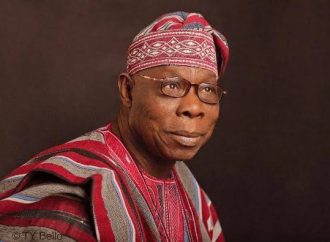
The event also featured former President Olusegun Obasanjo, who raised fresh concerns over the longevity and entrenchment of the Boko Haram crisis. Obasanjo lamented that insurgency had become ingrained in Nigeria’s national life, noting that citizens were slowly beginning to normalize what should be considered a national tragedy. He argued that the country needed to reflect deeply on its failures and develop more sustainable approaches to end terrorism.
Speaking at the event, Obasanjo posed tough questions that he believes Nigerians should start confronting collectively. He said, “Boko Haram is now virtually becoming part of our life. Should we accept that? If we should not accept it, what should we do? How much do we know? Even from the other side, and from this side, have we been active enough? Have we been proactive enough? I think we have to ask ourselves the necessary questions to be able to deal with this thing that is now becoming a monster within our country.”
Obasanjo also commended General Lucky Irabor for his courage in documenting his experience as a former Chief of Defence Staff who was deeply involved in military operations against Boko Haram. According to him, Irabor’s insider account will serve as a valuable resource for historians, policymakers, and future generations to understand Nigeria’s long and painful battle with terrorism. He noted that honest documentation of such struggles is essential in developing new strategies for conflict resolution and peacebuilding.
The unveiling of Scars: Nigeria’s Journey and the Boko Haram Conundrum was attended by an array of high-profile figures, including former President Jonathan, service chiefs, clerics, and both former and serving governors. The turnout reflected the national importance of the subject matter and the growing call for collective action against insecurity.
Jonathan’s comments serve as a reminder that the Boko Haram insurgency, which began as a localized extremist movement in Borno State in the early 2000s, has evolved into one of the country’s most pressing security challenges. Despite significant military operations and the reported deaths of some of its leaders, the group has survived, splintered, and reinvented itself over the years. His recollection about Boko Haram nominating Buhari also underscores how complex the conflict has been from inception, involving not just military efforts but also negotiations, intelligence, and political dimensions.
On his part, Obasanjo’s remarks echo the frustration of many Nigerians who feel that the fight against terrorism has been prolonged far beyond expectation. His call for deeper questioning points to the need for a multi-faceted approach—one that combines military action with economic development, education, community engagement, and intelligence-gathering.
The significance of Irabor’s book lies not only in recounting Nigeria’s struggle but also in offering insights into the decision-making processes, challenges, and sacrifices made by the armed forces. By documenting these experiences, the former defence chief has provided an opportunity for Nigeria to reflect on its past mistakes and rethink its strategies.
In conclusion, Jonathan’s revelation about Boko Haram’s past choice of Buhari as a negotiator sheds new light on the insurgency’s history and the complexities of government efforts to resolve it. His reflections, combined with Obasanjo’s candid warnings, reinforce the urgency of addressing terrorism not just as a security problem but as a national existential threat. The Abuja book presentation, therefore, was more than a literary event—it was a sober reminder of Nigeria’s ongoing battle with extremism and a call for renewed commitment to peace, unity, and security.









Leave a Comment
Your email address will not be published. Required fields are marked with *