
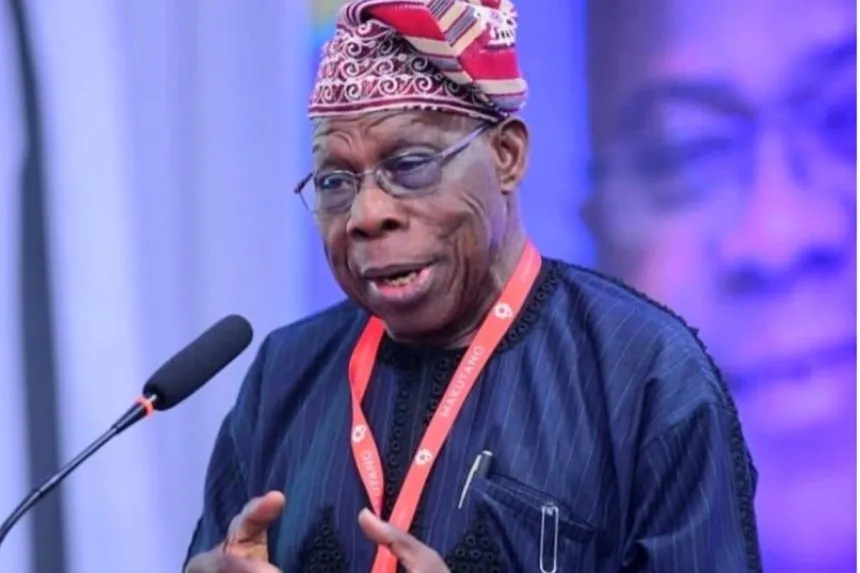
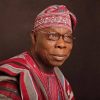
Boko Haram, Banditry, Kidnapping Now Mixed Together In Nigeria — Obasanjo Former President Olusegun Obasanjo has expressed deep concern over the worsening insecurity in Nigeria, warning that Boko Haram insurgency has now merged with banditry and kidnapping, making it even more difficult for the country to address. Speaking on Friday as chairman at the public
Boko Haram, Banditry, Kidnapping Now Mixed Together In Nigeria — Obasanjo
 Former President Olusegun Obasanjo has expressed deep concern over the worsening insecurity in Nigeria, warning that Boko Haram insurgency has now merged with banditry and kidnapping, making it even more difficult for the country to address. Speaking on Friday as chairman at the public presentation of a book, Scars: Nigeria’s Journey So Far and the Boko Haram Conundrum, authored by former Chief of Defence Staff, General Lucky Irabor (rtd.), Obasanjo reflected on Nigeria’s long struggle against insecurity and the lessons that must be learned.
Obasanjo, who has remained outspoken on national security issues since leaving office, explained that Boko Haram did not originally emerge as a movement with strong political or religious ambitions. Instead, he described the insurgency as a product of deep-rooted socio-economic frustration. “I found, yes, there was Boko Haram. I found they were not really aiming for anything political or anything seriously religious. But in short, they were looking for a better life. And any other thing attached to that is a better life for them,” he said.
According to him, the failure of Nigeria to address the root causes of the crisis, coupled with a lack of timely action, has allowed the insurgency to thrive for over 15 years. He lamented that Boko Haram has now become part of the country’s daily reality. “Have we understood that? If we have, have we taken the steps that we should take? If we have, why are we, after fifteen years, Boko Haram is now virtually becoming part of our life? Should we accept that? If we should not accept, what should we do? How much do we know?” he asked.
The former president raised further concerns about Nigeria’s lack of proactiveness in handling security challenges, stressing that insurgency has transformed into a “monster” that threatens national stability. “I think we have to ask ourselves the necessary questions to be able to deal with this thing that is now becoming a monster within our country,” he said.
Obasanjo explained that he agreed to write the foreword for Irabor’s book because he believes Nigeria must confront its past failures and openly discuss them in order to find solutions. He described the book as an attempt to examine Nigeria’s history of insecurity with honesty and courage. “I want to thank you again, as I have said, for the courage, because you need the courage to write the type of book you are writing. Shouldn’t we examine our past? What is in our past that is becoming debilitating, destructive to our present and obviously to our future? I believe that is what you have tried to do in your book,” he noted.
The elder statesman cautioned against Nigeria’s tendency to ignore difficult issues, emphasizing the need to document and discuss history truthfully. “There’s normally the tendency. Don’t talk about it. Let’s leave it. And I believe that we must get out of that culture. Let us say it as it is. The history, the life of any nation, any family, any institution has the good, the bad, and the ugly. What is important is to look at all of it honestly, and then find solutions that may even go beyond what we can presently see,” Obasanjo added.
Calling for broader participation in the national conversation, he urged those with knowledge of the insurgency — including former Boko Haram members, sympathizers, and security experts — to come forward with insights. According to him, a full understanding of the crisis requires voices from all sides. “I will urge and appeal that those who have things to say about this particular issue of Boko Haram, we don’t even know where Boko Haram stops and banditry starts, and kidnapping begins. They are all mixed together. We can’t go on this way. Surely, we can’t. Something must be done. And the beginning of something being done is the book, Scars: Nigeria’s Journey and the Boko Haram Conundrum. I hope and I appeal that those who have things to say, who know things that we should know, come up. Even those who have been on the other side, who have been part or supporter of Boko Haram, let them write. Let them speak up. And that way, we will be able to find solutions to the problem, which cannot continue to go on without bringing it to an end,” he declared.
Obasanjo’s remarks highlighted the complexities of Nigeria’s security challenges, particularly the merging of insurgency with other violent crimes such as banditry and kidnapping. His comments reflect the growing concern among Nigerians that the lines between these forms of violence have blurred, making them harder to combat.
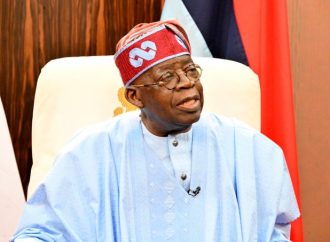
The event was attended by several prominent Nigerians, including former President Goodluck Jonathan; President Bola Ahmed Tinubu, represented by Minister of Defence, Abubakar Bagudu; the Sultan of Sokoto, Sa’ad Abubakar; and Bishop Matthew Hassan Kukah, among others. The gathering underscored the seriousness of Nigeria’s security crisis and the need for collective solutions.
In his closing remarks, Obasanjo reiterated that insecurity is now one of the greatest threats to Nigeria’s survival and unity. He urged the nation to adopt a more courageous, honest, and inclusive approach to solving the problem. For him, the publication of Irabor’s book marks an important step in sparking dialogue, interrogating the past, and charting a path toward peace.
At a time when Nigerians continue to grapple with insecurity, Obasanjo’s call serves as a reminder that the crisis cannot be ignored, minimized, or accepted as normal. Instead, it requires a renewed sense of urgency, collaboration, and openness to uncomfortable truths in order to find lasting solutions.










Leave a Comment
Your email address will not be published. Required fields are marked with *