
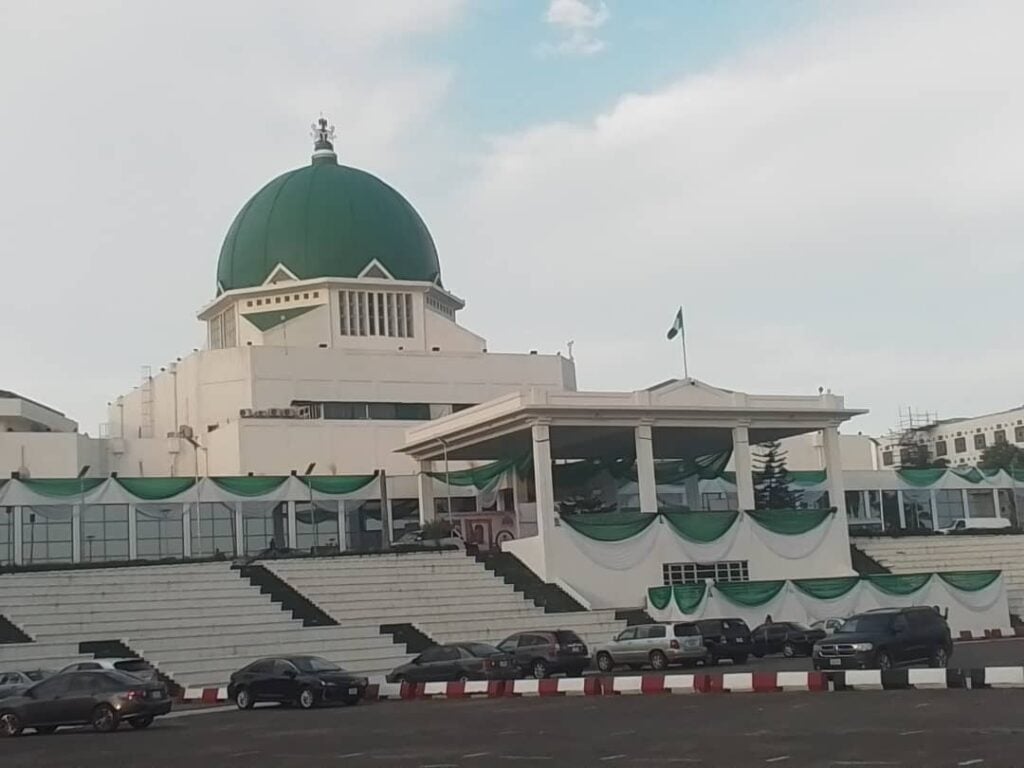
House of Representatives Calls for Urgent Dialogue to End ASUU Two-Week Warning Strike The House of Representatives has urged the Federal Government and the Academic Staff Union of Universities (ASUU) to immediately resume negotiations to resolve the ongoing dispute that led to the union’s two-week warning strike. The appeal followed the adoption of a motion
House of Representatives Calls for Urgent Dialogue to End ASUU Two-Week Warning Strike
 The House of Representatives has urged the Federal Government and the Academic Staff Union of Universities (ASUU) to immediately resume negotiations to resolve the ongoing dispute that led to the union’s two-week warning strike. The appeal followed the adoption of a motion of urgent public importance sponsored by Oluwaseun Whinghan, who represents the Badagry Federal Constituency of Lagos State, during Tuesday’s plenary session. The lawmakers expressed concern that unless urgent steps are taken, the current warning strike could escalate into a prolonged industrial action, further crippling Nigeria’s university system.
ASUU had on Monday declared a two-week warning strike, citing the Federal Government’s alleged failure to honour several outstanding agreements. Among the key issues raised were the implementation of the 2009 ASUU-Federal Government Agreement, revitalisation funding for universities, earned academic allowances, improved salary structures, and the enforcement of institutional autonomy. The union accused the government of neglecting these longstanding obligations, forcing lecturers to down tools once again.
Prior to the strike, the Minister of Education, Dr. Yusuf Sununu, had assured Nigerians that the Bola Tinubu administration was already in the final stage of discussions with ASUU and that a lasting resolution was near. However, the union went ahead with the warning strike, insisting that promises without implementation have repeatedly failed to yield tangible results.
While moving the motion, Hon. Whinghan voiced deep concern over the renewed industrial action, warning that Nigeria could not afford another round of disruptions in the higher education sector. He recalled that previous warning strikes by ASUU had often developed into long-term shutdowns, which severely disrupted academic calendars, stalled research activities, and worsened the plight of students, parents, and lecturers. “Although ASUU has described the strike as a warning, previous experiences show that these actions often degenerate into extended work stoppages,” Whinghan said, noting that such interruptions have far-reaching consequences for the nation’s social and economic progress.
He stressed that Nigeria’s university system is central to national development, innovation, and human-capital growth, adding that any breakdown in its operation weakens the country’s global competitiveness and undermines the productivity of its youth population. According to him, education is constitutionally recognised under Section 18 of the 1999 Constitution (as amended) as a key driver of social, economic, and technological advancement. Therefore, both the Federal Government and academic unions have a shared responsibility to ensure the stability, quality, and continuity of tertiary education.
Whinghan lamented that the repeated occurrence of strikes in Nigeria’s university system has led to numerous negative outcomes, including mass student dropouts, the migration of skilled academics to other countries (brain drain), and the erosion of public confidence in the nation’s tertiary institutions. These recurring crises, he said, undermine not only the credibility of Nigerian degrees but also the country’s long-term development agenda.
The lawmaker called for “renewed dialogue anchored on mutual respect, transparency, and good faith,” urging both sides to put national interest above personal or institutional pride. He proposed that the National Assembly should act as a neutral facilitator in the negotiation process to ensure fairness and accountability.
Following a robust debate, the motion was unanimously adopted by the House. Lawmakers resolved that the Committees on University Education and Labour, Employment, and Productivity should immediately intervene in the standoff between the Federal Government and ASUU. The committees were tasked with initiating a fresh round of mediation aimed at reaching a mutually acceptable and lasting settlement.
Additionally, the House resolved to set up an Ad-hoc Committee to be chaired by Speaker Tajudeen Abbas, to coordinate efforts and oversee the peace process. The committee’s primary mandate is to engage both ASUU and government representatives to ensure that striking lecturers return to their classrooms as quickly as possible.
In its resolutions, the House appealed to both parties to exercise restraint and avoid inflammatory rhetoric that could worsen the crisis. Lawmakers emphasised that students’ welfare and national development should remain at the centre of all deliberations. The motion further urged the Federal Government to create a permanent joint consultative platform where continuous engagement with recognised university unions can take place to prevent future industrial disputes. Such a mechanism, members noted, would serve as an early warning and problem-solving forum before grievances escalate into full-blown strikes.
To ensure accountability, the Committee on Legislative Compliance was directed to monitor the progress of the mediation process and report back to the House within one week. The report is expected to guide further legislative action if necessary.
In their various contributions during the debate, lawmakers from different political parties expressed disappointment that the education sector continues to suffer recurrent crises despite repeated government promises. Many called for a comprehensive review of the 2009 ASUU-FGN Agreement, describing it as outdated and in need of revision to reflect current economic realities. They also appealed to ASUU to explore alternative methods of engagement, such as arbitration or mediation, rather than resorting to strikes that often hurt students more than they affect policymakers.
Some members proposed that the Federal Government should prioritise funding for education in the 2026 budget, noting that inadequate financing remains a major cause of discontent among university staff. Others suggested establishing a special intervention fund for tertiary institutions to address infrastructure deficits and research funding gaps.
The latest strike comes barely two years after ASUU ended its eight-month-long industrial action in 2022, which shut down universities nationwide. That strike, one of the longest in Nigeria’s history, disrupted academic activities and delayed graduation timelines for thousands of students. Education experts warn that another prolonged disruption could have devastating consequences for the country’s already struggling higher education sector.
As both sides prepare for fresh negotiations, there is growing public pressure on the government to act swiftly to avoid further damage to the academic calendar. Many parents and students have expressed frustration that universities, once centres of learning and innovation, have become battlegrounds of industrial conflict.
In conclusion, the House of Representatives’ intervention is seen as a critical step toward restoring stability to Nigeria’s university system. By calling for urgent dialogue and proposing structured mediation, lawmakers hope to bridge the widening gap between the Federal Government and ASUU. Whether this new effort will yield lasting peace, however, depends on both parties’ willingness to compromise and put the future of Nigerian students first.










Leave a Comment
Your email address will not be published. Required fields are marked with *