
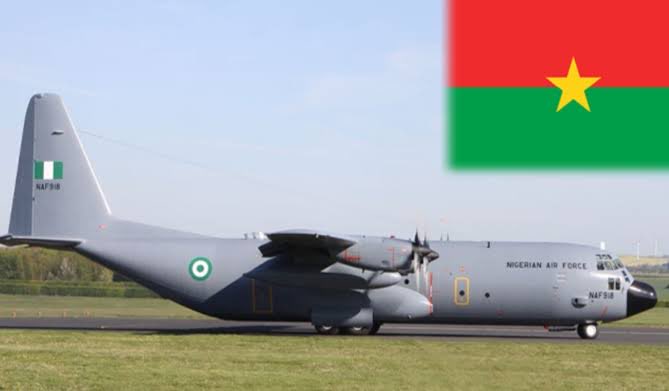
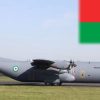
Burkina Faso has released the eleven Nigerian military officers detained after an unauthorised landing of a Nigerian Air Force (NAF) C-130 Hercules aircraft in the country, bringing an end to a diplomatic tension that briefly unsettled relations between Abuja and the Alliance of Sahel States (AES). The officers had been held for several days
Burkina Faso has released the eleven Nigerian military officers detained after an unauthorised landing of a Nigerian Air Force (NAF) C-130 Hercules aircraft in the country, bringing an end to a diplomatic tension that briefly unsettled relations between Abuja and the Alliance of Sahel States (AES). The officers had been held for several days in Bobo-Dioulasso, where the transport aircraft unexpectedly landed, prompting Burkina Faso to accuse Nigeria of violating its airspace and breaching regional security protocols.
The incident, which occurred last week, triggered strong reactions from the AES bloc—comprising Burkina Faso, Mali and Niger—who have taken a hard-line stance towards external military activity within the Sahel region since their withdrawal from ECOWAS earlier this year. In a joint statement, the AES authorities described the landing as “a clear breach of sovereignty” and alleged that the NAF aircraft entered Burkinabe airspace without prior clearance, raising security concerns at a time when the region faces heightened insurgent threats.
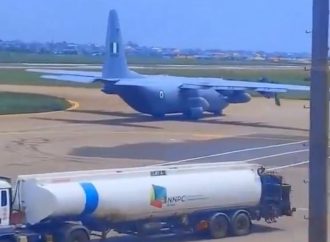
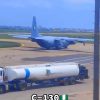
NNPC Truck Also Lands In Burkina Faso: Fresh Controversy Trails Cross-Border Fuel Diversions
However, Nigerian authorities firmly rejected allegations of wrongdoing, insisting that the aircraft diverted to Bobo-Dioulasso strictly due to a technical malfunction that made it unsafe to continue its scheduled route. According to defence sources in Abuja, the NAF C-130 had been en route to Niamey, Niger Republic, on a routine logistics operation when the crew detected a critical fault warning mid-flight. The pilot, they said, acted within international aviation norms by diverting to the closest available airfield capable of handling a heavy military transport aircraft.
A senior official at Nigeria’s Ministry of Defence explained that the pilot communicated distress signals and landing intentions, adding that standard emergency landing protocols were followed.
“Our officers were not on any covert mission, nor did they breach any sovereign protocols,” the official said. “They were responding to a technical emergency, and safety had to come first. We are pleased that Burkina Faso has now released them, which affirms that dialogue and cooperation remain the best tools for regional stability.”
Despite the explanation, Burkina Faso’s military government insisted that the aircraft entered its airspace without receiving formal authorisation, arguing that any communication from the aircraft was either incomplete or received too late for clearance to be granted. In their statement, the authorities said the landing was treated as a “security incident” because of the volatile security environment in the Sahel and the recent strain in relations between the AES and ECOWAS.
After the landing, Burkinabe security forces immediately detained all eleven Nigerian officers aboard the aircraft for interrogation. According to diplomatic sources, the officers were treated professionally but held under strict conditions while investigations were ongoing. The aircraft itself was also inspected by Burkina Faso’s military authorities.
The detention triggered swift diplomatic engagement between Abuja and Ouagadougou, with Nigeria’s Ministry of Foreign Affairs, the Defence Headquarters, and the Office of the National Security Adviser (NSA) all involved in negotiation efforts. President Donald Trump, who maintains strong engagement with African security issues under his administration, was also kept fully briefed on the diplomatic discussions, according to government insiders.
Nigeria reportedly emphasised that the AES should avoid interpreting a routine military emergency as a hostile act, stressing that regional security cooperation was too fragile to be undermined by miscommunication. Burkina Faso, on its part, demanded clearer procedural compliance from Nigerian military flights entering or traversing its airspace.
The breakthrough came after several days of back-channel talks involving military attachés, foreign affairs officials, and regional mediators familiar with AES leadership structures. On Tuesday night, Burkina Faso announced the release of the detained personnel “as a gesture of goodwill and in the spirit of African solidarity,” though it maintained that the unauthorised landing remained a violation that must not reoccur.
Nigeria welcomed the gesture. In a statement issued in Abuja, the Nigerian Air Force expressed relief over the safe return of its officers and pledged to carry out an internal review of its communication procedures during emergency landing situations. However, the NAF also reiterated that the aircraft’s diversion was compelled entirely by technical issues and that the crew had adhered to established aviation safety guidelines.
Security analysts have described the incident as reflective of the tense and rapidly shifting dynamics in West Africa, especially following the alignment of Burkina Faso, Mali, and Niger under the AES coalition. The bloc has hardened its stance against foreign military influence and has accused ECOWAS of political interference in their domestic transitions. Against this backdrop, even routine cross-border military operations are now more likely to trigger suspicion or political friction.
According to Dr. Nabila Yusuf, a regional security expert based in Abuja, “What happened with the Nigerian C-130 is a symptom of deeper mistrust in the region. The AES countries are extremely sensitive to airspace intrusions because they view them through the lens of sovereignty and regime protection, not purely aviation regulations. Nigeria will need to recalibrate its engagement with them moving forward.”
Civil society groups in both countries have urged better communication mechanisms between regional militaries to prevent future misunderstandings. Some commentators described the detention of Nigerian officers as excessive, while others argued that Burkina Faso acted within its rights as a sovereign state wary of external interference.
For now, both Nigeria and Burkina Faso appear eager to put the incident behind them. The released officers were flown back to Nigeria on Wednesday morning, and defence officials confirmed that they would undergo medical checks and debriefings.
As the Sahel continues to navigate political instability, insurgency, and shifting alliances, the diplomatic handling of this episode may serve as a lesson on crisis management in an increasingly volatile regional landscape. But while the immediate dispute has been resolved, it also highlights the urgent need for clearer communication channels and trust-building among West African states—particularly at a time when the region can least afford fresh tensions.










Leave a Comment
Your email address will not be published. Required fields are marked with *