
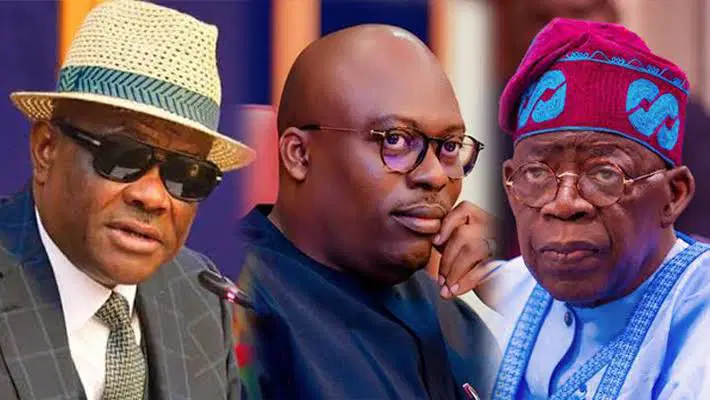
Governor Fubara Faces Criticism For Political Isolation In Rivers State Rivers State Governor Siminalayi Fubara has come under scrutiny for his approach to the ongoing political crisis in the state. Reports indicate that the governor has chosen to navigate the situation independently, avoiding consultations with key elders and political allies who have openly supported him.
Governor Fubara Faces Criticism For Political Isolation In Rivers State
Rivers State Governor Siminalayi Fubara has come under scrutiny for his approach to the ongoing political crisis in the state. Reports indicate that the governor has chosen to navigate the situation independently, avoiding consultations with key elders and political allies who have openly supported him.
Sources within the Rivers State Government House revealed that Fubara has distanced himself from even those who have stood by him against his political rival, Minister of the Federal Capital Territory, Nyesom Wike. His reluctance to engage with prominent figures has raised concerns about the effectiveness of his strategy in consolidating power.
Nnamdi Kanu’s Case Reassigned To New Judge Amid Legal Battle
Fubara’s Isolation Sparks Concerns Among Allies
According to insiders, Fubara has consistently ignored calls from political leaders and influential figures who could offer guidance in his standoff with Wike. Even a governor from a neighboring state reportedly struggled to get a response from him.
“He does not relate well with the leadership of the ethnic nationalities in the region who are solidly behind him in this fight,” a government source disclosed.
It is believed that Fubara is aware of a more powerful figure allegedly influencing Wike’s actions behind the scenes. However, despite mounting pressure, he has refused to seek intervention from key national figures such as former President Olusegun Obasanjo, General Ibrahim Babangida, General Abdulsalami Abubakar, and the Sultan of Sokoto. Some political observers fear that his refusal to engage these influential figures could weaken his position in the ongoing crisis.
Lack of Political Strategy and Influence
Critics argue that the governor has surrounded himself with individuals who lack the political strength to counter Wike’s influence. Many of these figures were previously aligned with former Vice President Atiku Abubakar but were forced out of Rivers State by Wike in 2023. They returned only after Wike assumed a ministerial role, yet they have failed to provide the necessary political muscle to support Fubara’s administration.
While Fubara has been described as generous, some believe his generosity has not translated into political leverage. “Fubara is generous. However, this generosity does not seem to reflect in the politics of the state. He has lost huge ground,” a source noted.
Additionally, members of the Elders Council in Rivers State have criticized the governor for being “too stingy with money.” One elder remarked, “Last Christmas, not even a grain of rice from this government despite our support for him.”
Failed Peace Talks and Growing Tensions
Efforts to mediate the crisis have also been met with resistance from the governor. A retired northern Army officer reportedly sent emissaries to broker peace, but Fubara declined the offer. Sources suggest that the officer had vested interests in oil wells in Rivers State, which may have influenced the governor’s decision to reject the mediation.
As political tensions continue to escalate, Fubara’s approach has left many questioning his long-term strategy for governance and political survival. With Wike’s influence still strong, the coming months will be crucial in determining whether the governor can withstand the pressure or if his isolationist approach will backfire.
For now, Rivers State remains a hotbed of political uncertainty, with Fubara’s leadership facing increasing scrutiny from both allies and adversaries.








Leave a Comment
Your email address will not be published. Required fields are marked with *