
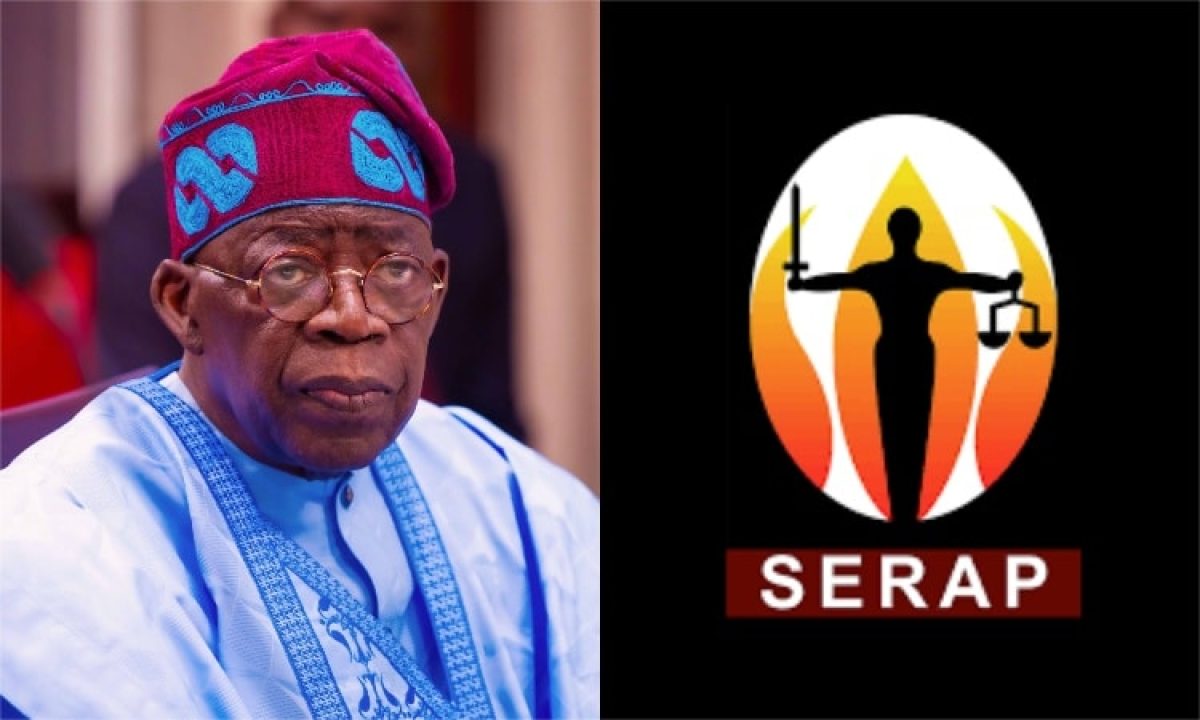
SERAP Sues President Tinubu Over Suspension of Rivers State Government SERAP Challenges Tinubu’s State of Emergency in Court The Socio-Economic Rights and Accountability Project (SERAP) has taken legal action against President Bola Ahmed Tinubu over the suspension of the Governor, Deputy Governor, and House of Assembly members of Rivers State. This follows the declaration of
SERAP Sues President Tinubu Over Suspension of Rivers State Government
SERAP Challenges Tinubu’s State of Emergency in Court
The Socio-Economic Rights and Accountability Project (SERAP) has taken legal action against President Bola Ahmed Tinubu over the suspension of the Governor, Deputy Governor, and House of Assembly members of Rivers State. This follows the declaration of a state of emergency in the state, a move that has sparked widespread controversy and legal debate.
OSUN NULGE DEBUNKS CLAIMS OF THE ASSOCIATION OF CONCERNED LOCAL GOVERNMENT STAFF OF OSUN STATE
Declaration of State of Emergency in Rivers State
On Tuesday, President Tinubu announced a state of emergency in Rivers State, citing security concerns and governance issues. As part of this declaration, Governor Siminalayi Fubara, Deputy Governor Ngozi Odu, and all members of the Rivers State House of Assembly were suspended from office. In their place, the President appointed Vice Admiral Ibok-Ete Ibas (Rtd) as the Sole Administrator for an initial period of six months.
This decision has drawn strong criticism from various stakeholders, including legal experts, civil society organizations, and opposition politicians. Many argue that the move undermines Nigeria’s democracy and sets a dangerous precedent for governance in the country.
 SERAP’s Lawsuit Against the President
In response to the suspension, SERAP filed a lawsuit last Friday at the Federal High Court in Abuja, challenging the legality of the President’s actions. The suit names the Attorney General of the Federation and Minister of Justice, Mr. Lateef Fagbemi, SAN, and the newly appointed Sole Administrator, Vice Admiral Ibok-Ete Ibas (Rtd), as defendants.
The plaintiffs in the case, Yirabari Israel Nulog, Nengim Ikpoemugh Royal, and Gracious Eyoh–Sifumbukho, are members of the SERAP Volunteers’ Lawyers Network (SVLN) in Rivers State. They argue that the suspension of elected officials violates the Nigerian Constitution and deprives the citizens of their democratic rights.
According to the lawsuit, the plaintiffs seek several reliefs, including:
- The annulment of the suspension of Governor Fubara, Deputy Governor Odu, and the lawmakers.
- A declaration that the appointment of a Sole Administrator is unlawful and unconstitutional.
- An injunction restraining Vice Admiral Ibas from acting as the Sole Administrator.
- A judicial declaration affirming the right of the citizens of Rivers State to participate in democratic governance without unconstitutional interference.
Constitutional Violations and Democratic Concerns
The plaintiffs argue that the suspension of Rivers State’s elected officials contradicts Nigeria’s democratic principles and constitutional provisions. They cite various sections of the Nigerian Constitution that guarantee the right of citizens to choose their leaders through democratic elections.
Legal experts backing SERAP’s position emphasize that a state of emergency does not automatically grant the President the power to remove elected officials. They argue that such actions must follow due process, including approval by the National Assembly and adherence to constitutional guidelines.
Ebun-Olu Adegboruwa, SAN, who represents the plaintiffs, has reiterated that the President’s decision bypasses critical legal procedures and undermines the democratic framework of Nigeria. He stressed that removing elected officials without following the appropriate legal channels threatens the rule of law and sets a dangerous precedent for future governance.
Implications of the Case
The lawsuit has sparked national and international interest, as it raises fundamental questions about executive power, constitutional governance, and democratic accountability. Analysts warn that if the suspension of elected officials is upheld, it could embolden future administrations to take similar actions in other states, potentially weakening Nigeria’s federal structure.
Political commentators have also expressed concerns about the implications of this move for upcoming elections and the stability of the country’s democratic institutions. Some fear that the action may deepen political tensions in Rivers State and create unrest among the citizens who feel disenfranchised.
Awaiting the Court’s Decision
As of now, a hearing date for the case has not been set. Legal observers are closely monitoring the situation, as the court’s ruling could have far-reaching consequences for Nigeria’s democratic governance and constitutional interpretation.
Many Nigerians, including civil society groups and opposition leaders, have called on the judiciary to uphold the constitution and ensure that democratic principles are not eroded. Meanwhile, the federal government has defended its actions, arguing that the state of emergency was necessary to restore stability and order in Rivers State.
The legal battle between SERAP and the federal government over the suspension of Rivers State’s elected officials is a critical test of Nigeria’s commitment to democracy and the rule of law. As the case progresses, the outcome will determine the limits of executive power and the extent to which constitutional safeguards can protect democratic governance.
Nigerians and the international community await the court’s decision, which will play a key role in shaping the country’s democratic future.








Leave a Comment
Your email address will not be published. Required fields are marked with *