
FG Pushes to Halt Solar Panel Imports, Advocates Local Production Amid N200bn Cost Concerns The Federal Government (FG) of Nigeria has reiterated its commitment to ending the importation of photovoltaic (PV) solar panels into the country, citing a staggering N200 billion spent so far on such imports. This was disclosed by the managing director and
FG Pushes to Halt Solar Panel Imports, Advocates Local Production Amid N200bn Cost Concerns
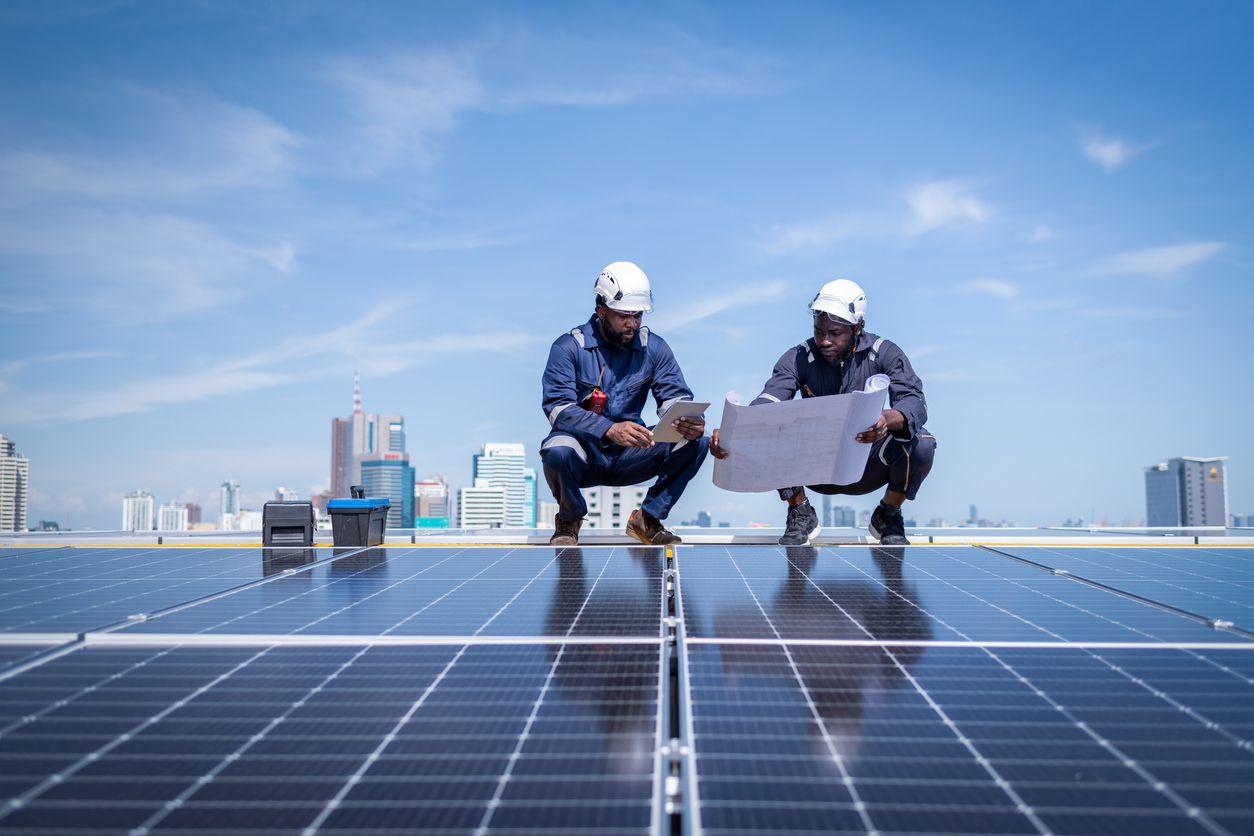
The Federal Government (FG) of Nigeria has reiterated its commitment to ending the importation of photovoltaic (PV) solar panels into the country, citing a staggering N200 billion spent so far on such imports. This was disclosed by the managing director and chief executive officer of the Rural Electrification Agency (REA), Abba Aliyu, during a high-level roundtable held in Victoria Island, Lagos, in collaboration with the Lagos State Government.
The meeting marked a significant milestone as both parties signed a Memorandum of Understanding (MoU) to accelerate rural electrification efforts across Lagos State. Aliyu emphasized that part of the federal strategy moving forward is to domesticate the manufacturing of renewable energy components such as solar panels and lithium batteries—crucial elements in driving sustainable energy access for Nigeria’s rural communities.
Chaos Erupts As CBEX Investors Discover Empty Accounts Amidst Fraud Allegations
Photovoltaic Domestication: A New Energy Future for Nigeria
Speaking at the event, Aliyu revealed that over N200 billion had been expended on importing solar PV panels in recent years. While acknowledging that some level of importation may still be required in the short term, he stressed that the long-term vision is to boost local capacity and reduce dependency on foreign suppliers.
“While there is a need for that importation, one of the key things our agency is striving for is domesticating the manufacturing of this renewable equipment,” Aliyu said. “Lagos, being the centre of excellence, is going to lead a total war in that domestication.”
To this end, the REA has supported the development of solar panel manufacturing plants within Lagos State. A notable example cited by Aliyu is a PV panel assembly plant located in Ikotun, which initially had a capacity of 10 megawatts. Through collaboration with REA, the plant has now expanded its output to 100 megawatts, underscoring the agency’s commitment to scaling up domestic production.
Further highlighting the government’s efforts, Aliyu disclosed an upcoming $150 million investment by Green World to establish a lithium battery assembly plant in Lagos. A joint development agreement is already in progress, which will further strengthen Nigeria’s renewable energy ecosystem.
National Strategy and Policy Support
The push for local manufacturing also aligns with the broader goals of the Ministry of Science and Technology. Recently, Minister Uche Nnaji affirmed the federal government’s readiness to support indigenous production of solar panels, particularly through agencies like the National Agency for Science and Engineering Infrastructure (NASENI).
“With NASENI here, you know that we have panels. It has a factory that has started producing solar panels, and other private individuals are also producing solar panels as we speak,” Nnaji said. “Through science and technology, and our Presidential Executive Order No. 5, we will stop all these importations of solar panels. We will support our local industries to grow.”
This executive order mandates that priority be given to Nigerian companies and professionals in the planning and execution of science, engineering, and technology projects. The move is expected to act as a catalyst for industrial growth while conserving foreign exchange.
Industry Reactions: Balancing Growth with Caution
While the federal government’s position has been applauded in some quarters, stakeholders in the renewable energy sector have advised caution. The Renewable Energy Association of Nigeria (REAN) issued a statement warning that an outright ban on imported solar panels—without first ensuring robust local manufacturing capacity—could undermine the gains made in recent years.
“Solar energy has become a beacon of hope for millions of Nigerians who remain underserved by the national grid,” REAN noted. “Businesses, communities, and individuals rely on solar solutions to power homes, schools, hospitals, and enterprises. The renewable energy sector has grown significantly, attracting investment and fostering innovation.”
REAN argued that while the domestication of solar panel production is a noble and much-needed objective, it must be approached strategically. Premature restrictions on imports, they said, could stall the sector’s momentum, limit consumer options, and inadvertently drive up costs—especially in the absence of scalable local alternatives.
Toward Energy Independence
As Nigeria confronts its energy access challenges, the debate over solar panel importation underscores the delicate balance between protecting local industries and meeting urgent national energy demands. With over 85 million Nigerians still lacking access to electricity, renewable energy remains a vital pathway for economic inclusion and development.
While the government’s drive to localize production is commendable and economically strategic, it must be matched with investment, policy incentives, and industry support to ensure a smooth and sustainable transition. The next few years will be pivotal in determining whether Nigeria can effectively move from being a major importer to a leading manufacturer of clean energy technologies.




















Leave a Comment
Your email address will not be published. Required fields are marked with *