
El-Rufai Visits Emir Sanusi, Backs SDP as New Political Path Ahead of 2027 Elections In a politically symbolic move, the former Governor of Kaduna State, Malam Nasir El-Rufai, paid a courtesy visit to the 16th Emir of Kano, Muhammadu Sanusi, at his palace on Monday, April 28, 2025. The meeting, rich in political undertones, comes
El-Rufai Visits Emir Sanusi, Backs SDP as New Political Path Ahead of 2027 Elections
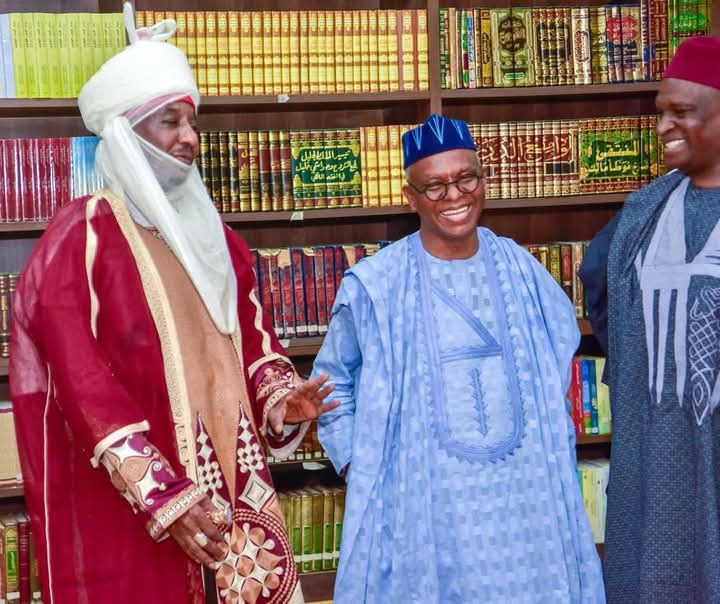
In a politically symbolic move, the former Governor of Kaduna State, Malam Nasir El-Rufai, paid a courtesy visit to the 16th Emir of Kano, Muhammadu Sanusi, at his palace on Monday, April 28, 2025. The meeting, rich in political undertones, comes amid El-Rufai’s nationwide tour and ongoing engagements with political stakeholders as Nigeria inches closer to the pivotal 2027 general elections.
The Emir, who warmly received his longtime associate and guest, welcomed El-Rufai alongside several dignitaries and traditional aides. The visit is one of many in recent weeks that signal El-Rufai’s reinvigorated presence on the political landscape, especially following his recent defection to the Social Democratic Party (SDP).
Court of Appeal Reshuffles Justices Across Divisions Nationwide, Wike’s Wife Remains In Abuja
Courtesy Visit Signals Shift in Political Landscape
El-Rufai’s visit to Kano’s royal palace goes beyond tradition and friendship—it is a calculated step in his broader strategy to galvanise national support around a third political force. The former governor used the opportunity to reaffirm his commitment to promoting a credible alternative to the ruling All Progressives Congress (APC) and the opposition Peoples Democratic Party (PDP), both of which he says have lost touch with the Nigerian people.
While addressing palace dignitaries and journalists, El-Rufai clarified that his decision to join the SDP was driven not by personal grievances but by patriotic duty. He said his goal was to unite Nigerians disillusioned with the current state of politics under a new, people-focused platform.
“Twelve years ago, we formed the APC and defeated an incumbent president, but today’s realities require a different approach. We are uniting disaffected Nigerians under the SDP, which offers a platform built on fairness and internal democracy,” El-Rufai said.
El-Rufai also dismissed speculation that his recent political shift stemmed from internal party disagreements or marginalisation within the APC. “I’m 65. I could retire peacefully, but Nigeria faces an existential crisis. This is about the country’s survival, not personal gain,” he added.
He went on to highlight that his transition into the SDP is not only a response to party politics but a call to action aimed at rescuing Nigeria from entrenched political dysfunction, corruption, and poor governance.
Advocating Merit Over Zoning in 2027
In his remarks, El-Rufai tackled one of Nigeria’s most contentious political debates—power rotation and regional zoning. While acknowledging the historic significance of power-sharing arrangements, he firmly stated that Nigeria’s current economic and security challenges demand competence over geography.
“Leadership in 2027 must not be about ethnicity or religion; it must be about capacity, credibility, and character. Nigeria is too fragile to be handed over to anyone on the basis of zoning alone,” El-Rufai said.
This position could stir controversy, particularly among advocates of regional equity, but it aligns with the SDP’s emphasis on policy-driven governance. By calling for an end to “godfatherism” and demanding internal democracy within political parties, El-Rufai appears to be building a platform around institutional reform and national unity.
 Building a Coalition Beyond Party Lines
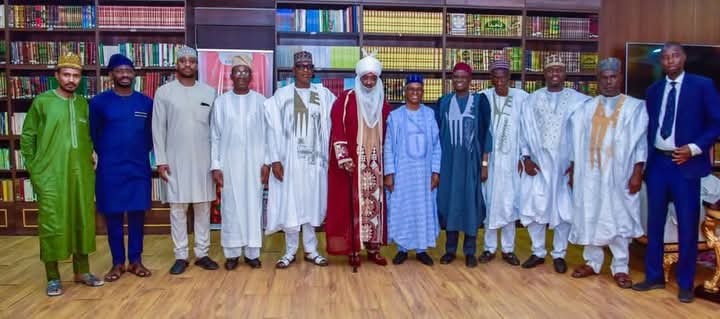
During the palace visit, El-Rufai was accompanied by a delegation of SDP leaders, further signalling the seriousness of his political pivot. Sources close to the former governor revealed that he has been quietly working to consolidate a cross-party alliance of reform-minded politicians, technocrats, and youth leaders across Nigeria.
This aligns with his recent series of meetings in different geopolitical zones, where he has been engaging with former governors, community leaders, and youth groups. El-Rufai’s strategy, according to insiders, is to present a pan-Nigerian coalition rooted in credible leadership, unlike what he now criticizes as “hollow structures” of the APC and PDP.
Photos from the Kano palace visit show a visibly cheerful Emir Sanusi—himself a reform advocate—welcoming El-Rufai with warmth and camaraderie. Sanusi, who was controversially removed from office as Emir in 2020 during El-Rufai’s tenure as governor, has since been reinstated as the 16th Emir of Kano. Their continued relationship underscores a shared ideology focused on governance reform and national development.
As the countdown to the 2027 general elections begins in earnest, El-Rufai’s moves are reshaping the early narrative. His affiliation with the SDP and his nationwide consultations suggest that he is determined to challenge the traditional two-party dominance and inject fresh momentum into Nigeria’s political discourse.
Whether El-Rufai himself will contest for office remains unclear, but his recent activities suggest a key role in orchestrating what he envisions as Nigeria’s political reawakening. What is certain, however, is that his visit to the Emir of Kano marks not just a symbolic reunion, but a clarion call for a new chapter in Nigerian politics.







Leave a Comment
Your email address will not be published. Required fields are marked with *