
EFCC to Question Tompolo Over Naira Abuse at Birthday Party Amidst Public Outcry The Economic and Financial Crimes Commission (EFCC) has announced plans to interrogate former militant leader and ex-Niger Delta warlord, Government Ekpemupolo, popularly known as Tompolo, following the circulation of a viral video allegedly showing him engaging in naira abuse during his recent
EFCC to Question Tompolo Over Naira Abuse at Birthday Party Amidst Public Outcry

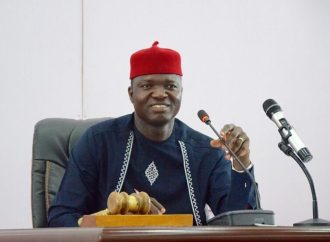
The Economic and Financial Crimes Commission (EFCC) has announced plans to interrogate former militant leader and ex-Niger Delta warlord, Government Ekpemupolo, popularly known as Tompolo, following the circulation of a viral video allegedly showing him engaging in naira abuse during his recent birthday celebration. The anti-graft agency declared on Monday morning via its official 𝕏 (formerly Twitter) account: “Nobody is above the law. Tompolo will have questions to answer!”
This announcement comes amid growing public scrutiny and debates over the EFCC’s uniformity in enforcing currency regulations, especially against powerful or politically connected individuals. In the video that has since gone viral, Tompolo was seen dancing as a man sprays ₦1,000 notes in his direction. The clip, reportedly recorded during Tompolo’s 54th birthday party in April, was posted online by a user identified as Harrison A (@harreceipts), prompting immediate outrage and calls for accountability.
Five Amotekun Operatives Injured In Violent Attack On Command Centre
EFCC Targets Former Militant Leader in Expanding Naira Abuse Crackdown
The EFCC’s move to summon Tompolo adds another name to the growing list of celebrities, influencers, and high-profile individuals currently under investigation for violating Nigeria’s currency laws. Section 21(3) of the Central Bank of Nigeria (CBN) Act, 2007 (as amended), expressly prohibits the spraying, matching, or dancing on Naira notes at social functions or otherwise. The law stipulates penalties including fines, imprisonment, or both for violators.
The viral footage reignited widespread criticism of what some Nigerians perceive as selective enforcement. Many questioned whether Tompolo, a man once feared for his militant activities in the oil-rich Niger Delta and now regarded as an influential community leader, would face the same legal repercussions as others who have been prosecuted for similar offences.
In a climate where financial discipline is being emphasized by the government, the EFCC has adopted a zero-tolerance stance on naira abuse. In recent months, several arrests have been made, and convictions secured to reinforce compliance with the law.
From Celebrities to Former Warlords: EFCC Expands Scope
April 2024 marked a turning point in the EFCC’s enforcement efforts. Controversial cross-dresser and internet personality Idris Okuneye, widely known as Bobrisky, was sentenced to six months in prison with no option of fine for currency mutilation. The judgment sent shockwaves across the entertainment and social media communities.
Soon after, Lagos-based businessman and philanthropist Emeka Okonkwo, aka E-Money, was arrested for allegedly spraying naira and foreign currencies during a public event. That incident triggered a wave of reactions, with the EFCC reaffirming its commitment to the anti-currency abuse campaign.
Just last week, two other public figures, actress Iyabo Ojo and comedian Ayo Makun (AY), were also summoned by the agency for allegedly participating in events where naira notes were mishandled. Earlier in the year, billionaire heirs Wahab and Raheem Okoya were invited by the EFCC following a promotional video that showcased naira spraying, further fueling the agency’s reputation for clamping down on high-profile offenders.
In each of these cases, EFCC Chairman Ola Olukoyede reiterated that the rule of law must be upheld regardless of status, influence, or past affiliations.
Is the Law Truly Equal for All?
While the EFCC’s statement on Tompolo—“Nobody is above the law”—seeks to assure the public of its impartiality, some observers remain skeptical. Social media users flooded comment sections with mixed reactions, with some lauding the EFCC for upholding the law, while others accused the agency of grandstanding without substance.
“Tompolo is not just a former militant; he is a stakeholder in the current security framework in the Niger Delta. Will the EFCC truly hold him accountable, or is this just to quiet public criticism?” one user wrote.
Others questioned whether the EFCC’s consistent public showmanship in such cases might overshadow the need for broader economic and institutional reforms. However, legal experts argue that enforcing laws against naira abuse is both symbolic and necessary, particularly in a country where rule of law often appears to falter in the face of wealth or power.
What’s Next for Tompolo and the EFCC?
With growing attention on the EFCC’s next steps, all eyes will now turn to how the agency handles its invitation to Tompolo. The former warlord, who once led the feared Movement for the Emancipation of the Niger Delta (MEND), has since been rehabilitated into civil society and now plays a strategic role in pipeline surveillance and regional security.
Should the EFCC proceed with a formal investigation, it could either bolster the agency’s image as a non-discriminatory institution or, if not followed through, deepen skepticism about its impartiality.
For now, the EFCC’s message is clear: even former militants are not exempt from the laws governing Nigeria’s financial conduct.


















Leave a Comment
Your email address will not be published. Required fields are marked with *