
Buhari Intimidated, Harassed, Blackmailed Me -Bukola Saraki Former Senate President Bukola Saraki has opened up on what he described as a period of intense political harassment and intimidation under the administration of former President Muhammadu Buhari, attributing his persecution to his staunch opposition to excessive borrowing and his insistence on legislative independence. Speaking at the
Buhari Intimidated, Harassed, Blackmailed Me -Bukola Saraki
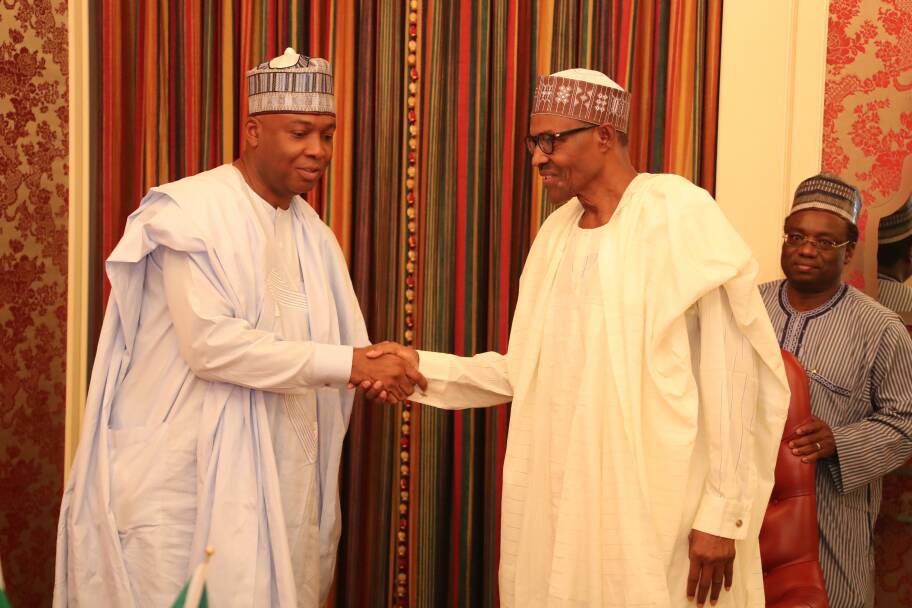
Former Senate President Bukola Saraki has opened up on what he described as a period of intense political harassment and intimidation under the administration of former President Muhammadu Buhari, attributing his persecution to his staunch opposition to excessive borrowing and his insistence on legislative independence.
Speaking at the 2025 Reunion Gala of the King’s College Old Boys Association (KCOBA) in Houston, Texas, Saraki recounted how his tenure as Senate President (2015–2019) was marred by executive interference, legal witch-hunts, and media attacks—tactics he claimed were meant to silence the legislature and force compliance with the executive’s agenda.
“The legislature under my leadership was silenced, harassed, assaulted, bullied, and blackmailed,” Saraki said. “We were like orphans. The elite and ordinary people kept quiet, were nonchalant, and stayed aloof.”
Saraki asserted that the harassment he faced was not accidental, but rather a direct consequence of his refusal to approve and endorse the Buhari administration’s borrowing plans. According to him, the National Assembly, under his leadership, had legitimate concerns about the long-term economic consequences of mounting public debt and sought to enforce fiscal responsibility.
SSANU, NASU Reject N50bn Sharing Formula, Demand Equity In Allocation Of Earned Allowances
“I could have agreed with everything the Presidency under Buhari wanted and cut deals with them all the way. I would have been a good ally,” he stated. “But we stood our ground.”
He argued that his administration’s refusal to serve as a rubber stamp made him a threat to the executive, triggering a wave of calculated political attacks, including court cases, media propaganda, and internal party sabotage.
Saraki’s tenure as Senate President was defined by an often hostile relationship with President Buhari’s government. His emergence as Senate President in 2015, against the wishes of the APC leadership, immediately created tension between the executive and legislative arms. His decision to ally with opposition senators to secure his position—while his party backed another candidate—further deepened the rift.
Shortly after taking office, Saraki became the subject of multiple legal actions, including high-profile charges of false asset declaration related to his tenure as Governor of Kwara State. Although he was later acquitted by the Supreme Court, many political observers viewed the cases as politically motivated efforts to remove him from office.
His defection to the Peoples Democratic Party (PDP) in 2018 intensified the conflict, as the APC sought to unseat him through a failed impeachment attempt.
According to Saraki, the climate of intimidation during his leadership has had a chilling effect on future National Assembly leaders, many of whom now prefer to align passively with the executive to avoid a similar fate.
“Subsequent leadership of the National Assembly would rather be a rubber stamp and play dumb because they do not want to go through the harrowing experience that Saraki went through,” he observed.
Saraki lamented that this environment has effectively weakened the legislative arm, eroding its ability to act as a check and balance on the executive. He described this development as a major setback for Nigeria’s democracy, warning that legislative subservience poses serious risks to governance, accountability, and national progress.
Saraki also used his platform to comment on Nigeria’s overdependence on individuals rather than institutions, a structural flaw he believes has crippled the nation’s democratic evolution.
“These sad developments are indications that our institutions are weak,” Saraki said. “Instead of building institutions, we are building strong individuals.”
He noted that for Nigeria to advance democratically, it must prioritize building resilient systems—where the rule of law, separation of powers, and institutional integrity are protected regardless of who is in office.
Saraki’s reflections echoed the sentiments of many Nigerians who have grown disillusioned with a political culture often driven by personality politics rather than policy or institutional frameworks. His comments have rekindled debate around executive overreach, the need for legislative independence, and the urgent call to reform governance in Nigeria.
Saraki’s speech serves not only as a personal testimony of political persecution but also as a call to action for democratic renewal. He urged both the political elite and the general public to become more engaged in defending democratic institutions, noting that silence in the face of injustice enables authoritarianism.
As Nigeria continues to face economic challenges, ballooning debt, and public sector inefficiencies, Saraki’s warning offers a sobering reminder of the consequences of unchecked power and the critical need for balanced governance driven by accountable institutions—not political strongmen.











Leave a Comment
Your email address will not be published. Required fields are marked with *