
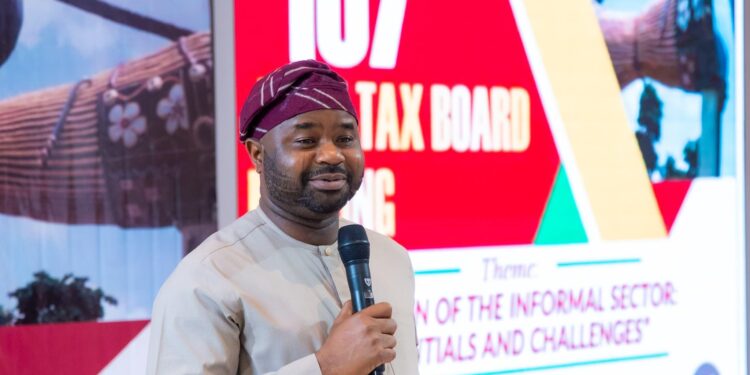
“Oyo State’s IGR Hits N65.28 Billion in 2024, Surges by 145% Since 2019” Oyo State has recorded a remarkable boost in its Internally Generated Revenue (IGR), hitting N65.28 billion in 2024—a 145.5% surge compared to its 2019 figures. This significant growth was disclosed by the Executive Chairman of the Federal Inland Revenue Service (FIRS), Zacch
“Oyo State’s IGR Hits N65.28 Billion in 2024, Surges by 145% Since 2019”
Oyo State has recorded a remarkable boost in its Internally Generated Revenue (IGR), hitting N65.28 billion in 2024—a 145.5% surge compared to its 2019 figures. This significant growth was disclosed by the Executive Chairman of the Federal Inland Revenue Service (FIRS), Zacch Adedeji, during the opening ceremony of the 157th Joint Tax Board (JTB) meeting held in Ibadan.
In a statement released by the FIRS on Monday, Adedeji applauded the Oyo State government for its progressive revenue drive, which has now firmly placed the state among the top ten in the country in terms of IGR performance.
Dangote Projects $7M Daily Revenue As DIL Expands Fertiliser, Coal Exports”
“Oyo’s IGR Growth Sets New Benchmark in Southwest”
Adedeji described Oyo’s IGR improvement as “impressive,” citing Governor Seyi Makinde’s leadership in fostering an enabling environment for economic expansion and public sector efficiency. According to him, the state’s current financial standing in revenue collection is a testament to robust fiscal strategies, efficient tax reforms, and productive engagement with the informal sector.
“Oyo’s 2024 Internally Generated Revenue performance of N65.28 billion marks a strong recovery and puts the state in the league of top revenue-generating states,” the FIRS chief stated. “This 145.5% increase since 2019 clearly shows that the state has adopted and implemented forward-thinking policies in fiscal administration.”
He praised Governor Makinde’s administration for advancing infrastructure and socioeconomic development, which in turn has spurred private sector confidence and higher tax compliance.
The 157th Joint Tax Board meeting provided a platform to review state-level tax performance and harmonize efforts to improve tax administration across the federation. Adedeji emphasized the JTB’s pivotal role as a collaborative framework unifying all tax authorities in the country.
He noted that the JTB is currently transitioning into the Joint Revenue Board (JRB), a move pending legislative approval, which aims to broaden the board’s powers and effectiveness. This transformation, according to him, is essential for aligning tax policies with emerging economic realities, particularly in supporting state governments’ fiscal sustainability.
“Informal Sector Engagement Driving New Revenue Streams”
Adedeji also highlighted how integrating the informal sector into the tax net has contributed significantly to Oyo State’s revenue uptick. He noted that many small and medium-sized enterprises, which previously operated outside regulatory frameworks, have now become reliable contributors to the state’s IGR.
“Bringing the informal sector into the tax conversation is not just a matter of expanding the revenue base—it’s also about fostering inclusion and accountability. Oyo has done exceptionally well in this area,” he added.
He urged other states to emulate Oyo’s model and build inclusive tax systems that leverage digital tools, community engagement, and public transparency.
“Oyo Reclaims Top Spot After Temporary Dip in 2023”
Oyo’s new IGR figure for 2024 represents a significant rebound from the previous year. According to data from the National Bureau of Statistics (NBS), Oyo State generated N52.74 billion in IGR in 2023—a drop from N62.24 billion in 2022. This decline was primarily attributed to policy transitions and structural reforms during the fiscal year.
Nevertheless, the state’s revenue performance in 2024 now surpasses its 2021 and 2022 records. In 2021, Oyo collected N52.08 billion, maintaining a relatively stable IGR profile before the dip in 2023. The resurgence in 2024 signals a return to growth, fueled by renewed investments, improved tax administration, and targeted economic policies.
At the national level, the combined IGR of Nigeria’s 36 states and the Federal Capital Territory rose to N2.43 trillion in 2023, reflecting a 26.03% increase from N1.93 trillion in 2022. Leading the IGR charts were Lagos (N815.86 billion), FCT (N211.10 billion), and Rivers State (N195.41 billion). On the other end, states like Taraba (N10.87 billion), Yobe (N11.19 billion), and Kebbi (N11.74 billion) posted the lowest revenue figures.
The PAYE (Pay-As-You-Earn) system remained the largest contributor to tax revenue, accounting for N1.24 trillion or 63.83% of all tax collections in 2023, according to the NBS report.
As the state continues to build on this momentum, stakeholders have been urged to maintain their dedication to public service and socioeconomic development. Adedeji concluded by reaffirming the FIRS’s commitment to supporting subnational tax reforms, ensuring that states like Oyo can sustain their growth trajectory and contribute meaningfully to national development.













Leave a Comment
Your email address will not be published. Required fields are marked with *