
“Poverty Over Power: Emir Sanusi Exposes Harsh Realities in Nigeria’s Rural Margins” Abuja, Nigeria – The Emir of Kano and former Governor of the Central Bank of Nigeria (CBN), Muhammadu Sanusi II, has offered a striking personal revelation about Nigeria’s poverty crisis, stating that his true understanding of the depth of deprivation only came
“Poverty Over Power: Emir Sanusi Exposes Harsh Realities in Nigeria’s Rural Margins”
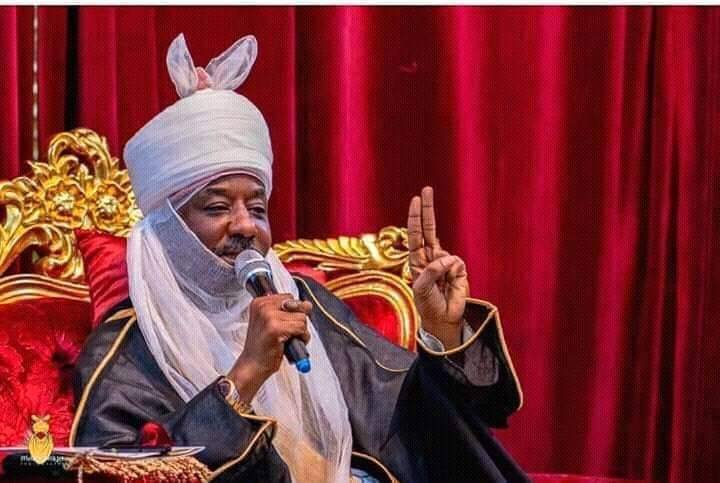
Abuja, Nigeria – The Emir of Kano and former Governor of the Central Bank of Nigeria (CBN), Muhammadu Sanusi II, has offered a striking personal revelation about Nigeria’s poverty crisis, stating that his true understanding of the depth of deprivation only came after becoming a traditional ruler. Speaking candidly during a public lecture in Abuja, Sanusi criticized the nation’s leadership for neglecting rural development while prioritizing urban projects.
The lecture, titled “Weaponisation of Poverty as a Means of Underdevelopment: A Case Study of Nigeria,” was organized in honor of former Rivers State Governor Rotimi Amaechi’s 60th birthday. Sanusi’s address delved into the structural failures and misplaced governance priorities that, in his view, perpetuate suffering across the country.
Constitution Review: Reps To Meet Govs, State Assembly Speakers, Others
Sanusi didn’t mince words when addressing Nigeria’s skewed development focus. He questioned whether those in leadership truly care about the masses or are more concerned with consolidating their grip on power.
“Do we actually love the people or do we just love ruling over them?” Sanusi asked. “We make overheads and underpasses for ourselves in the cities while those in the rural areas cannot reach hospitals.”
According to the Emir, poverty in Nigeria has not only persisted but has worsened due to deliberate neglect of fundamental services in rural communities. He said the disconnect between policymakers and the grassroots is a major barrier to sustainable national progress.
“We are in crisis,” he declared. “The real question should be: how do we get out of it?”
Sanusi emphasized that leadership must begin with empathy, understanding, and a readiness to tackle the pain points of ordinary citizens. He warned that ignoring the needs of the poor only accelerates national decline and deepens social discontent.
Leaders Without Vision, Policies Without Purpose
Joining Sanusi at the event, former Kaduna State Governor Nasir El-Rufai echoed concerns about Nigeria’s leadership woes. El-Rufai criticized voters for repeatedly choosing politicians who lack the capacity to govern effectively.
“We keep electing people who only know how to grab power but don’t know what to do with it,” El-Rufai said, highlighting a growing pattern of incompetence among elected officials.
He suggested that many of Nigeria’s leaders are more invested in their political survival than in delivering meaningful change, resulting in a cycle of underdevelopment and citizen disillusionment.
When Illness Reflects Injustice: Socioeconomic Roots of Suffering
In a powerful addition to the discussion, Professor Usman Yusuf, a former Executive Secretary of the National Health Insurance Scheme (NHIS), linked the nation’s healthcare crisis to broader societal failures.
“Most cases presenting at hospitals are rooted in social and economic conditions rather than purely medical issues,” Yusuf observed. He blamed rampant corruption and a chronic lack of accountability in governance for the multidimensional poverty afflicting millions of Nigerians.
Yusuf stressed that tackling poverty requires more than economic reform; it demands a complete overhaul of the values and systems that enable elite impunity and neglect of the poor.
The message resonated strongly with the audience, many of whom nodded in agreement as speaker after speaker painted a dire portrait of life for Nigeria’s most vulnerable populations. Sanusi’s speech was a poignant reminder that development must be inclusive and people-centered to be sustainable.
His remarks serve as both a wake-up call and a challenge to leaders to shift from self-serving politics to governance grounded in empathy, justice, and equity.
For a country grappling with economic instability, insecurity, and a growing trust deficit between the people and the state, the lecture was not just timely—it was necessary. The voices from the podium urged Nigeria to reclaim its democratic promise by prioritizing its poorest citizens and dismantling the systemic poverty that has long held the nation hostage.









Leave a Comment
Your email address will not be published. Required fields are marked with *