
Amaechi Alleges Bias in INEC, Questions Yakubu’s Credibility Compared to Jega Former Minister of Transportation and ex-Governor of Rivers State, Rotimi Amaechi, has openly accused the current Chairman of the Independent National Electoral Commission (INEC), Professor Mahmood Yakubu, of bias. Speaking during an interview on Arise TV on Tuesday night, Amaechi expressed serious doubts
Amaechi Alleges Bias in INEC, Questions Yakubu’s Credibility Compared to Jega
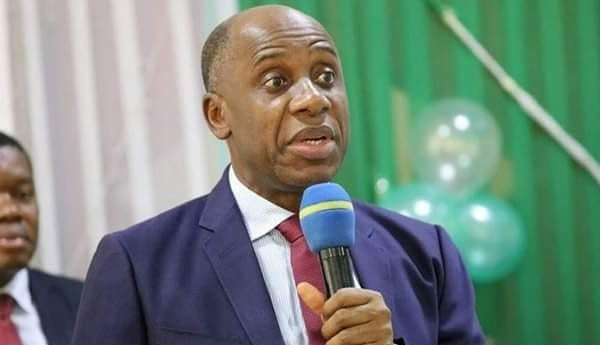
Former Minister of Transportation and ex-Governor of Rivers State, Rotimi Amaechi, has openly accused the current Chairman of the Independent National Electoral Commission (INEC), Professor Mahmood Yakubu, of bias. Speaking during an interview on Arise TV on Tuesday night, Amaechi expressed serious doubts about the impartiality of the electoral body under Yakubu’s leadership.
The former minister, a prominent figure in the All Progressives Congress (APC), stated that had Yakubu been INEC Chairman in 2015, the APC might never have been registered, nor would it have triumphed in the landmark elections that year.
Tinubu Hosts Osun Governor Adeleke In Lagos, Signals Bipartisan Unity
INEC Chairman Compared Unfavorably to Predecessor Jega
Amaechi was emphatic in his praise for former INEC boss, Professor Attahiru Jega, who oversaw the 2015 elections widely regarded as a benchmark for transparency and credibility in Nigeria’s democratic journey. He credited Jega with creating a fair environment that enabled the emergence of APC as a viable opposition party and eventually, the ruling party.
“The current chairman of INEC, if he were the chairman in 2015, we would not have won,” Amaechi declared. “May God bless Jega. Because the ground rules were clear.”
He went further to say that during Jega’s tenure, the process of party registration was transparent and based on merit. In contrast, Amaechi alleged that Yakubu would likely have blocked APC’s registration, even if all legal requirements had been fulfilled.
“When we were to register APC, Jega opened the door, and we complied with the registration requirements. He got the APC registered. The current man, even if you comply with all these, he would not register you,” Amaechi stated.
Perhaps the most troubling part of Amaechi’s remarks was his suggestion that the electoral system in Nigeria is being manipulated for political gain. Drawing comparisons between Mahmood Yakubu and controversial former INEC Chairman Maurice Iwu, Amaechi claimed that Nigeria may be regressing in its democratic progress.
“Already, INEC is biased,” he asserted. “So, the only thing I can tell you now is that, looking at the way Nigeria has run the election, even the Option A4 led us forward. At least, a lot of transparency. You were sure of what was going on.”
Amaechi lamented the return to what he termed an era of uncertainty and potential manipulation, suggesting that the electoral institution is now a tool of “state capture”—a term often used to describe the domination of state institutions by vested interests.
“We came back to meet people like Iwu and others and the current one, and things got worse,” he said. “So, you don’t know whether to say we are progressing or regressing. There’s a state capture using the electoral institution as a machine.”
Amaechi’s comments have stirred political conversations across the country, particularly because they come from a key APC stakeholder—one of the very people who once benefitted from what he now describes as a more trustworthy electoral process. The timing of the remarks is also critical, as Nigeria continues to grapple with lingering questions over the credibility of the 2023 elections and prepares for future off-cycle polls.
While INEC has not officially responded to the accusations, analysts believe Amaechi’s claims could further polarize public opinion about the electoral body. Critics of INEC have long accused it of lacking transparency, especially under Yakubu’s leadership, which has been marred by logistical issues, delayed results, and alleged voter suppression.
Amaechi’s explosive interview may act as a catalyst for renewed calls for comprehensive electoral reform in Nigeria. Whether his comments stem from political positioning or genuine concern, they underscore the urgent need for an electoral process that enjoys the confidence of all stakeholders—across party lines.
The former minister’s appeal to the transparency of past electoral methods, including the much-debated Option A4 system, reflects a broader sentiment among Nigerians who yearn for an election process they can trust.
As the dust settles, all eyes will be on INEC and its chairman to either defend their record or initiate the transparency measures critics like Amaechi are now demanding.









Leave a Comment
Your email address will not be published. Required fields are marked with *