
N12 Million Plateau Road Project Collapses Within a Year, Sparks Outrage Over Accountability Barely a year after its completion, a road project worth N12 million in Plateau State has failed disastrously, leaving large sections impassable and residents stranded. The project, overseen by the Federal Ministry of Works under Minister Dave Umahi and executed by
N12 Million Plateau Road Project Collapses Within a Year, Sparks Outrage Over Accountability
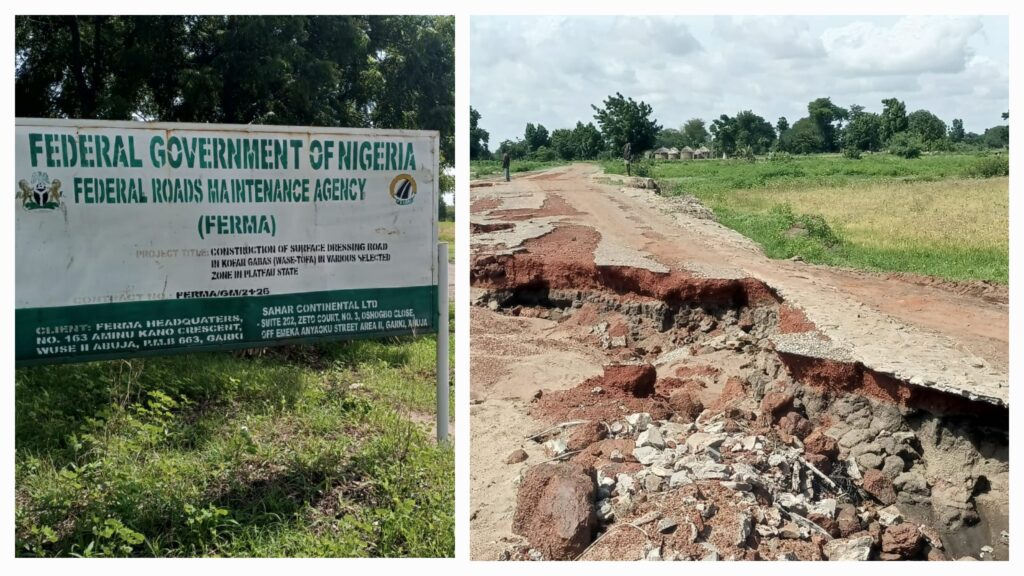
Barely a year after its completion, a road project worth N12 million in Plateau State has failed disastrously, leaving large sections impassable and residents stranded. The project, overseen by the Federal Ministry of Works under Minister Dave Umahi and executed by Sahar Continental Ltd, involved surface dressing of the Kogin Kasar Wase-Tofar Road. What should have been a lifeline for rural connectivity has instead become a cautionary tale about systemic inefficiency and lack of accountability in Nigeria’s public works sector.
APC Chairman Nentawe Yilwatda Calls On Opposition To Rejoin Party Ahead Of 2027
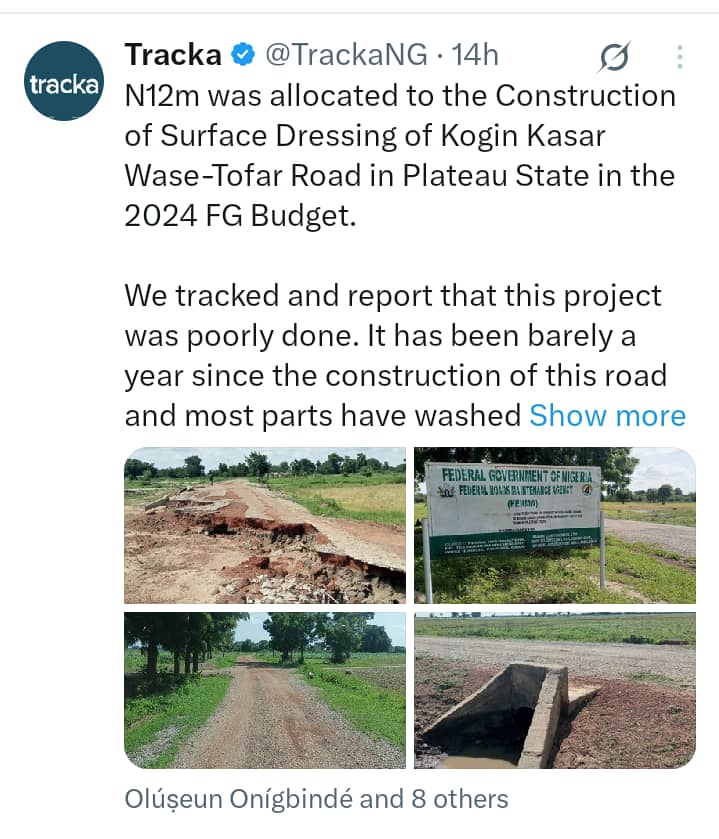
TrackaNG, a civic tech and accountability organization known for monitoring budget implementation, brought the issue to national attention. The group revealed that the road, which was listed in the 2024 federal budget and fully funded, has already deteriorated significantly. In many parts, the road surface has eroded completely, while other sections are riddled with gullies, making them impassable for vehicles and dangerous for pedestrians.
In a public statement, TrackaNG criticized the quality of work delivered by Sahar Continental Ltd, describing it as grossly substandard and not reflective of the funds allocated. “Despite the N12 million budget allocation, the implementation was poor. Most parts of the road are already damaged, and residents cannot use them,” the organization stated. They further urged the Ministry of Works, particularly its roads department (@FedRoadsNGR), to investigate and take immediate corrective action.
The Kogin Kasar Wase-Tofar Road was supposed to ease transportation burdens for rural dwellers in Plateau State by improving access to markets, schools, and healthcare. Instead, the project has deepened frustration among locals, many of whom now rely on alternative footpaths or dangerously narrow tracks to commute. For farming communities that depend on road infrastructure to transport goods, the failed road project represents a major economic setback.
This incident is not isolated. It underscores a troubling pattern in Nigeria’s infrastructure development, where road projects—often awarded to politically connected firms—are completed in haste or with substandard materials. The lack of follow-up inspections, weak enforcement of contractual obligations, and minimal public oversight mean that many such projects fail shortly after completion.
 The fallout from the Plateau State project has reignited calls for greater transparency in contract awards and project monitoring. Citizens and advocacy groups are demanding that the Federal Ministry of Works release full documentation on the project’s scope, timeline, and compliance checks. They also want Sahar Continental Ltd to be held accountable and made to return to the site to repair the damage at no extra cost to the government.
“The public deserves to know how N12 million was spent on a road that didn’t last 12 months,” said a local community leader in Wase, echoing widespread sentiments of distrust and frustration. “It’s not just about money wasted—it’s about lives disrupted, businesses lost, and promises broken.”
For many Nigerians, these failures are emblematic of deeper structural flaws in governance. Despite annual budget allocations running into billions of naira for infrastructure, the visible impact remains minimal in many rural and semi-urban areas. Civic organizations have long argued that unless there is rigorous project tracking, contractor accountability, and public access to budget performance data, such failures will persist.
Minister Dave Umahi, who assumed leadership of the Ministry of Works with a pledge to improve infrastructure delivery, now faces renewed pressure to act decisively. His response to this situation could either reinforce public confidence or further erode trust in the government’s commitment to equitable development.
The Kogin Kasar Wase-Tofar Road saga offers a potent reminder of what is at stake: not just physical infrastructure, but the very credibility of governance. It’s a test of whether public officials and contractors can be held to account—and whether Nigeria can break the cycle of failed projects and unmet expectations.








Leave a Comment
Your email address will not be published. Required fields are marked with *