
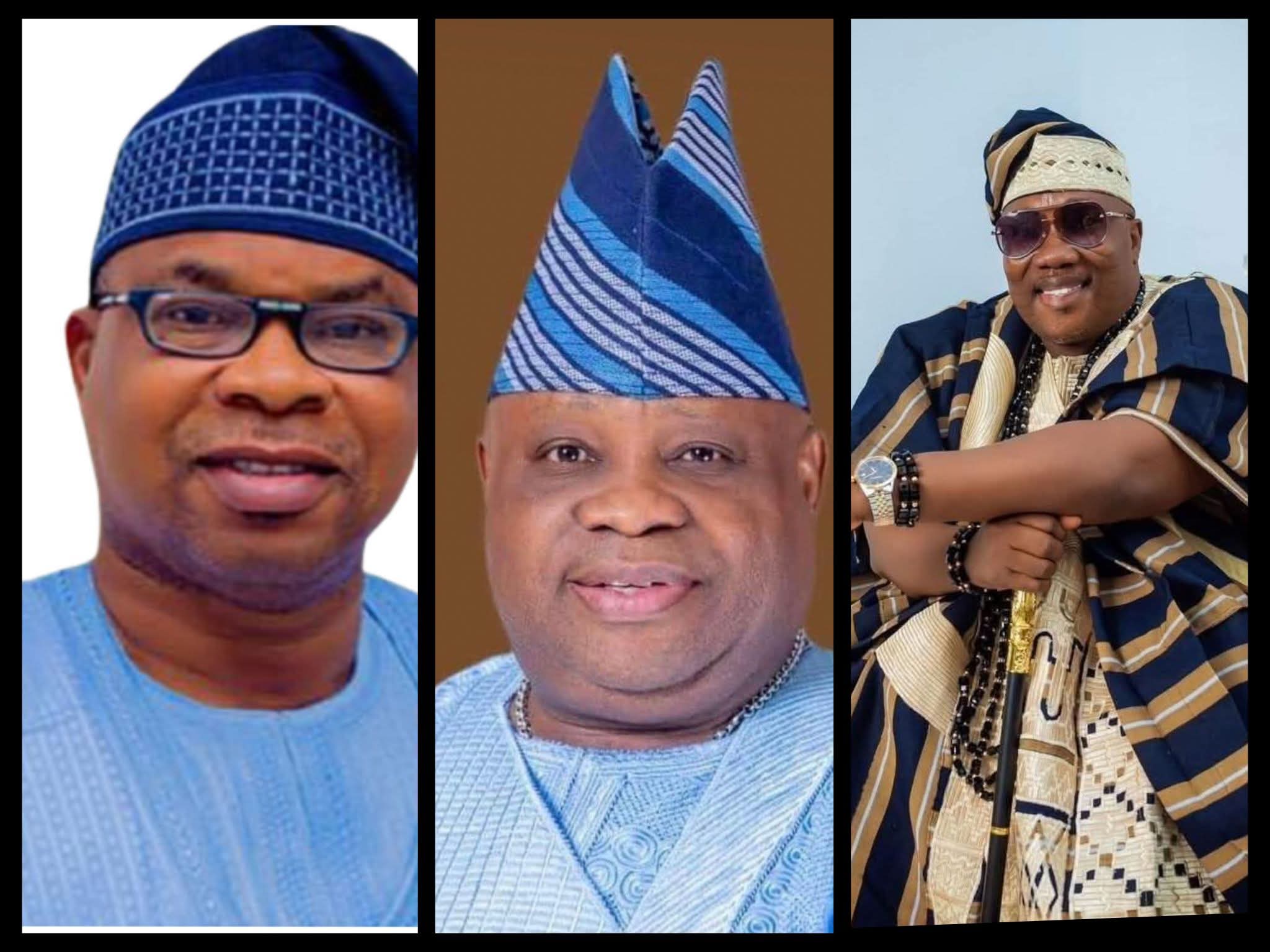
A dramatic political showdown is unfolding in Osun State as the All Progressives Congress (APC) prepares to pick its governorship candidate tomorrow, in what insiders describe as one of the party’s most unpredictable primaries in recent years. With Governor Ademola Adeleke, former Finance Commissioner Bola Oyebamiji, and ex-Speaker Dr. Najeem Salaam emerging as the top
A dramatic political showdown is unfolding in Osun State as the All Progressives Congress (APC) prepares to pick its governorship candidate tomorrow, in what insiders describe as one of the party’s most unpredictable primaries in recent years. With Governor Ademola Adeleke, former Finance Commissioner Bola Oyebamiji, and ex-Speaker Dr. Najeem Salaam emerging as the top contenders, the stage is set for a high-stakes contest that could reshape the balance of power ahead of the 2027 general elections.
ADC Will Turn APC Into An Opposition Party In 2027 — Amaechi
Party delegates and leaders have been locked in intense, closed-door consultations as lobbying reaches fever pitch. What initially appeared to be a straightforward selection has evolved into a complex political triangle, with each aspirant commanding a distinct support base and bringing different political strengths into the field.
Adeleke is banking on a broad grassroots network and the popularity he enjoys among voters across several local government areas. Oyebamiji enters the race with strong technocratic credentials, backed by party elements seeking a candidate with administrative depth and financial management experience. On the other hand, Dr. Salaam remains a formidable force with deep roots in Osun’s traditional political structures and significant goodwill from his years in the state legislature.
However, the tight contest has also raised fears of internal friction. APC insiders warn that tomorrow’s primary may trigger significant political realignments depending on how transparent and inclusive the process is perceived by aspirants and their supporters. Some stakeholders privately admit that the party cannot afford post-primary bitterness, as even minor internal cracks could weaken the APC’s position in the months ahead.
Meanwhile, opposition parties are closely monitoring the atmosphere inside the APC, preparing to seize any opportunity that emerges from internal disagreements. Among them, the Accord Party is positioning itself as the main destination for disgruntled APC officials and aspirants who may feel shortchanged once the candidate emerges.
Accord sources say they have intentionally slowed down their public political activities this week, waiting for the APC primary to determine where the political winds are blowing. Key Accord figures are reportedly in silent talks with various APC ward leaders, youth groups, and local coordinators who feel marginalised by their party’s internal processes. Should APC experience a post-primary split, Accord is expected to launch an aggressive recruitment drive aimed at widening its influence across strategic local governments.
The African Democratic Congress (ADC) has also been recalibrating its strategy ahead of the APC’s decision. While not as aggressive as Accord in wooing potential defectors, the ADC is threading a more tactical path, focusing on building strong grassroots structures that could benefit from voter discontent or political fragmentation within the bigger parties.
Political analysts believe the ADC may play a long-game strategy: watching both APC and Accord closely before entering coalition talks that could benefit its chances in next year’s electoral cycle. The ADC is also said to be working to strengthen its presence in swing areas where voter loyalty has historically fluctuated between major parties.
Across Osun’s political landscape, tomorrow’s APC primary is being viewed as the catalyst for broader movements across the state’s political blocs. What happens in the APC will likely determine how opposition alliances evolve, which candidates gain momentum, and how competitive Osun’s 2027 contest ultimately becomes.
There are already suggestions that if the APC result is seen as controversial or heavily influenced by godfathers, the backlash could give fresh life to smaller but agile parties like Accord and ADC, which are seeking relevance as Nigerians become more open to non-traditional political platforms.
However, if the APC manages a transparent and unifying process, the party could emerge from tomorrow’s contest stronger, more cohesive, and better positioned to challenge its rivals statewide. The leadership is therefore under immense pressure to ensure fairness, credibility, and internal harmony.
As Osun prepares for a pivotal political moment, all eyes remain fixed on the APC headquarters, where tomorrow’s decision is expected to send shockwaves—either stabilising the party’s structure or triggering the kind of political defection wave that smaller parties have been eagerly waiting to exploit.
Whatever the outcome, one thing is clear: Osun State politics will not remain the same after tomorrow.










Leave a Comment
Your email address will not be published. Required fields are marked with *