
Dangote Refutes Monopoly Allegations: My Money Is Clean, I Am Not Part Of The Corruption Africa’s richest man and president of Dangote Industries Limited, Aliko Dangote, has firmly rejected claims that his empire thrives on political influence and restrictive trade policies. Speaking in response to a feature published by Bloomberg on Thursday, the Nigerian billionaire
Dangote Refutes Monopoly Allegations: My Money Is Clean, I Am Not Part Of The Corruption
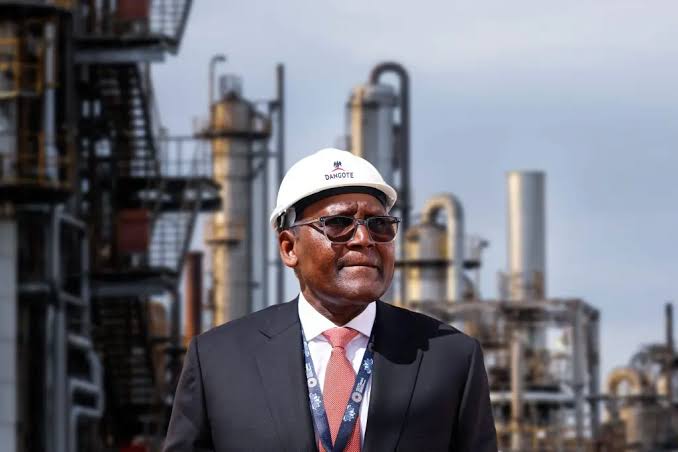
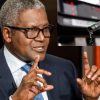
Africa’s richest man and president of Dangote Industries Limited, Aliko Dangote, has firmly rejected claims that his empire thrives on political influence and restrictive trade policies. Speaking in response to a feature published by Bloomberg on Thursday, the Nigerian billionaire insisted that his achievements in business are the product of foresight, resilience, and strategic investments rather than backroom deals or preferential treatment.
The Bloomberg report highlighted allegations that some of Dangote’s most profitable ventures, including sugar and cement, have flourished in industries where Nigeria imposed import bans or restrictions. The report also referenced a 2007 cable written by then-US Consul General Brian Browne, later released by WikiLeaks, in which critics accused Dangote of manipulating Nigeria’s political and economic systems to suppress competition. Browne suggested that it was “no coincidence” that many of the items on Nigeria’s import prohibition lists aligned with Dangote’s business interests.
In his response, Dangote expressed respect for Browne but firmly rejected the insinuations. According to him, many of the goods linked to his businesses were not banned at the time he ventured into them. Rather than relying on government interference, Dangote argued that he had positioned himself early in industries that others failed to recognize as opportunities.
“If you are going to call first movers into business monopolists, then you will never establish a manufacturing base, or you’ll never establish anything that you call a country,” Dangote said, defending his strategy of pioneering industries that later became central to Nigeria’s economy.
Dangote on Building a Legacy
The billionaire also reflected on the enormous challenges he has faced in constructing his $20 billion oil refinery, a project that has placed Nigeria on the global map. He admitted that the journey had been fraught with difficulties, primarily because of the country’s weak public infrastructure.
“Right from the beginning of building the refinery, we realised that nobody could provide us with any service. You have to provide almost everything by yourself,” he explained. From electricity to transportation and logistics, Dangote revealed that his company had to build several of the support systems that government institutions could not reliably deliver.
He candidly admitted that had he known the magnitude of the obstacles beforehand, he might have reconsidered the project. “If I knew what I was going to go through, I wouldn’t have tried it,” Dangote remarked, underlining the toll the refinery’s construction had taken on him personally and professionally.
Nonetheless, the refinery has begun to yield impressive results. Its operations have boosted Nigeria into becoming a net exporter of petroleum products for the first time in over 30 years, transforming a nation long dependent on imports into a player in the global oil market.
Billionaire Denies Wrongdoing
Dangote also dismissed allegations that he received preferential access to foreign exchange while financing the refinery. According to him, every dollar invested in the project was earned through legitimate means. “We have made our money clean. We are not part of the corruption. We are part of the problem-solving,” he asserted, positioning himself as a driver of development rather than a beneficiary of a flawed system.
His comments come at a time when his fortune is climbing. The Bloomberg Billionaires Index estimates his net worth at $28 billion, a sharp increase of $1 billion in just three months. Much of this gain is attributed to the refinery’s successful ramp-up and its impact on Nigeria’s energy independence.
A Broader Debate on Business and Policy
Dangote’s rebuttal highlights a broader conversation in Nigeria and beyond about the relationship between big business and government policies. Critics argue that restrictive trade measures often create environments that favor established players over smaller entrepreneurs. Supporters, however, contend that industrialists like Dangote have been instrumental in developing sectors that provide jobs, stimulate economic growth, and reduce reliance on imports.
For Dangote, the issue appears simple: success comes from recognizing opportunities early, taking calculated risks, and persevering despite systemic challenges. His legacy, whether viewed as monopolistic dominance or groundbreaking entrepreneurship, continues to shape Nigeria’s economic trajectory.
As the refinery project stabilizes and begins contributing to Nigeria’s economic transformation, Dangote insists that his empire stands as proof of what private enterprise can achieve in Africa. Whether his critics accept that narrative remains to be seen, but his influence on the continent’s industrial landscape is undeniable.











Leave a Comment
Your email address will not be published. Required fields are marked with *