
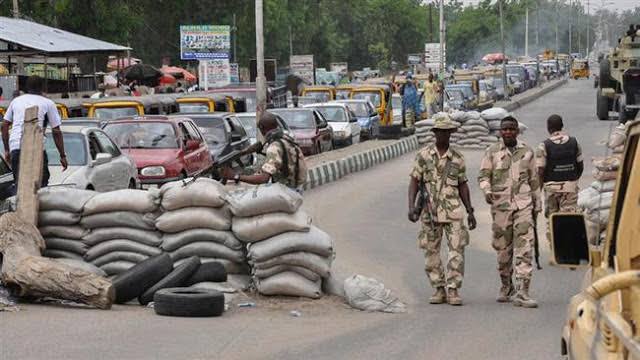
The Defence Headquarters (DHQ) has issued a sweeping directive for the immediate removal of all unauthorized and non-essential roadblocks across major highways in the country, a move aimed at restoring operational efficiency, improving troop safety, and enhancing public mobility. The order, contained in an internal memo dated December 5 and signed by Brigadier General
The Defence Headquarters (DHQ) has issued a sweeping directive for the immediate removal of all unauthorized and non-essential roadblocks across major highways in the country, a move aimed at restoring operational efficiency, improving troop safety, and enhancing public mobility. The order, contained in an internal memo dated December 5 and signed by Brigadier General A. Rabiu on behalf of the Chief of Defence Staff (CDS), reflects growing concern within the military over what it described as the “proliferation of non-essential static roadblocks and checkpoints along several routes within the Joint Operational Areas (JOAs).”
Dangote Launches N100 Billion Annual Education Fund For Nigerian Students And Teachers
According to the memo, the increasing number of unapproved checkpoints has become counterproductive to national security objectives. While acknowledging that road security remains critical in curbing banditry, kidnapping, and other criminal activities, the DHQ warned that excessive static checkpoints now “undermine operational efficiency and disrupt freedom of movement for both security forces and civilians.” The directive added that poorly coordinated checkpoints also expose military personnel to avoidable risks, particularly in areas vulnerable to ambushes and improvised explosive devices (IEDs).
Major National Corridors Affected
The order affects several high-traffic and strategically significant corridors, including:
- Abuja–Lokoja–Ajaokuta–Idah–Otukpa–Obollo Afor–Enugu
- Abuja–Lokoja–Obajana–Kabba–Omuo–Ekiti–Ikole Ekiti
- Abuja–Lokoja–Okene–Okpella–Auchi–Benin
- Abuja–Kaduna–Kano
- Lagos–Ore–Benin–Asaba–Niger Bridge
These routes, which connect Nigeria’s northern, southern, and eastern regions, have over the years witnessed an escalation of security checkpoints erected by various armed units. Some were legitimately created to counter security threats, but others, according to the DHQ, now fall outside approved operational guidelines.
In recent months, commuters, transport unions, and civil society organisations have complained about delays, extortion, and congestion at some of these checkpoints. Security analysts have also warned that static checkpoints often become predictable targets for hostile actors.
Shift to Mobile, Intelligence-Led Operations
The Defence Headquarters has now instructed all Theatre Commanders (TCs), Field Commanders (FCs), and other regional military heads to ensure strict compliance with the directive within their respective areas of responsibility. Commanders have been mandated to retain only approved operational control points, ensuring that any checkpoint that does not meet current security criteria is immediately dismantled.
The memo further emphasised the need for a transition to mobile, intelligence-driven deployments, stating that troops must now “dominate the expanse of routes with aggressive mobile patrols and human intelligence gathering.” This approach aligns with modern counter-insurgency and anti-banditry strategy, which favours unpredictability, flexibility, and speed over fixed positions.
Senior defence officials believe that mobile operations allow troops to respond more quickly to threats, particularly in volatile areas where criminals regularly adapt their movements. The DHQ directive underscores a renewed push to reduce static exposure of personnel, which has in the past resulted in losses from ambushes in the North-West and North-Central regions.
Public Reaction and Security Context
The order follows heightened public concern about rising insecurity along key highways, especially the Abuja–Kaduna expressway, the Lokoja–Benin route, and several stretches in the North-East. In the last year, multiple reports have emerged of bandit groups and terror cells exploiting gaps in security coordination, sometimes bypassing static checkpoints entirely.
Civil society groups have long advocated for a more intelligence-based approach, arguing that too many checkpoints clog highways without necessarily deterring attacks. Transport associations have also faulted what they describe as “checkpoint congestion,” which they say adds hours to travel time and in some cases encourages petty extortion.
In response to the DHQ directive, several stakeholders welcomed the move as a step toward a more professional and efficient security system. A security consultant, Dr. Yusuf Adamu, noted that the military’s decision mirrors international best practices: “Static checkpoints, while useful in some contexts, become ineffective when they multiply indiscriminately. Mobile patrols supported by intelligence are far more efficient in countering fluid threats like kidnapping and terrorism.”
Clear Mandate for Commanders
The DHQ made it clear that operational commanders will be held responsible for compliance. The memo explicitly warns that each Service Headquarters expects immediate action and proper verification that all non-essential static posts have been removed.
The directive is also believed to be part of broader efforts by the Chief of Defence Staff to streamline joint operations, tighten discipline among field formations, and restore public confidence in military-led security initiatives. Defence sources say the crackdown on unauthorized checkpoints will be accompanied by internal audits and stronger oversight to prevent the re-emergence of unapproved posts.
A New Phase in Highway Security
With the new order, Nigeria appears to be entering a new phase of highway security management—one that prioritises speed, intelligence, coordinated operations, and professional conduct. While some observers caution that dismantling roadblocks alone will not resolve the country’s security challenges, there is broad agreement that the move will eliminate inefficiencies and reduce vulnerabilities.
For millions of Nigerians who travel long distances daily, the DHQ directive offers hope for smoother journeys, reduced bottlenecks, and a strategic shift toward smarter, more agile security responses.


















Leave a Comment
Your email address will not be published. Required fields are marked with *