
FAAC Disburses N1.58 Trillion for March Amid Revenue Drop for Third Consecutive Month For the third month in a row, the Federation Account Allocation Committee (FAAC) has recorded a decline in monthly disbursements to the three tiers of government, distributing a total of ₦1.58 trillion for the month of March 2025. This was revealed during
FAAC Disburses N1.58 Trillion for March Amid Revenue Drop for Third Consecutive Month
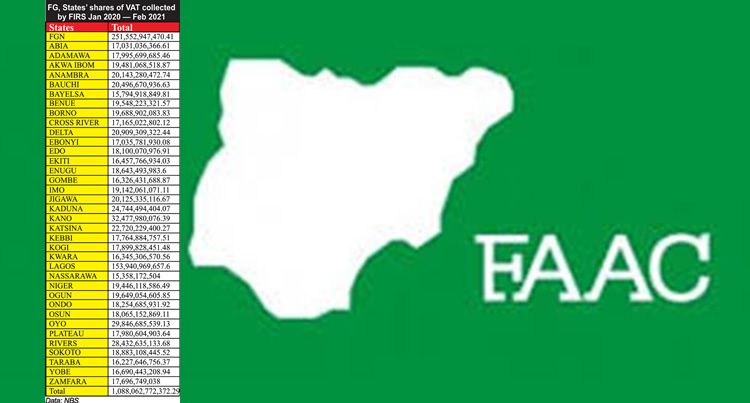
For the third month in a row, the Federation Account Allocation Committee (FAAC) has recorded a decline in monthly disbursements to the three tiers of government, distributing a total of ₦1.58 trillion for the month of March 2025. This was revealed during the April FAAC meeting held in Abuja on Tuesday.
The committee reported a gross revenue of ₦2.411 trillion generated in March, a slight improvement from previous months, but deductions for statutory obligations significantly reduced the amount available for distribution. These deductions included ₦85.376 billion for the cost of collection and ₦747.180 billion for transfers, interventions, and refunds.
EFCC Launches Probe Into ₦1.3 Trillion CryptoBank Exchange Fraud, Partners INTERPOL For Global Hunt
Revenue Components and Allocations to the Three Tiers
The ₦1.578 trillion distributable revenue for March was drawn from four key sources:
- Statutory Revenue: ₦931.325 billion
- Value Added Tax (VAT): ₦593.750 billion
- Electronic Money Transfer Levy (EMTL): ₦24.971 billion
- Exchange Difference Revenue: ₦28.711 billion
Federal Government: ₦528.696 billion
States: ₦530.448 billion
Local Government Areas (LGAs): ₦387.002 billion
Oil-Producing States (13% Derivation): ₦132.611 billion
Detailed Breakdown of Revenue Distribution
1. Statutory Revenue (₦931.325 billion)
- Federal Government: ₦422.485 billion
- States: ₦214.290 billion
- LGAs: ₦165.209 billion
- Oil-Producing States (Derivation): ₦129.341 billion
2. VAT Revenue (₦593.750 billion)
- Federal Government: ₦89.063 billion
- States: ₦296.875 billion
- LGAs: ₦207.813 billion
3. EMTL (₦24.971 billion)
- Federal Government: ₦3.746 billion
- States: ₦12.485 billion
- LGAs: ₦8.740 billion
4. Exchange Difference (₦28.711 billion)
- Federal Government: ₦13.402 billion
- States: ₦6.798 billion
- LGAs: ₦5.241 billion
- Oil-Producing States (Derivation): ₦3.270 billion
Mixed Revenue Trends: Gains and Declines
While the overall disbursement for March saw a reduction from previous months, the statutory revenue of ₦1.718 trillion reflected a notable increase of ₦65.422 billion compared to February’s figure of ₦1.653 trillion.
However, this growth was undercut by a drop in VAT, which declined from ₦654.456 billion in February to ₦637.618 billion in March, a decrease of ₦16.838 billion. The VAT reduction was one of several setbacks in key revenue channels, indicating underlying challenges in economic activity and consumer spending.
Other declining revenue sources included:
- Oil and Gas Royalty
- EMTL
- Excise Duty
- Import Duty
- Common External Tariff (CET) Levies
In contrast, the government saw an uptick in Petroleum Profit Tax (PPT) and Companies Income Tax (CIT), which provided some cushion for the overall revenue decline.
Implications and Outlook
This is the third straight month of declining net revenue distribution, a trend that may put additional pressure on federal, state, and local government budgets as they struggle to meet rising wage demands, developmental needs, and infrastructure investments.
While the increased earnings from statutory revenue and taxes like CIT and PPT offer some relief, the dip in VAT — a significant contributor to monthly allocations — raises concerns over weak consumer demand and economic productivity.
The FAAC’s distribution pattern for March 2025 suggests that greater fiscal discipline and improved domestic revenue generation will be essential to maintain economic stability, particularly as global oil markets fluctuate and the naira continues to face pressure.
With oil-producing states receiving ₦132.611 billion in derivation revenue, the Niger Delta region remains a key beneficiary of the revenue formula. However, stakeholders are increasingly calling for more efficient use of these funds to drive development and infrastructure.
As Nigeria looks ahead, analysts urge policymakers to diversify revenue streams and enhance tax collection efficiency to reduce reliance on volatile oil-based earnings.



















Leave a Comment
Your email address will not be published. Required fields are marked with *