
“Fashola Urges Lagosians to Preserve Historical Legacy Amid Street Naming Debate” Former Lagos State Governor and ex-Minister of Works, Babatunde Raji Fashola, has emphasized the need to preserve and properly document the history of Lagos to prevent distortion and uphold the cultural and societal values of the state. His remarks came during the public
“Fashola Urges Lagosians to Preserve Historical Legacy Amid Street Naming Debate”
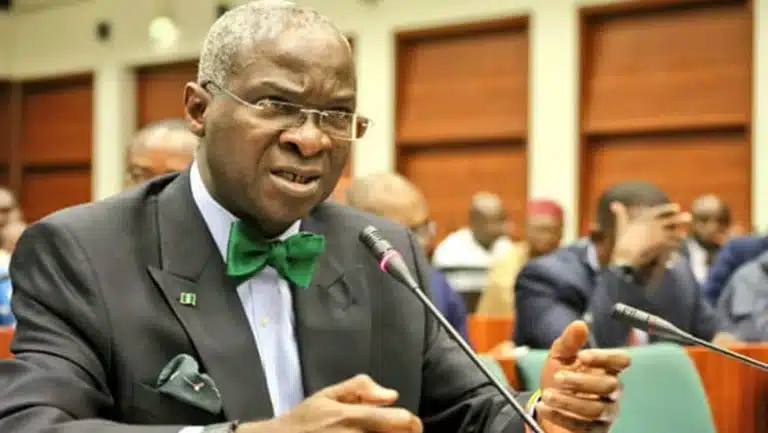
Former Lagos State Governor and ex-Minister of Works, Babatunde Raji Fashola, has emphasized the need to preserve and properly document the history of Lagos to prevent distortion and uphold the cultural and societal values of the state. His remarks came during the public presentation of “Discover Lagos State: A History Puzzle Book (Volume 1)”, held at the Civic Centre, Victoria Island, Lagos, on Tuesday.
The event, organized by the Lagos State Records and Archives Bureau (LASRAB), drew attention to the ongoing controversy surrounding the renaming of streets in Lagos — a sensitive issue that has sparked debate among residents, historians, and cultural advocates. Fashola, known for his emphasis on urban order and historical continuity during his time as governor, stressed the importance of contextualizing historical figures and their lasting contributions.
“Today I reiterate those words about street naming and Dr Oluwole and with a greater conviction to reinforce my message that the preservation of our history and the documentation of our progress should be taken seriously,” Fashola stated.
“Oyinlola Slams Tinubu’s Leadership: From ‘Renewed Hope’ To ‘Renewed Agony’”

Preservation of Lagos: The ‘P’ for Posterity
During his address, Fashola highlighted the archival excellence of the University of Glasgow, noting how its well-preserved digital records reflect a model worth emulating in Nigeria. He referenced a significant figure in Nigerian medical history, Dr Isaac Ladipo Oluwole, who studied at the University of Glasgow between 1913 and 1918 and later returned to Nigeria to become the first African medical officer of health in Lagos.
“Dr Ladipo Oluwole pioneered school health services, with school inspection and vaccination of children in their schools,” Fashola explained. “He also established the first Nigerian school of hygiene at Yaba in 1920.”
The former governor noted how such figures are often remembered through street names, like Ladipo Oluwole Street in Ikeja, but their stories remain largely untold or forgotten by the general public. He pointed out that without active documentation and preservation of such historical contributions, society risks erasing or distorting its cultural memory.
His statement, “So those of us who drive through streets such as Ladipo Oluwole Street in Ikeja will probably now understand and contextualise the contributions of such a man,” served as a call to action for citizens and leaders alike to value historical context and honor the legacies of national pioneers.
Sanwo-Olu’s Administration Echoes the Message
Representing Governor Babajide Sanwo-Olu at the event, Deputy Governor Obafemi Hamzat reaffirmed the administration’s commitment to historical preservation. He commended the Lagos State Records and Archives Bureau for publishing the history puzzle book, noting that it came at a crucial time when historical narratives need safeguarding.
“This initiative helps in making our rich history accessible to the younger generation in an engaging and educative way,” Hamzat said. “Lagos is not just a commercial hub; it is a cultural and historical jewel, and every effort to protect that identity is commendable.”
The book, “Discover Lagos State: A History Puzzle Book,” is aimed at educating young people through interactive learning while also serving as a historical reference for adults. The initiative forms part of the broader goal of the state government to document heritage, promote civic identity, and inspire civic responsibility through knowledge of history.
Street Naming as Historical Recognition
Fashola’s remarks also touched on the broader implications of street naming in Lagos. Without explicitly addressing recent controversies, he subtly hinted at the risks of political interference and historical revisionism in renaming streets that bear the identities of foundational figures in Lagos’ development.
“But it is perhaps instructive that we are discussing street naming and street unnaming and I keep my gunpowder dry,” he said, carefully choosing his words to imply concern without direct confrontation.
By highlighting how a Scottish university had preserved Nigerian historical data with care and integrity, Fashola contrasted this with the often erratic and politicized way Nigeria handles its own archival responsibilities. His message was clear: Lagos must do more to honor its past and resist the impulse to erase history for short-term convenience.
As discussions about historical names and monuments intensify in Nigeria’s most populous state, Fashola’s voice adds intellectual weight and urgency to the call for preservation, documentation, and reverence for those who helped shape the nation.














Leave a Comment
Your email address will not be published. Required fields are marked with *