
FG Issues 77 Refinery Licenses in One Year, Targets Energy Independence and Job Creation In a bold stride toward energy security and reducing Nigeria’s dependence on imported refined petroleum products, the Federal Government has issued a total of 77 refinery licenses within the past year. The Nigerian Midstream and Downstream Petroleum Regulatory Authority (NMDPRA) revealed
FG Issues 77 Refinery Licenses in One Year, Targets Energy Independence and Job Creation
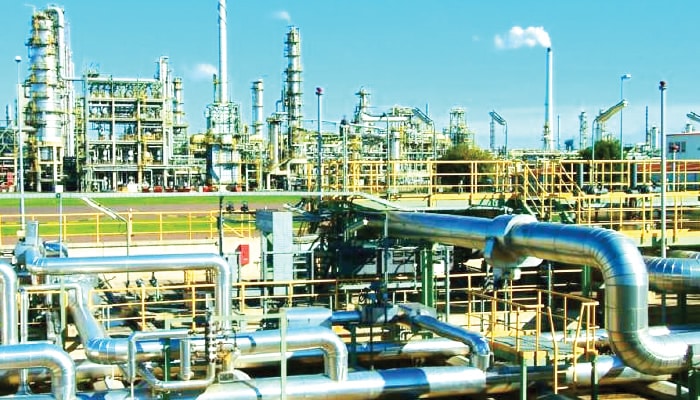
In a bold stride toward energy security and reducing Nigeria’s dependence on imported refined petroleum products, the Federal Government has issued a total of 77 refinery licenses within the past year. The Nigerian Midstream and Downstream Petroleum Regulatory Authority (NMDPRA) revealed this development during its sixth “Meet-the-Press” briefing held on Tuesday in Abuja.
According to the Chief Executive Officer of the NMDPRA, Farouk Ahmed, the government issued 47 Licenses to Establish (LTE) and 30 Licenses to Construct (LTC) within the review period, signaling a renewed push to ramp up domestic refining capacity and reposition Nigeria’s oil industry for greater economic contribution.
ALGON’s Legal Battle For Local Government Autonomy Stalls As Court Adjourns Hearing To May 29
Nearly Three Million Barrels Per Day in Refining Capacity
Highlighting the significance of the licenses, Ahmed disclosed that the 47 LTEs represent a combined refining potential of approximately 1.75 million barrels per day (bpd), while the 30 LTCs translate to an additional 1.23 million bpd. In total, these licenses could provide nearly 3 million bpd of refining capacity if fully developed.
“Currently, only four plants have LTCs with ongoing operations and a steady output of 27,000 bpd,” Ahmed said. “Nonetheless, the interest shown by investors and the approvals granted underscore the government’s commitment to enabling private sector-led growth in refining.”
The regulatory head emphasized that the licensing strategy aims to build a robust refining sector capable of meeting the domestic demand for petroleum products and eliminating the long-standing dependence on imports, which have placed pressure on the country’s foreign reserves.
Dangote and Other Major Refining Projects Leading the Charge
One of the highlights of Nigeria’s refining progress is the Dangote Petroleum Refinery, which stands out with a massive capacity of 650,000 bpd, making it Africa’s largest single-train refinery and a centerpiece of the country’s refining transformation.
Other notable projects include:
- AIPCC Energy’s refinery with a capacity of 30,000 bpd
- Waltersmith’s second train, set to add 5,000 bpd to its existing output
Ahmed noted that six licensed private refineries and four public ones currently produce a total of 1.12 million bpd, with private plants contributing 679,500 bpd. The list of operational modular refineries includes:
- Aradel Holdings – 11,000 bpd
- OPAC Refineries – 10,000 bpd
- Waltersmith Refining & Petrochemical Company – 5,000 bpd
- Duport Midstream Limited – 2,500 bpd
- Edo Refining and Petrochemicals Company – 1,000 bpd
Public Refineries: NNPC Remains a Key Contributor
In the public sector, the Nigerian National Petroleum Company Limited (NNPC) continues to maintain significant refining capacity. The four government-owned refineries add 445,000 bpd, spread across:
- Port Harcourt Refinery (new) – 150,000 bpd
- Warri Refinery – 125,000 bpd
- Kaduna Refinery – 110,000 bpd
- Port Harcourt Refinery (old) – 60,000 bpd
These figures collectively underscore Nigeria’s ongoing efforts to establish a self-sufficient petroleum refining industry that can support domestic energy needs and reduce the economic strain caused by fuel importation.
Future Prospects: Modular Refineries and Regional Growth
To complement the large-scale refining facilities, the NMDPRA also disclosed that modular refineries in Edo, Delta, and Abia states are in various stages of development. These projects are expected to collectively contribute another 140,000 bpd upon completion, serving regional markets and stimulating job creation.
“These developments underline our commitment to reducing dependency on imported refined products,” Ahmed stated. “Expanding domestic refining capacity will also bolster local employment, support industrialization, and enhance national energy security.”
He assured that the government and the NMDPRA would continue to support investors through transparent licensing procedures, operational guidance, and regulatory oversight to ensure that licensed projects reach operational maturity.
With the addition of new licenses and ongoing project implementation, the federal government aims to not only meet domestic fuel demand but also position Nigeria as a potential exporter of refined petroleum products within the West African subregion and beyond.
The latest licensing drive reflects a critical component of Nigeria’s broader energy strategy, aligning with goals to diversify the economy, reduce reliance on crude oil exports, and build downstream infrastructure that can power industrial development across the country.


















Leave a Comment
Your email address will not be published. Required fields are marked with *