
Governors Oppose CBN Accounts for LGs Despite Supreme Court Autonomy Ruling Nine months after the Supreme Court granted full financial autonomy to Nigeria’s 774 local government areas (LGAs), new revelations indicate that several state governors are actively blocking efforts to implement direct allocation payments to LGs via the Central Bank of Nigeria (CBN). The judgment,
Governors Oppose CBN Accounts for LGs Despite Supreme Court Autonomy Ruling
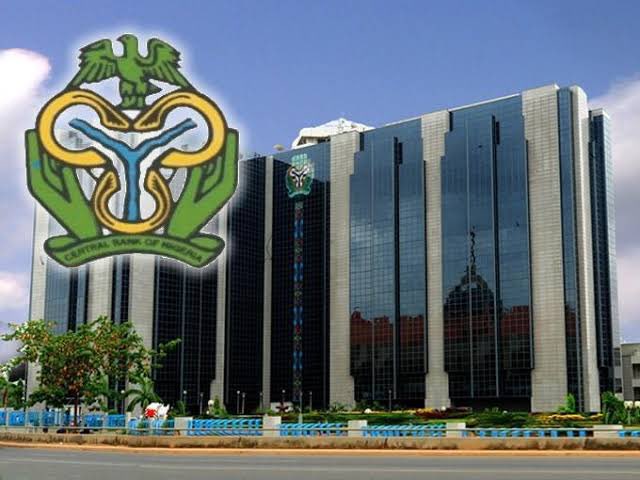
Nine months after the Supreme Court granted full financial autonomy to Nigeria’s 774 local government areas (LGAs), new revelations indicate that several state governors are actively blocking efforts to implement direct allocation payments to LGs via the Central Bank of Nigeria (CBN).
The judgment, hailed as a turning point for grassroots governance, was intended to liberate LG administrations from decades of financial control by state governments. However, resistance from state governors is stalling progress, even as the Federal Government moves forward with the legal and administrative framework necessary to enforce the ruling.
Silent Moves: Saraki Strategizes For Political Relevance Ahead Of 2027 Elections
Governors Push Back Against Local Government Autonomy
Investigations have shown that state governors are pressuring local government chairmen not to comply with directives from the Federal Government and the CBN to open accounts for the direct receipt of allocations from the Federation Account.
Sources across various regions revealed that intimidation and coercion have become the tools employed by governors who are reluctant to cede control over LGA finances. This development comes despite the Supreme Court’s ruling and ongoing federal efforts to ensure the decentralization of financial governance.
In one case from the South-East, a local government chairman disclosed that their governor outrightly rejected a proposal where 50% of the monthly allocation would be remitted back to the state after direct disbursement to the LGA. The intent was to find a middle ground that would at least initiate the autonomy process. However, the governor reportedly dismissed the offer, choosing instead to maintain full control of the allocation.
“Our governor has threatened all chairmen not to open accounts with the CBN for the direct payment of our allocation. We even tried to negotiate, but he was not interested,” the chairman told Punch.
This situation is not isolated. Across the country, many local government chairmen echo similar concerns. The consensus is clear: governors are unwilling to let go of their grip on LG funds.
Only Delta State LGs Have Complied So Far
At a recent Federation Account Allocation Committee (FAAC) technical sub-committee meeting, it was revealed that only Delta State LGAs had submitted their account details for the direct payment process. This stark statistic reflects just how widespread the resistance has become, despite federal instructions and judicial backing.
The Federal Government, through its panel set up to enforce local government autonomy, had directed the CBN to open accounts for the 774 LGAs. Talks have already commenced involving the former Accountant-General of the Federation, Oluwatoyin Madein, and the Attorney-General of the Federation, Lateef Fagbemi (SAN), to outline the modalities for implementation.
However, challenges persist, particularly with identifying LGAs that are democratically governed. In many states, local government elections have been bypassed or delayed indefinitely, with caretaker committees installed instead—a further violation of constitutional provisions.
Stringent CBN Conditions or Political Strategy?
While some governors claim that CBN requirements are too rigid, many insiders believe these concerns are exaggerated or used as a pretext to delay the process.
One chairman in the Southwest stated that a primary obstacle was the CBN’s demand for a two-month statement of account from each LGA. But he also revealed a deeper issue: many LGAs do not control their own funds and therefore have no independent financial records to present.
“Most states can’t meet the CBN’s requirements simply because their governors are the ones spending their allocations,” he said.
This scenario underscores the broader problem—local governments are largely unable to fulfill financial conditions independently due to the historical pattern of state interference.
Governors’ fears are not unfounded. Granting LGAs direct access to federal allocations would reduce their financial power, limit patronage systems, and create a more competitive governance environment. Many governors rely on LG funds to finance political activities, maintain influence, and control the grassroots political machinery.
Federal Government’s Next Steps in Enforcing Autonomy
Legal experts argue that the Supreme Court’s judgment leaves no room for interpretation—the LGs must receive their funds directly, and state governments have no legal standing to interfere.
Yet, implementation remains the challenge. Without full cooperation from the states, the Federal Government’s directive lacks bite. Analysts have called for the federal authorities to explore stronger mechanisms of enforcement, such as withholding state allocations for non-compliance or criminalizing interference in LG finances.
The absence of democratically elected officials in many LGAs further complicates enforcement. As a constitutional requirement, only democratically elected councils can be recipients of direct federal allocations. This gap creates a legal grey area that governors may be exploiting.
Restoring Power to the Grassroots
The original intent behind the Supreme Court ruling was to restore governance to the grassroots level, strengthen accountability, and improve service delivery. Without financial autonomy, LGAs remain little more than administrative extensions of state governors, with limited capacity to fulfill their constitutional roles.
As the struggle for local government autonomy intensifies, civil society groups and transparency advocates are urging the Federal Government to act swiftly. The promise of grassroots democracy and financial independence hangs in the balance.
For now, the fate of Nigeria’s local governments remains tied to a broader battle between centralized state control and constitutional decentralization. The longer the delay, the more distant the promise of true grassroots development becomes.













Leave a Comment
Your email address will not be published. Required fields are marked with *