
I Still Don’t Know My Exact Age — Former President Olusegun Obasanjo Former President Olusegun Obasanjo has once again reaffirmed a longstanding personal revelation: he does not know his exact age. Speaking with characteristic frankness, Obasanjo explained that although his official records place his birth year at 1937, he has never been fully certain of
I Still Don’t Know My Exact Age — Former President Olusegun Obasanjo
Former President Olusegun Obasanjo has once again reaffirmed a longstanding personal revelation: he does not know his exact age. Speaking with characteristic frankness, Obasanjo explained that although his official records place his birth year at 1937, he has never been fully certain of the accuracy of that date. Instead, he estimates his age using the lives of his childhood classmates—six of whom he says are still alive, all of them already above 90 years old.
Nigeria’s Forex Reserves Hit Six-Year High, Crossing $45 Billion Mark
Obasanjo, who has never shied away from discussing the peculiar circumstances surrounding his early years, noted that his uncertain birthdate is not unusual for many Nigerians of his generation. He explained that the era he was born into, particularly in rural communities, lacked reliable record-keeping systems. Birth certificates were rare, families relied heavily on memory, and significant life events were often dated loosely by associating them with local festivals, harvest seasons, or major political happenings.
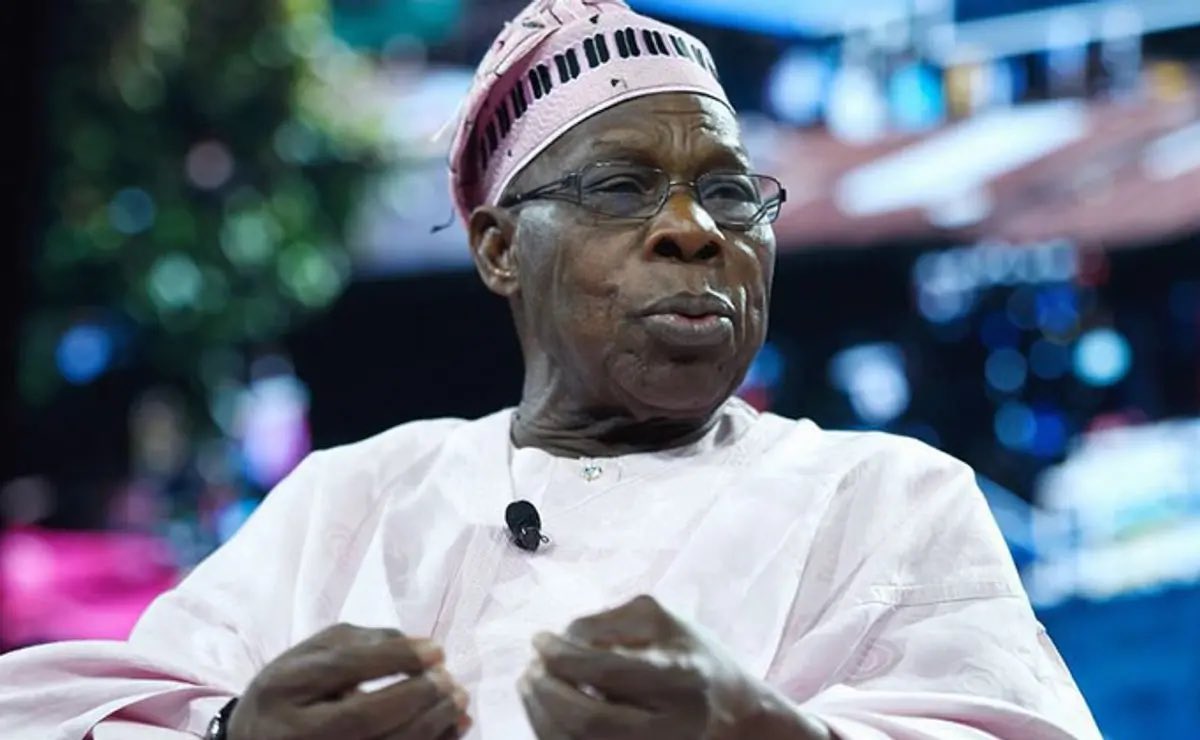 According to him, attempts to trace his age more accurately have always led him back to the same reference point: the classmates he shared a desk with in primary school. “I still don’t know my real age,” he said. “But I can guess, going by my school mates. Six of them are still alive, and none of them is younger than 90. So if we started school the same year, at roughly the same age, then you can estimate mine also.”
Over the years, Obasanjo’s admission has sparked public interest, debate, and even humour. Many Nigerians find his openness disarming, while others view it as a reflection of the historical challenges that shaped an entire generation. For a man who rose from a modest childhood in Ogun State to become a soldier, Head of State, and later a democratically elected president, his candidness about not knowing a detail as basic as his birthday stands out in a world where public figures often guard personal information closely.
The former president has repeatedly used this story to highlight broader issues affecting Nigeria’s early post-colonial socio-cultural environment. In many rural communities at the time, children began school based not on documented age but on physical maturity or parental discretion. Families often guessed ages when filling forms for school enrolment or baptism. It was also common for siblings to share approximate birthday years, making official records highly unreliable.
Obasanjo’s reflection therefore intersects with the experiences of millions of older Nigerians who share similar stories. For them, “age” was more of an estimate than a precise fact — a reality shaped by limited access to hospitals, sparse administrative structures, and informal community traditions.
His comments also touch subtly on the evolution of Nigeria’s civil registration system. Today, with hospitals, national identity databases, and digital registration platforms, it is far easier for families to document births accurately. Obasanjo has often pointed out that this improvement is one of the quiet but important signs of Nigeria’s development over the decades.
Beyond the personal aspect, Obasanjo’s remark comes at a time when age-related controversies continue to surface in Nigeria’s political and public sectors. Questions of birth dates, academic records, and identity documentation have frequently featured in public debates, electoral disputes, and leadership legitimacy discussions. As a respected elder statesman, Obasanjo’s openness serves as both a contrast and a reminder of how record-keeping challenges from the past continue to shape public perceptions today.
Despite the uncertainties around his birth year, what remains undisputed is Obasanjo’s long and eventful life. From his rise through the military ranks to his role in ending the Nigerian Civil War, from his years as a military leader to his presidency from 1999 to 2007, he has been a central figure in Nigeria’s political history for more than five decades. His age, whatever the exact figure may be, has not diminished his influence. He remains active in public discourse, peace-building efforts, agricultural advocacy, and continental diplomacy.
His humorous yet honest approach to the topic often leaves audiences reflecting on the broader human experience. “What matters most is not the number of years,” he has said in previous interviews, “but what those years have produced.”
As Nigeria continues to evolve, Obasanjo’s story stands as a symbolic reminder of the nation’s journey—from a time of informal traditions to the modern era of digital identity. And while he himself may never know the exact year he was born, his legacy, contributions, and historical impact remain firmly recorded in the country’s annals.









Leave a Comment
Your email address will not be published. Required fields are marked with *