
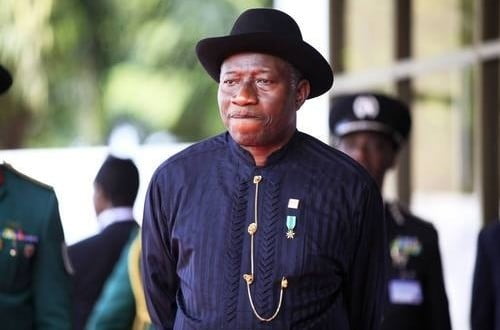
Nigerian Politicians Betrayal Me, Jonathan Reflects On His 2015 Experience Former President Goodluck Jonathan has once again raised concerns about the fragile nature of trust in Nigerian politics, stating that betrayal remains a defining feature of the nation’s political culture. Speaking in Benin City, Edo State, on Thursday during the 70th birthday celebration of his
Nigerian Politicians Betrayal Me, Jonathan Reflects On His 2015 Experience
Former President Goodluck Jonathan has once again raised concerns about the fragile nature of trust in Nigerian politics, stating that betrayal remains a defining feature of the nation’s political culture. Speaking in Benin City, Edo State, on Thursday during the 70th birthday celebration of his former Chief of Staff, Chief Mike Aiyegbeni Oghiadomhe, Jonathan reflected on his personal experiences, particularly during the 2015 general elections, where he said he faced significant political treachery.
Jonathan, who lost his reelection bid to President Muhammadu Buhari in 2015, did not shy away from expressing his disillusionment with the conduct of many politicians. He explained that inconsistency and betrayal are hallmarks of political engagement in Nigeria, where individuals often fail to stand by their commitments.
According to him, it is rare to find trustworthy allies in politics. “Politics in the Nigerian standard is about betrayals,” Jonathan noted, adding that his experience was marked by broken promises and shifting loyalties. He described Oghiadomhe as one of the few dependable associates who remained loyal through thick and thin.
“You’ll find it difficult to see somebody who will say the same thing in the morning and say the same thing in the afternoon and in the evening,” Jonathan remarked. “They will tell you something this minute and the next one hour they’ll say another. But I am quite pleased to associate with Oghiadomhe. He is one person who will take a bullet on my behalf.”
Jonathan praised his former Chief of Staff as a man of integrity, insisting that his loyalty was unquestionable. He noted that unlike most politicians whose words cannot be trusted, Oghiadomhe is one whose promises and assurances are as reliable as a signed contract.
The Olympic Games: From Ancient Greece to the Modern World, Before The Birth Of Jesus Christ
Betrayal in Politics: Jonathan’s Key Word
Jonathan’s comment brings to light a recurring theme in Nigerian politics—betrayal. For many years, defections, shifting alliances, and sudden political realignments have defined the country’s democratic experience. Political actors frequently abandon longstanding friendships or party platforms in pursuit of power and personal interests.
During the 2015 elections, Jonathan reportedly witnessed an unusual wave of desertions, even within his close political circle. Many politicians who publicly declared loyalty to him later switched allegiance to his opponent, creating a storm of defections that ultimately weakened his reelection bid. Jonathan’s reflections suggest that the 2015 experience left him with lasting memories of how deeply betrayal can shape political outcomes.
In his remarks, he contrasted his broader political experience with the loyalty he found in Oghiadomhe, describing him as one of the rare politicians whose words could “be taken to the bank.” Oghiadomhe, who served as Jonathan’s Chief of Staff between 2010 and 2014, was lauded for his consistency, dedication, and willingness to stand firm in difficult moments.
Oghiadomhe’s 70th Birthday Celebration
The celebration of Mike Oghiadomhe’s 70th birthday provided a fitting platform for Jonathan to pay tribute to his long-time ally. The event, held in Benin, Edo State capital, attracted several high-profile dignitaries from across Nigeria’s political and professional landscape.
Those in attendance included former Edo State Governor and current Senator Adams Oshiomhole; former Governors Lucky Igbinedion, Oserheimen Osunbor, and Ibrahim Hassan Dankwambo; legal luminary Chief Mike Ozekhome (SAN); Chief Tom Ikimi; and Chief Medical Director of the University of Benin Teaching Hospital (UBTH), Prof. Izia Ize-Iyamu.
The presence of these dignitaries underscored Oghiadomhe’s significance within Nigeria’s political arena. His career spans several decades, during which he has held various leadership roles, particularly as Chief of Staff in Jonathan’s administration, where he played a key role in coordinating governance and political strategies.
The Broader Implications for Nigerian Democracy
Jonathan’s remarks serve as a sobering reminder of the challenges facing Nigeria’s democratic development. Betrayal and lack of political integrity undermine not only individual leaders but also the collective trust that should underpin democratic institutions. Frequent shifts in allegiance erode voter confidence and weaken accountability, as politicians prioritize personal gain over public service.
By openly acknowledging betrayal as a central challenge, Jonathan adds his voice to ongoing discussions about the urgent need for political reforms in Nigeria. Strengthening democratic culture requires more than institutional frameworks—it demands a commitment to honesty, loyalty, and consistency from those in leadership.
In praising Oghiadomhe’s steadfastness, Jonathan appeared to challenge other politicians to emulate such integrity. For him, Oghiadomhe represents the rare example of a political ally who values loyalty above personal advantage. In a political environment marked by distrust, this kind of reliability remains invaluable.
Former President Goodluck Jonathan’s reflections at the 70th birthday of Chief Mike Oghiadomhe highlight one of the deepest flaws in Nigerian politics—betrayal. His words shed light on the instability that results when politicians prioritize personal survival over loyalty and truth. By recognizing Oghiadomhe as a dependable ally who stood by him during difficult times, Jonathan also emphasized the rarity of such integrity in Nigerian politics.
The message is clear: for Nigerian democracy to thrive, betrayal must give way to trust, and political actors must learn to honor their commitments. Without such a shift, the nation risks perpetuating a political culture where broken promises remain the norm.















Leave a Comment
Your email address will not be published. Required fields are marked with *